
Key Takeaways
- Check the legal entity, production site and responsibility for the order separately.
- Resolve unexplained differences between contracting and payment details before transferring funds.
- Connect production evidence to a location, date, product and responsible person.
- Use remote checks to identify questions for further verification; record what they cannot establish.
- Approve a defined next step, rather than treating one successful check as blanket supplier approval.
What Does It Mean to Verify a Furniture Manufacturer?
Check identity, operating role and production control separately
Furniture manufacturer verification should establish the registered company behind the offer, its relationship with the production site and the work it actually performs. When looking for a real furniture factory in China, ask which operations it owns, which it manages through partners and which are subcontracted. Request evidence appropriate to each answer.
A trading company can disclose and manage its supply chain transparently. A factory can also outsource selected processes. Our comparison of furniture factories and trading companies explains these operating models. For this check, focus on whether the description matches the evidence and whether responsibility is clear.
Understand the limits of a verification result
An operating workshop does not establish free capacity for your order. A good sample does not establish consistent bulk quality. Record exactly what was observed and leave capacity, ongoing reliability and destination-market compliance to their respective assessments. This keeps a China furniture factory check from becoming an unsupported promise about future performance.
Confirm the Legal Entity Behind the Quotation
Check the registered company and declared production address
To verify a Chinese supplier, request its Chinese legal name, Unified Social Credit Code and business licence. SAMR’s official business-information lookup page provides access to the National Enterprise Credit Information Publicity System. Use the legal name or identifier, rather than relying only on an English trading name.
Compare the registration details with the supplier’s documents: company name, status, registered address, legal representative and business scope. Review available abnormal-operation and serious-violation records in context. Keep the lookup date and findings. Registration information establishes a starting point; it does not independently verify equipment, staffing or current production.
Ask for the production address separately. If it differs from the registered address, request an explanation and evidence connecting the company to the site, such as relevant operating or occupancy documents. The difference is a question to resolve, not automatic proof of deception.
Reconcile contract and payment details
Compare the entity named on the quotation, contract, invoice and proposed beneficiary account. Where an export company or another group entity is involved, request the relationship and payment authority in writing. Our guide to verifying a furniture supplier’s legal entity and payment details covers this document review in more depth.
The FBI’s business email compromise guidance recommends independently checking payment requests and account changes. Confirm through an established contact channel; do not rely on the telephone number supplied in the change request. Record the confirmation before releasing funds.
In MrsWoods’ procurement workflow, buyers check supplier identity and invoice details. When payment details change, the team requests updated supporting company information and routes the change for internal review. This is a purchasing control, not a guarantee that a document alone establishes legitimacy.

Request Live and Order-Specific Production Evidence
Ask to see the work relevant to your product
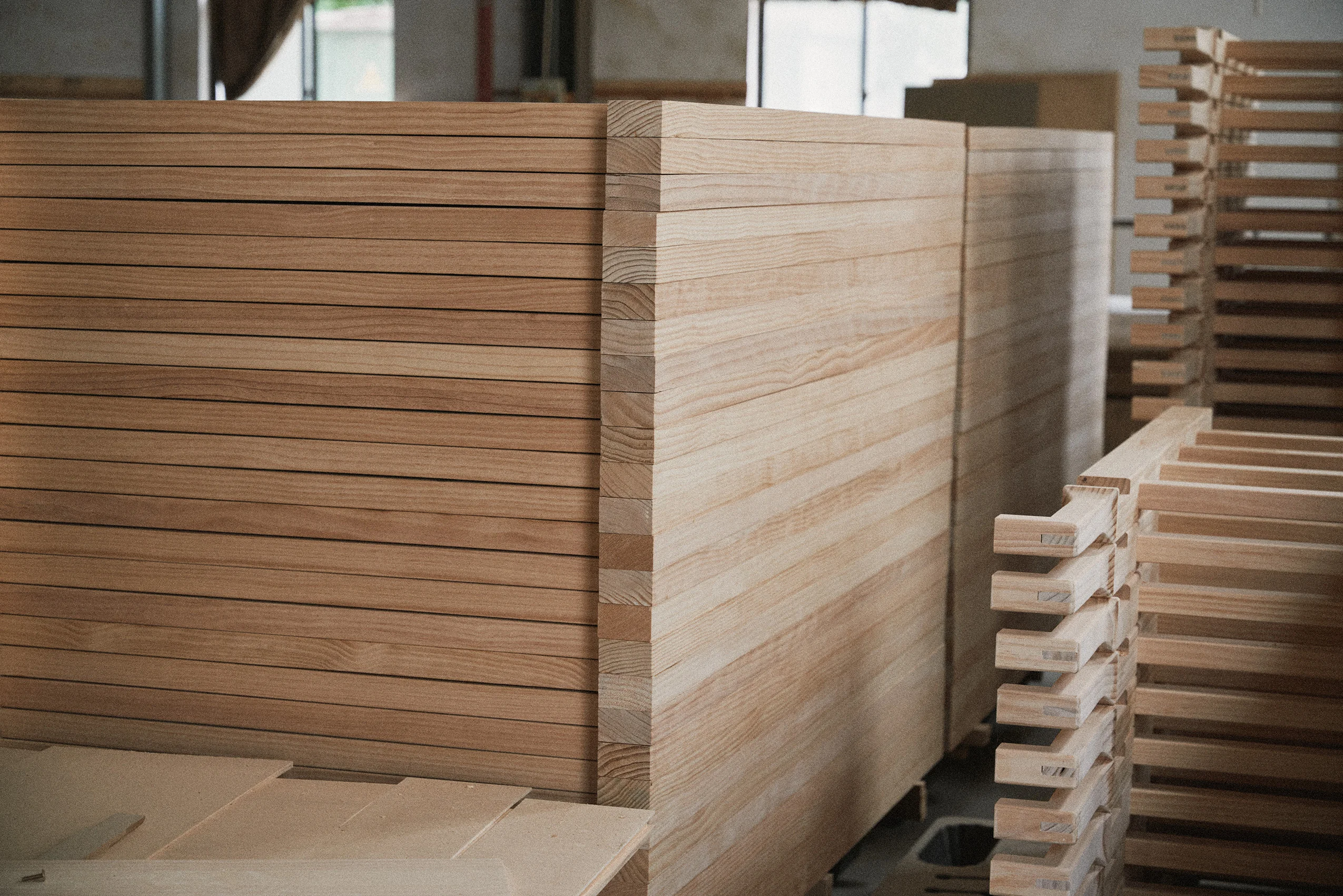
A useful production review follows the proposed furniture through its main operations. For an oak table, ask where material preparation, machining, assembly, finishing and packing happen. Identify work performed elsewhere and the person responsible for checking it. Before your order exists, request comparable current production rather than implying your products are already on the line.
SGS’s supplier documentation and on-site verification services distinguish checking a company’s legal existence from observing its actual background and operations. Apply that distinction when reviewing sales materials: a factory photograph needs context about the site, activity and supplier relationship.
Request a relevant selection of equipment, staff at work, materials, work-in-progress, finished products and production records. Protect other customers’ information by accepting redacted records or agreed substitutes. Our guide to furniture factory production evidence explains how to connect these records.
Cross-check the location, timing and product
For furniture factory verification, ask the presenter to connect a selected component with its drawing, internal job reference or material record. Compare the surroundings with earlier site images. A timestamp is useful context, but it can be edited; it should not be treated as independent proof.
MrsWoods’ procurement team compares production photographs, product markings and colour-board references with the supplier’s stated site and actual production. Site visits help the team check whether the scenes and processes supplied in photographs correspond to conditions on the ground.
Clarify responsibility for outsourced work
For each outsourced operation, record the performing company, location, specification owner, inspection responsibility and defect-resolution contact. Ask who can authorise a change of site or subcontractor. An unanswered responsibility question should remain open even if the finished sample looks acceptable.
Use Remote Verification as a Preliminary Screening Step
Plan a live walkthrough around unanswered questions
When you need to verify a furniture factory in China before travelling, agree a live walkthrough with a person who understands the production process. Send the areas and documents you need to examine. Confirm permission for recording and for showing personnel, customer designs or order information.
A practical route runs from the site entrance to relevant production areas, then to selected work-in-progress and supporting records. Ask follow-up questions during the call. Note any missing areas, unreadable documents or connection failures instead of treating the tour as complete.
ISO/IEC TS 17012:2024 guidance on remote auditing addresses the possibilities and limitations of remote methods in management-system audits. Its published scope explains that remote methods are an audit tool, not a replacement for on-site methods. Applying that distinction to preliminary supplier checks is a buyer recommendation, not a claim that a video call meets a certification requirement.
Our guide to verifying a furniture factory remotely develops the call preparation and evidence requests.
Escalate when the evidence remains incomplete
Arrange an on-site review when a material identity or production question cannot be resolved remotely. Higher financial exposure, unfamiliar processes or inaccessible subcontracted operations may also justify a visit. Explain the open question to the reviewer so the visit produces relevant findings.
MrsWoods’ procurement responses state that the team visits factories to review production before placing bulk manufacturing orders. Photographs and videos assist that review; they are not described as a substitute for the pre-order site visit.
Build an Evidence Checklist and Approval Gate
Record what was checked and what remains open
A working record should identify the checkpoint, supplier claim, evidence reference, review date, reviewer, acceptance criterion and unresolved issue. Add the person responsible for follow-up and the decision reached. Record unavailable evidence explicitly; an empty field can otherwise be mistaken for a completed check.
ISO 19011:2026, published in May 2026, provides guidance on management-system audit principles, programmes and conduct. It does not itself confer certification. The checklist and decision categories here are an editorial application for furniture sourcing, not an ISO-issued factory approval scheme.
Approve a defined next step
Use the evidence to decide whether to proceed to sampling, request clarification, commission a targeted audit or pause the sourcing process. Avoid a universal pass score that allows minor positives to cancel an unresolved payment or identity problem. Name the person authorised to make the decision.
For a site review, our furniture factory audit checklist expands the evidence categories. Specify the purpose when commissioning external work. SGS’s furniture-sector services list factory audits, production inspection and product testing separately; request the activity that addresses your question rather than an unspecified “factory check”.

Red Flags and Common Verification Mistakes
The strongest warning signs are unresolved contradictions and resistance to reasonable checks. Consider pausing the affected decision when:
- The supplier cannot explain which entity is contracting or receiving payment.
- It refuses both an appropriate live review and reasonable alternative verification.
- The declared site, production activity and supporting records conflict.
- It cannot identify who controls an important outsourced operation.
- It pressures you to bypass an agreed review or account-change procedure.
Check the explanation before drawing a conclusion. A confidentiality restriction may require redacted records; a connection failure may require another call. Repeated refusal to resolve an important issue is different from a documented access limitation.
Common buyer mistakes include treating a registration search as proof of manufacturing, accepting a sample as evidence of bulk capacity and assuming every operation occurs in a single owned building. Ask what each piece of evidence actually establishes. A real production site can still be unsuitable for your product or order.
How Can MrsWoods Support This Verification Stage?
MrsWoods combines furniture manufacturing, product development and supply-chain coordination for B2B customers. Its procurement review considers the supplier’s identity, site, equipment, personnel and current production. For work involving partner factories, the team clarifies production responsibilities and follows up on the work and inspection findings.
For a proposed collection, buyers can ask which production route applies, what evidence is available and which questions need a site review. Any claim about a specific factory, certification or equipment should remain tied to identifiable evidence for that project.
Frequently Asked Questions
How can a buyer verify that a furniture manufacturer is a legitimate operating business?
Check its registered legal identity and then verify the relationship between that company and the stated production site. Review current operations through suitable records and direct observation. Record any gaps before deciding whether to advance.
What documents should be checked before paying a furniture supplier?
Compare the business licence, quotation, contract, invoice and beneficiary details. Investigate differences and independently confirm payment changes through an established contact. Your finance reviewer should approve the documented arrangement before transferring funds.
What production evidence should a furniture factory provide?
Request evidence relevant to the product and stage: site identity, equipment, current work, materials and selected production records. Before an order is placed, comparable work may be appropriate. Confidential customer information can be redacted without removing the details needed for verification.
Can a furniture factory be verified remotely?
Remote methods can support document review and observation, but the conclusion is limited to what can be checked. If the site relationship, key process or evidence remains uncertain, arrange further verification. A completed video tour is not automatic approval to order.
When should a buyer use a third-party or on-site factory audit?
Use one when unresolved questions require direct observation or specialist competence, or when your purchasing criteria require independent review. Define the site, operations, documents and reporting scope beforehand. An audit only addresses its agreed scope and observed conditions.
Does outsourcing mean a supplier is not a real manufacturer?
Outsourcing alone does not settle that question. Identify what the supplier performs itself, what partners perform and how responsibilities are controlled. The buyer needs a transparent operating model and traceable accountability, rather than an assumption based on a label.
Conclusion
Understanding how to verify a furniture manufacturer helps you make a defensible decision about the next sourcing stage. Begin with the legal entity, reconcile the proposed payment arrangement and connect manufacturing claims to current evidence from the relevant site. Keep a record of the source, date and limits of each finding.
The verification file should explain what is known and what remains unresolved. Remote checks can help prepare that file, while a site visit or specialist assessment can address questions that cannot be answered at a distance. Later decisions about quality, capacity and compliance still need their own evidence.
If you are developing an oak furniture collection or planning a new B2B sourcing project, discuss the proposed production route through MrsWoods furniture supply and custom development services. Share your product category, drawings or reference images, target market, intended quantity and the factory questions you need answered. This gives the team a concrete basis for discussing responsibilities and the information needed before production.
