
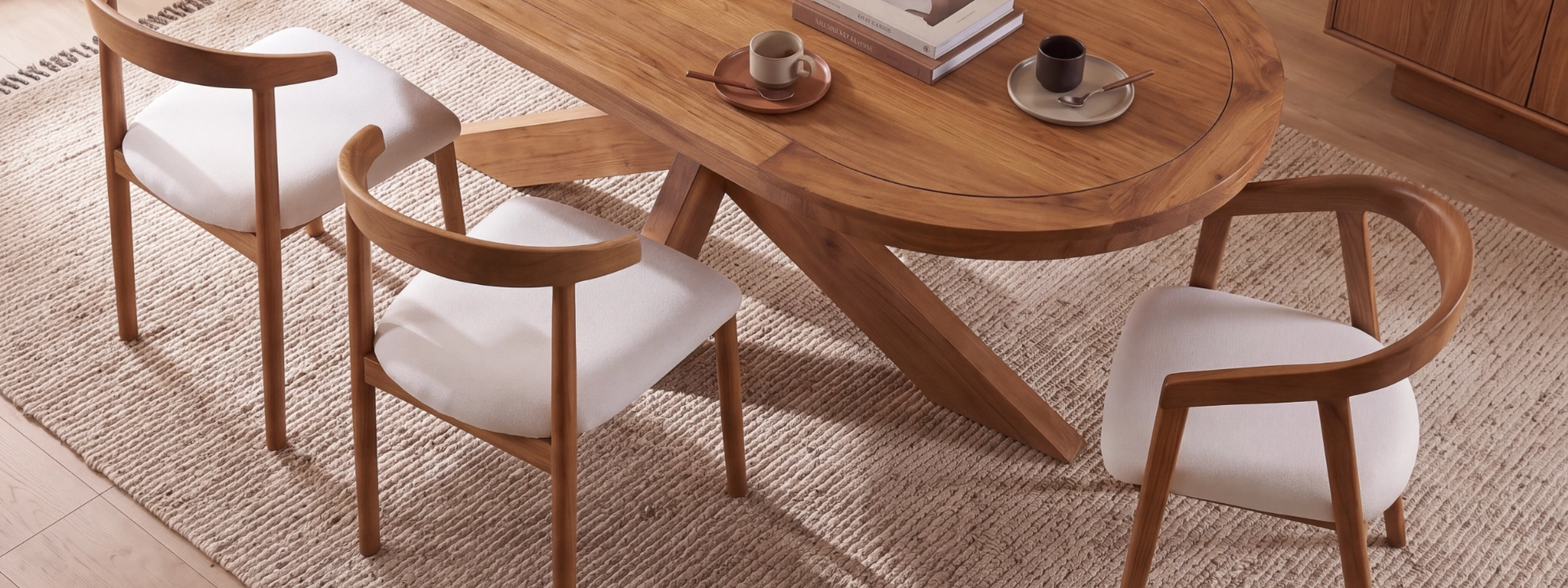

For an overseas furniture buyer, a polished catalogue answers a different question from a production record. The catalogue presents the range; production evidence helps explain how the proposed factory handles a product like yours. A cabinet, dining table and upholstered chair may require different views and supporting information, even when purchased through the same company.
This guide sets out what to request before ordering and how the evidence should become more specific once your order enters production. It forms one part of choosing a furniture manufacturer in China. Start with a clear product brief, then ask for the evidence that resolves your actual production questions.
Key Takeaways
- Identify the product, relevant factory and manufacturing operation before requesting evidence.
- Distinguish comparable past work from records of your own production order.
- Connect materials, equipment and work in progress with drawings, references or production records.
- Follow up on a specific mismatch rather than requesting more unrelated photographs.
What Should Useful Production Evidence Identify?
Match the Evidence to the Product and Production Site
Begin with the furniture category, intended construction and proposed production location. Ask the supplier to identify which operation each image or record represents. A useful description might explain that a photograph shows table-leg machining at the facility proposed for that component, rather than simply labeling it “our workshop.”
MrsWoods owns several furniture factories, with different products manufactured at different facilities. When discussing your project with our team, identify the product category and construction so the conversation can focus on the relevant production facility. This gives a factory discussion a practical starting point: the furniture you want to develop or purchase.
Keep the company-to-site relationship clear as you review the evidence. Our guide to how to verify a furniture manufacturer covers the wider identity checks. Here, the task is to connect the declared production location with the particular work being discussed.
Distinguish Comparable Production from Your Own Order
Before you place an order, ask for relevant completed work, current comparable production or an available sample with supporting information. Identify which category the evidence belongs to. A previous cabinet project may demonstrate experience with a construction detail, but its records should not be presented as records of your future order.
Once your order is in production, request references tied to that order. If one production task covers several customer orders, ask how your items are identified within it. The relationship may be explained through an order reference, product code or linked record; it need not depend on a particular software system.

What Raw-Material and Storage Evidence Should Buyers Request?
Connect Material Descriptions with Labels and Receiving Records
When verifying raw-material inventory, identify the material description being claimed and the product component it concerns. Request a permitted view of the material together with its available label, receiving entry or supplier description. Check whether the terminology and reference details agree across those items.
For an oak furniture manufacturer discussion, “oak” alone may leave the construction unclear. Ask which components are specified as solid oak and which, if any, use oak veneer over a stated substrate. A photograph of an oak-faced panel does not establish the species or construction of every component in the finished piece.
In its furniture inspection overview, SGS identifies materials and components as pre-production inspection subjects. It also describes early-production comparison with customer specifications, technical drawings and a reference sample. These distinctions help buyers request the information relevant to the stage they are reviewing.
Check How Materials Relate to the Furniture Being Produced
A storage photograph shows what was visible in that area. To connect it with a product, ask which material reference appears on the relevant job or component information. Where a material-issue or allocation record is used, request the relevant portion. Otherwise, ask what record or observation can establish the link.
Separate “available in storage” from “allocated to this work” and “already used in these components.” If the factory claims that a particular material is in your order, evidence of stock elsewhere is an incomplete answer. Any unresolved species, grade or performance question needs the appropriate material verification, rather than a stronger claim about the photograph.
What Should Equipment and Work-in-Process Evidence Show?
Relate Equipment to the Actual Manufacturing Operation
Verifying furniture manufacturing equipment starts with its role in the proposed production route. Ask which feature of the product an operation creates or finishes, and request a relevant view of the work. A machine photograph becomes more informative when the supplier can connect it with a component and explain the operation.
QIMA’s manufacturing-audit scope includes factory facilities, machinery condition and workflow. For a buyer reviewing supplier production-line evidence, the practical implication is to examine how the equipment relates to the work, rather than using an equipment list as the entire assessment.
Clarify where the operation takes place and who is responsible for it. Equipment access, ownership and responsibility are distinct questions. If machining and finishing occur at different facilities, request the appropriate reference for each location; do not assume that every operation must appear in one workshop.
Connect Components and Semi-Finished Furniture to the Product
Useful work-in-process evidence shows a component at an understandable stage. For a table base, that could mean seeing the leg and rail components before assembly, then identifying the corresponding assembly. Ask which visible features connect these items with the drawing or product reference under discussion.
For upholstered seating, the relevant view may concern the frame or another stage needed to answer your question. Request the product-specific view instead of applying a wooden-table checklist to every category. Record whether the scene shows your work, comparable production or a demonstration.
When collecting evidence of furniture workshop production by video, use the preparation steps in our guide to verifying a furniture factory remotely. The evidence request should identify what you need to see before the call begins.
Which Production Records Should Match the Furniture Being Made?
Compare Product References, Drawings and Finish Samples
For OEM furniture manufacturing, ask the supplier to identify the drawing, specification or reference used for the work being shown. Check the product reference and the relevant version. A drawing for a related model may look convincing while showing a different edge profile, base arrangement or fixing position.
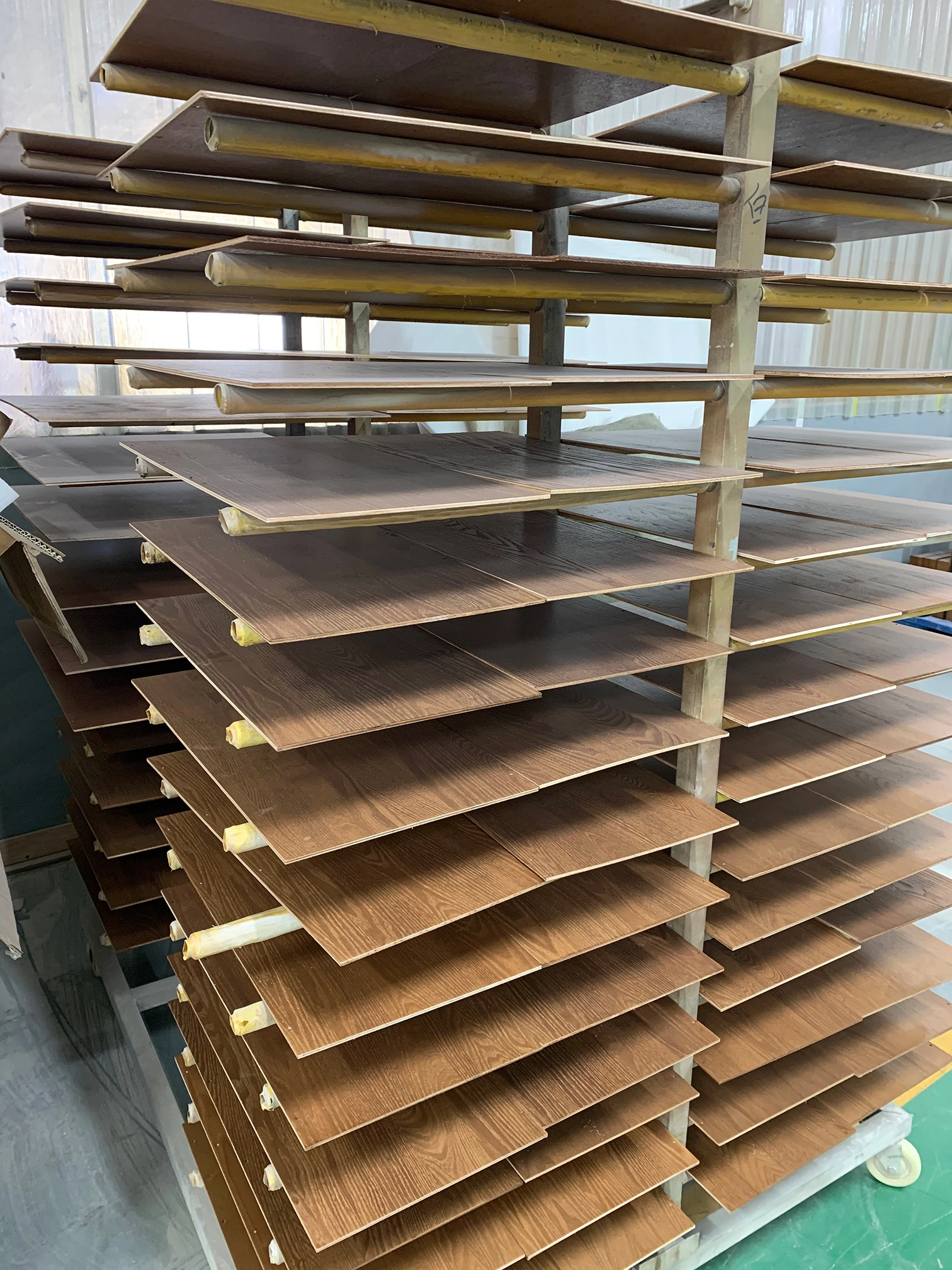
Treat finish information with the same care. Ask which colour-board or finish reference accompanies the production task. Photographs can help locate the reference and document appearance, but visual similarity on a screen is not an agreed colour-acceptance method.
MrsWoods’ procurement reviews bring product markings, production photographs and colour boards into the same comparison. The team checks how semi-finished and finished furniture relate to the reported production setting and key processes, then uses on-site observation to verify the supplied images. These checks focus the review on identifiable products and actual production conditions.
Link Work-in-Process, Finished Products and Relevant Records
Ask to see the relevant portion of a production instruction, job record or inspection record where one is available. Establish what product or batch it concerns, the activity recorded and the date. A completed inspection sheet for a different product does not answer a question about the component in front of you.
For finished furniture, compare the product reference with the available finished-item or packing identification. Packaging marks can help connect records, but a mark alone is not proof of where the item was made. Read it alongside the production information already reviewed.
The aim is a small, connected set of evidence. Request the fields needed to understand the relationship, with unrelated customer information removed. You do not need an entire customer order book to establish which reference belongs to the selected item.
How Can Buyers Connect These Records to One Product and Factory?
Follow an Oak Furniture Example Across the Evidence
Consider an illustrative dining-table review: the buyer’s brief specifies an oak-veneered top and solid-oak legs. This is an example of how to connect evidence, not a reported customer order. Start by separating the references for the top, legs, base construction and finish.
For the top, compare the stated panel construction with the relevant material description and drawing. For the legs, ask how the available material reference connects with the components being machined. Then compare the leg-to-base arrangement in the drawing with the assembly being shown. Each comparison answers a narrower question than “Can you make oak tables?”
Finally, connect the selected finish reference and finished-product identification with that same model. If finishing happens at another declared facility, note the location change and the reference used to connect the work. The evidence should follow the product across its stated production route.

Resolve Mismatches with a Specific Follow-Up Request
Describe the difference before requesting an explanation. “The drawing shows this base arrangement, but the assembly photo shows another” is more useful than “Please send better evidence.” Ask whether you are looking at a different model, revision, production stage or location, then request the matching reference.
If a record has been redacted, identify which connection is now missing. The supplier may be able to retain a product code while hiding the customer’s name. An unexplained gap needs clarification; a documented confidentiality restriction calls for an appropriate alternative.
Where an important connection cannot be established from the supplied information, define it as a question for a site review. Our furniture factory audit checklist develops the on-site review process. Keep this evidence exercise focused on the product and production claims you need to verify.
Frequently Asked Questions
What Production Evidence Should I Request Before Placing an Order?
Request relevant examples of completed or current production, the proposed factory and process locations, and supporting material or product references. Identify these as comparable work. Order-specific records become relevant when your own production task exists.
Are Workshop Photos Enough to Verify Furniture Production?
No. Ask what the photographs show, where they were taken and how the visible work connects with a product reference or record. Photos become more useful when these relationships can be checked through other information or observation.
Does Every Manufacturing Process Need to Be in the Same Factory?
No. Review the declared arrangement for the product. When work crosses facilities, identify the operation, location and responsible party at each stage, together with the reference connecting the components or products between them.
Can I Request Evidence Without Accessing Another Customer’s Confidential Information?
Yes. Ask for permitted views, anonymized examples or selected record fields that preserve the connection you need to check. Agree what may be shared or recorded rather than requesting unrestricted access to another customer’s files.
How Can I Connect Production Photos to a Particular Product or Order?
Compare product references, relevant construction details and production records. Distinguish the model from the specific order: a matching design may identify a product, while an additional job or order reference is needed to connect that work to your purchase.
What Should I Do If Production Records and Factory Photos Do Not Match?
State the mismatch, ask for its context and request the corresponding record or view. If the explanation leaves an important production claim unresolved, arrange a targeted follow-up or include the question in an on-site review.
Conclusion and Next Step
A useful review of furniture factory production evidence leaves you with a clear account of the selected product, the work performed and the records supporting it. Begin with the item you want to source. Follow its relevant material descriptions, components, processes and references, and identify any change of production location along the way.
Keep the evidence proportionate to the stage of the relationship. Comparable work helps frame an early supplier discussion; records tied to your production task become important once that work exists. When something does not match, ask a precise question and request the information needed to resolve it. This makes the conversation more useful for both the buyer and the manufacturing team.
To discuss a project with MrsWoods, explore our OEM, ODM and furniture supply services. Share your product category, drawings or reference images, material requirements and planned quantities. Our team can discuss the relevant production arrangements; buyers can also request a live video factory tour or arrange an in-person visit to our facilities in China.
