


For a B2B furniture buyer, capacity is the demonstrated and currently available ability of the relevant people, processes, materials, suppliers, quality controls, and packing resources to produce the required SKU mix within the agreed window without creating unacceptable quality or delivery risk. The assessment therefore has to follow the order, not the size of the factory tour.
This guide provides the decision framework for brands, retailers, wholesalers, and project buyers. It does not replace a detailed factory audit, product engineering review, or order-specific production plan. It shows what to define, what evidence to request, where capacity often becomes constrained, and when an approval should remain conditional.
Key Takeaways
- Define capacity for the actual product mix and period. A whole-factory monthly number cannot show whether the required SKUs, finishes, quantities, and packaging can move through the same route on time.
- Separate theoretical, demonstrated, committed, and available capacity. Installed potential is not the same as repeatable output or an open production slot.
- Assess the bottleneck, not the busiest-looking workshop. Materials, specialist labour, finishing, curing, quality checks, testing, or packing may limit the system before the main machines do.
- Treat outsourcing as a visibility and control question. An external process can support supply, but only when its scope, evidence, capacity, and responsibility are disclosed.
- Approve with evidence and keep monitoring. Capacity changes as orders, material dates, rework, maintenance, and buyer approvals change.
What Does Furniture Factory Capacity Mean for a B2B Buyer?
Furniture factory capacity is not one permanent number. It is the quantity and mix of conforming products that a defined production system can complete in a defined time, under stated assumptions. For sourcing decisions, the important number is the capacity that remains available for the buyer’s order after current commitments and real constraints are considered.
Keep capacity, capability, and supply reliability separate
Capability asks whether the supplier can make the product to the required construction, finish, performance, documentation, and market requirements. Capacity asks how much of that suitable product can move through the required route in the relevant period. Supply reliability asks whether the agreed quantity, quality, timing, and evidence can be maintained as conditions change. A factory may have equipment capacity but lack the finishing skill for the range. It may have made one approved item but lack enough controlled output for a multi-SKU launch.
These distinctions protect the buyer from approving a large theoretical number before product fit is established. If the broader supplier decision is still open, begin with the complete guide to choosing a furniture manufacturer in China, then use this capacity framework after the relevant product and process route is understood.
Define the buyer decision and this article’s limits
The capacity review should support a specific decision: shortlist the supplier, reserve a tentative window, release a trial quantity, approve a ramp-up, allocate part of a programme, or place a repeat order. The evidence needed for a trial is not automatically enough for a seasonal launch or a programme with several materials and finishes. Record the decision, affected products, period, assumptions, and conditions before collecting data.
This article stays at decision-framework level. Detailed audit methods, source-document checks, sampling, and on-site verification belong in the dedicated capacity-verification guide. The commercial buyer still needs appropriate technical, quality, compliance, contractual, and logistics review for the actual order.
How Should Buyers Define Capacity for the Target Product Mix?
Convert the forecast into a product-specific capacity requirement
Start with a dated demand file rather than a verbal annual volume. List each SKU, quantity by release or shipment wave, construction, dimensions, materials, finish family, hardware, testing or inspection needs, packaging format, and target factory-ready window. Mark which items are repeat products, which require development, and which share a production route. This turns a purchasing forecast into a capacity question that production and sourcing teams can actually test.
A product mix matters because equal unit counts can consume very different resources. A simple repeat item and a new item with hand finishing, special stone, custom hardware, or knock-down packaging should not be treated as equivalent units. Even similar products can compete for the same finishing line, jig, skilled team, inspection resource, or packing station. Use the measure that reflects the constrained work: pieces, sets, labour hours, machine hours, finishing area, batches, or packed volume.
Separate theoretical, demonstrated, committed, and available capacity
- Theoretical capacity: the calculated maximum under stated operating time, speed, staffing, yield, and changeover assumptions. It is a planning ceiling, not a delivery promise.
- Demonstrated capacity: conforming output previously achieved through the relevant process route for a comparable product mix and period.
- Committed capacity: the portion already allocated to released orders, protected programmes, maintenance, trials, rework, or other known demand.
- Available capacity: the feasible balance that can be offered to the proposed order after constraints, commitments, and an agreed risk allowance are considered.
Ask the supplier to label every number. A demonstrated monthly result should identify the product family, period, good output basis, major operating conditions, and whether outsourced work is included. An available figure should identify the date range, current load, reserved-but-unreleased work, and the latest date on which the slot must be confirmed. Without those labels, the numbers cannot be compared fairly.
Set acceptance criteria for quantity, mix, time window, and quality
Capacity approval should state what success means. Specify the quantity and mix that must be factory-ready in each period, the accepted quality basis, required inspection or testing evidence, packaging completion, and any permitted shipment split. Add the maximum scope that can be released before first-output evidence is accepted. The result may be a full approval, a limited pilot, or a staged ramp-up rather than a binary yes.
Which Labour, Equipment, and Process Constraints Actually Limit Output?
Map the route from materials to packing
Map the order from material commitment through machining, component preparation, assembly, surface preparation, finishing, curing, hardware fitting, inspection, testing where required, packing, and factory handover. Add external processors and shared resources. The purpose is not to create a decorative flowchart; it is to show which step releases the next, which resource it consumes, and what evidence proves that the planned volume can pass through.
Material availability belongs in the capacity model. A factory can have open labour and equipment while the required timber grade, veneer lot, stone, fabric, foam, finish system, or custom hardware is not available in the necessary quantity. Record supplier lead time, MOQ, incoming acceptance, substitution approval, and the latest commitment date for any material that can block the route.
Find the bottleneck rather than average factory output
The limiting resource is the step whose usable rate and queue restrict the complete system. Adding cutting capacity will not improve finished output if sanding, finishing, curing, inspection, or packing is already the constraint. Review the planned rate, available hours, current queue, changeover pattern, good-output yield, and recovery options at each critical step. Use a normal operating basis and a credible peak case rather than assuming every resource performs at its maximum simultaneously.
The US National Institute of Standards and Technology describes supply-chain work that includes mapping, risk assessment, forecasting visibility, bottleneck improvement, and supplier metrics. Its public guidance does not provide a furniture capacity formula, but it supports the principle that capacity sits inside an interdependent supply system. See the NIST supply-chain management overview.
Allow for changeovers, maintenance, yield, rework, and approvals
A realistic calculation deducts planned maintenance, normal setup and colour changes, cleaning, operator availability, inspection holds, expected scrap, repair, and rework. It also recognises buyer-controlled dependencies. A late drawing, finish, sample, label, or packaging decision can leave a reserved resource idle or force the order into a later sequence. Record these conditions as assumptions, not as hidden padding.
How Should Buyers Check Subcontracting, Backup Resources, and Peak-Season Resilience?
Clarify which processes are in-house, outsourced, or shared
Ask for a process-by-process ownership map. It should identify the facility performing the work, who controls the specification and schedule, how incoming and outgoing evidence is reviewed, and whether that resource is shared with other factories or customers. Outsourcing is not automatically a rejection point. Undisclosed outsourcing, unclear responsibility, or capacity that depends on an unverified third party is.
The same rule applies to backup resources. A second factory or processor is not a usable contingency until its product capability, current load, tooling, material access, quality controls, documentation, and transfer time are known. If changing the route affects an approved sample, finish, test, labelling basis, or contractual requirement, define who can approve the change and what must be repeated. The guide to in-house vs outsourced furniture production examines this boundary in detail.
Test ramp-up against materials, labour, quality, and packing
Do not test ramp-up by multiplying one successful trial batch. Ask what changes when volume rises: additional shifts, new operators, more supplier lots, parallel lines, extra tooling, altered batch size, more inspection points, or another packing area. Then identify the first constraint that moves and the evidence needed before the next step. A staged release can protect both supply and quality by increasing volume only after stable output, findings, documentation, and milestone performance are visible.
Peak-season resilience should use named conditions, not a percentage promise. Review the period, known factory closures, labour availability, critical material reservations, competing commitments, logistics cut-offs, and the latest buyer-approval dates. Ask which actions are already secured and which remain proposals. Overtime, extra shifts, or a second route should not be counted twice as both normal capacity and contingency.
Define the escalation and reapproval gate
State which changes require the capacity decision to be reopened. Triggers may include a material date moving beyond its latest commitment point, a critical process changing facility, the bottleneck queue exceeding its approved assumption, repeated quality findings, a lost shift pattern, or a material increase in order mix. The alert should identify the evidence, affected SKUs, forecast impact, options, decision owner, and deadline.
What Evidence Should Support a Furniture Factory Capacity Approval?
Build an evidence pack for the actual order
A useful evidence pack connects the demand file to the production route. Depending on the order and decision, it may include the SKU and quantity forecast, process map, shift and working-calendar assumptions, relevant equipment or workstation list, staffing basis, historical good-output records for comparable products, current load, critical material commitments, subcontractor scope, bottleneck calculation, maintenance constraints, quality and rework evidence, packing capacity, and a staged ramp plan.
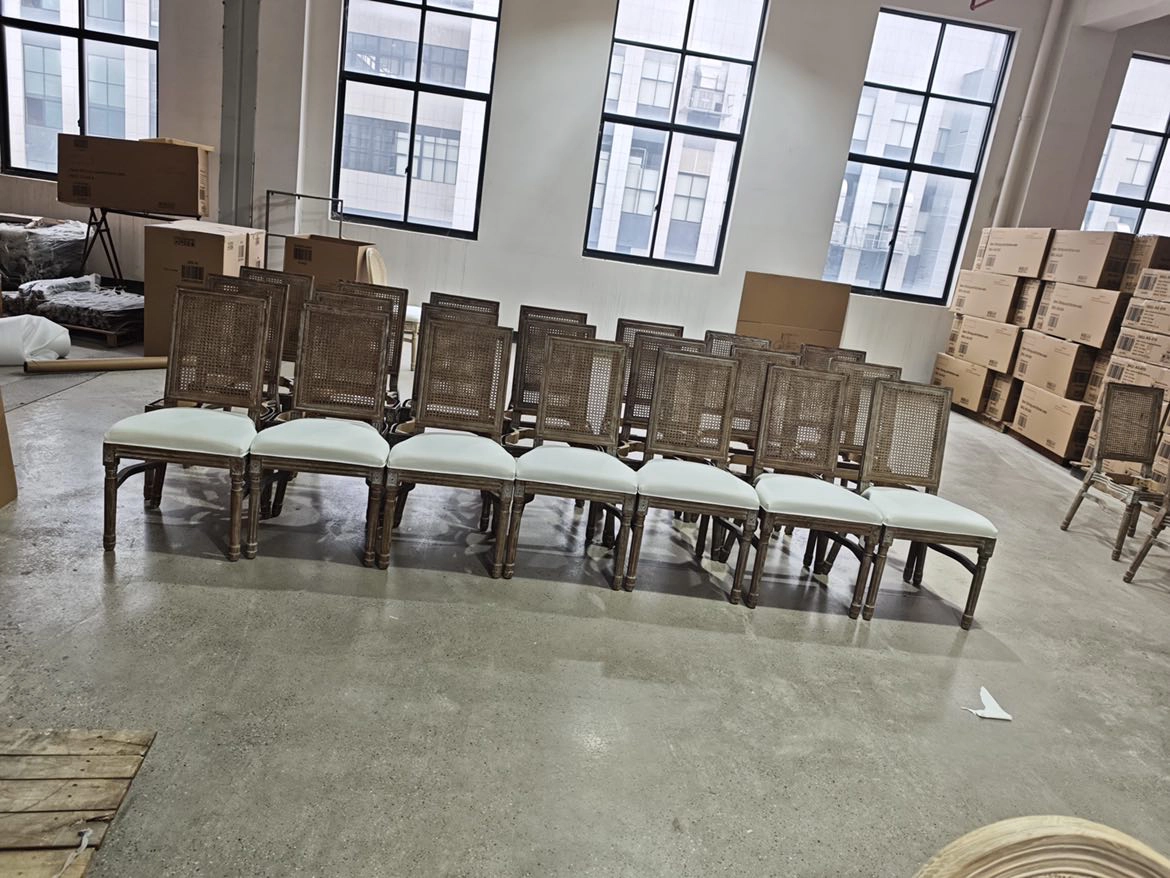
Evidence should be proportionate. A buyer does not need every factory record for every decision, and sensitive customer information should be redacted. However, a summary must remain traceable enough to show the product family, period, source record, definition, responsible owner, and how it supports the claimed available slot. Photographs alone rarely prove output; spreadsheets alone rarely prove that the named route exists. Combine records, observation, samples, and dated commitments where risk justifies it.
Name the owner, revision, date, and remaining assumption
ISO 22400-1 provides an industry-neutral framework for manufacturing-operations KPI concepts and terminology. It is not a furniture certification and its public page does not validate a supplier’s number. Its relevance here is disciplined definition: a capacity figure should state what is measured, how it is calculated, the period, source, owner, and context. See the ISO 22400-1 overview.
Use revision control for the demand file, process route, load snapshot, and capacity result. Record when the evidence was current and when it must be refreshed. List open assumptions separately: unapproved finishes, unconfirmed material dates, planned recruitment, an external processor not yet reserved, or a buyer forecast that may change. This prevents a conditional figure from becoming an unconditional promise when copied into a PO.
Choose approve, conditionally approve, request evidence, use an alternate route, or pause
A buyer decision should name the approved scope and next gate. Approve when the product route, available capacity, evidence, and assumptions support the defined requirement. Conditionally approve when specific evidence or actions can close before further release. Request more evidence when the claim may be credible but is not yet traceable. Use an alternate route only after its capability and controls are accepted. Pause when the risk cannot be bounded without a material change to quantity, timing, quality, or responsibility.
MrsWoods has more than 15 self-owned furniture factories and can allocate products according to category, material, process, and production fit. That network should not be converted into one universal output figure: the relevant evidence still depends on the order and assigned route. For a proposed programme, MrsWoods can review the SKU mix, forecast, materials, finishes, packaging, ramp-up stages, and the evidence needed for the capacity decision. Use the detailed guide to verify furniture factory capacity when the sourcing team is ready to test source records and site evidence.


What Red Flags Show That Capacity Is Not Controlled?
Evidence gaps that make a headline number unreliable
- One unlabelled monthly number: no product family, period, good-output definition, or calculation basis is provided.
- No current-load view: the factory describes maximum output but cannot show what is already committed during the proposed window.
- No product-route match: evidence comes from easier products, different finishes, or another facility without a justified comparison.
- No bottleneck: every department is described as having spare capacity, with no queue, constraint, changeover, or yield assumption.
- Opaque outsourcing: an external process is included in the promise but its identity, scope, capacity, quality evidence, or responsibility is unclear.
- Instant ramp-up: the supplier multiplies trial output without explaining additional people, materials, tooling, inspection, or packing resources.
- Missing end-of-line capacity: production is counted complete before required finishing, curing, inspection, testing, packing, or documentation is ready.
- Conflicting records: schedules, material dates, workshop evidence, and management statements do not describe the same scope or period.
- Late risk reporting: constraints are disclosed only after a milestone fails, leaving no time for a controlled alternative.
When to pause, recheck, or use an alternate production route
Pause further release when the evidence cannot distinguish a manageable assumption from a material delivery or quality risk. Recheck after the supplier provides a revised load snapshot, closes a critical material or staffing condition, demonstrates stable output, or completes corrective action. If the route changes, verify the new facility or processor against the same product, quality, documentation, and timing requirements.
Do not solve a capacity gap by silently compressing inspections, curing, testing, or approval time. Capacity and schedule are connected but not interchangeable. Once the route and available slot are credible, use the furniture manufacturing lead-time guide to define the quoted start, finish, assumptions, and evidence needed for the order schedule.
Frequently Asked Questions
What is furniture factory capacity?
Furniture factory capacity is the quantity and mix of conforming products that a defined production system can complete in a defined time under stated operating assumptions. Buyers should focus on demonstrated and available capacity for the assigned product route, not only installed equipment or a whole-factory maximum.
Is a factory’s monthly output enough to prove capacity?
No. Monthly output becomes useful only when the product family, SKU mix, time period, good-output definition, process route, outsourcing, staffing, operating calendar, and current commitments are known. A historical number may support the assessment, but it does not prove that the required slot remains available.
How does SKU mix affect furniture production capacity?
Different SKUs consume different materials, labour, machine time, finishing space, changeovers, inspection, and packing resources. A mixed programme may create more constraints than the same number of repeated units. Group products by shared process route and test the bottleneck for each period instead of treating every unit equally.
What evidence should buyers request before approving factory capacity?
Request evidence proportionate to the order: a controlled demand file, product-route map, historical good output for comparable work, current-load snapshot, critical-resource assumptions, material commitments, subcontractor scope, bottleneck calculation, quality and rework evidence, packing capacity, and a ramp-up plan. Each item should have a source, date, owner, and clear relationship to the decision.
Can outsourced production count towards factory capacity?
Yes, when the external scope is disclosed and the buyer can verify the provider’s capability, available capacity, quality controls, evidence, schedule, and responsibility. It should be shown separately from in-house capacity so that shared resources, transport between facilities, transfer approvals, and contingency risks are visible.
How should buyers evaluate ramp-up and peak-season supply reliability?
Use staged volumes and verify what changes at each step. Check additional material lots, staff, shifts, tooling, parallel routes, inspection, packing, factory closures, and competing commitments. Expand only after the agreed quality, output, documentation, and milestone evidence is stable; reopen approval if a critical assumption changes.
Conclusion. A reliable furniture factory capacity decision starts with the actual SKU mix and ends with a scoped, evidence-based approval. Buyers should separate theoretical potential from demonstrated output, deduct current commitments, map the bottleneck from materials through packing, and make subcontracting and ramp-up assumptions visible. The approved figure should name its period, source, owner, revision, conditions, and recheck trigger.
For an order-specific discussion, send MrsWoods the SKU and quantity forecast, target factory-ready windows, drawings or specifications, materials and finishes, packaging basis, required tests or inspections, expected ramp-up, and any peak-season or market constraints. MrsWoods can discuss product-to-factory fit, the evidence needed before release, and supply-continuity options through its furniture supply and custom development services.
