


Key Takeaways
- A lead-time number without boundaries is ambiguous. Define the scope, start trigger, finish event, time basis, assumptions, exclusions, and revision rule.
- Sample development and bulk production need separate clocks. Bulk timing should not appear to run while a required pre-production approval is still open.
- A short estimate is not automatically a reliable schedule. The buyer also needs order-specific evidence that the product, material, facility, quantity, and production slot were considered.
- Required date, initial estimate, agreed baseline, and current forecast are different dates. Mixing them hides change instead of managing it.
- Time can be recovered only through an explicit trade-off. Scope, sequence, materials, shipment waves, or routing may change; required tests, curing, inspections, and approvals should not simply disappear.
What Does a Furniture Manufacturing Lead-Time Quote Actually Cover?
A manufacturing lead-time quote should describe the elapsed working or calendar time between a named start trigger and a named finish event for a defined order. It should also state what is outside that window. Development, bulk production, inspection, packing, factory release, international transit, customs, and site delivery are related periods, but they are not interchangeable.
Test the statement before testing the number
Start by rewriting the supplier’s answer as one complete sentence: “For these SKUs and quantities, counted in these working or calendar days, the current estimate runs from this confirmed event to this documented finish event, assuming these conditions remain true.” If the quotation cannot support that sentence, the buyer is comparing an undefined number with a required date.
The Lead-Time Statement Test used in this article has seven fields: order scope, start trigger, finish event, time basis, assumptions, excluded time, and revision rule. It is an editorial buyer tool, not an ISO or ASCM checklist. Its purpose is to turn a loose answer into questions that can be confirmed in writing.

Separate the windows that buyers often combine
Development may include drawings, engineering review, material or finish samples, a prototype, testing, and approval. Bulk production may begin only after the applicable release conditions are met. Inspection and packing can sit inside or after the production estimate, depending on the supplier’s definition. Factory-ready, handed to a forwarder, loaded, arrived at port, cleared, delivered, and installed are different finish events.
If the project is still proving the design, use the separate guide to furniture sample development. If the issue is whether the commercial offer clearly states the timing trigger and delivery boundary, check the furniture quotation terms and exclusions. Neither page replaces an order-specific schedule.
Do not confuse speed with delivery reliability
The ASCM SCOR performance framework treats responsiveness and reliability as different performance attributes. Responsiveness concerns speed, while reliability concerns performing as expected, including delivery timing, quantity, and documentation. Applied to a furniture order, the fastest quoted cycle is not necessarily the strongest plan if scope, approvals, quality requirements, or evidence remain unresolved.
Why Is There No Single Standard Furniture Lead Time?
There is no defensible universal lead time for all furniture because the order is not defined by the product name alone. A repeat chair using an approved construction and available finish is a different planning problem from a new curved cabinet requiring engineering, tooling, matched veneer, special hardware, a new pack, and destination-specific testing.
The order conditions move the date
A factory should consider whether the design is new or repeated, how many SKUs and variations are included, the quantity by SKU, the current drawing revision, the approval status, and the availability of materials and hardware. Process sequence also matters. Machining, assembly, upholstery, finishing, drying or curing, testing, corrective work, inspection, and packing cannot always be compressed or run in parallel.
For this reason, tables that publish a single number for “custom furniture” create false comparability unless they also state the product type, order basis, start and end points, market, and date of the information. A useful estimate is conditional. It should become more precise as the product and release conditions become more precise.
Manufacturing scale still needs an order-specific route
MrsWoods owns more than 15 furniture factories, and different product categories may be assigned to different company-owned facilities. For a buyer, the useful question is not simply how many factories exist. It is which facility is relevant to the product and process, whether that route has been assessed for the current order, and what evidence supports the proposed slot. The factory count does not prove unlimited capacity or a promised date.
A credible estimate should therefore connect the product to the intended manufacturing route. The planned facility, material path, key processes, quantity, and current schedule need to make sense together. The separate guide to furniture factory capacity evidence examines that question in detail; this article uses routing only to judge the lead-time statement.
Mixed-SKU orders are controlled by compatibility, not an average
When an order contains dining tables, chairs, cabinets, upholstery, metal components, or several finishes, the items may not follow one production path. The earliest common factory-ready date may be controlled by the slowest approved item, a shared material, a late component, a common inspection, or the requirement to load everything together.
Averaging several lead times does not solve this. The buyer should identify whether the shipment must remain complete, whether certain SKUs can be released in waves, and which unresolved dependency currently controls the date. Detailed stage timing belongs in the companion guide to furniture lead time by project stage.
What Must Be Confirmed Before the Lead-Time Clock Starts?
The clock should start only when the agreed release conditions for that estimate are satisfied. Those conditions vary by project, but the supplier and buyer should be able to identify them. A deposit may be one condition, yet it does not automatically replace final drawings, approved materials, samples, labels, packaging, or other decisions that the factory needs before executing the order.
Build a written release gate
The release record should identify the purchase order or commercial authorization, any agreed payment trigger, the final drawing or specification revision, approved material and finish references, required sample status, quantity by SKU, packaging and labels, target-market test or document requirements, and the people authorized to close open questions. It should also list unresolved items rather than treating silence as approval.
The buyer does not need to impose one universal form. A controlled purchase order, approved specification pack, approval register, and dated schedule can work together. What matters is that the active documents agree and that both parties can reconstruct why the start date was accepted.
Keep the sample clock and the bulk clock separate
A development estimate may begin while drawings or sample details are still being worked out. A bulk estimate usually needs a more stable basis. If a required sample, finish panel, first piece, or test remains open, the schedule should say whether bulk work is blocked, partially released, or proceeding at an agreed risk. It should not quietly count those days as completed production.
This separation prevents two common disputes. The buyer avoids assuming that sample activity is consuming the bulk-production window, and the factory avoids being measured against a date that depended on approval the buyer had not yet supplied.
Record late inputs and their timing effect
The release gate should include a rule for delayed inputs. If approval is due on Monday but arrives on Friday, the new completion date should not be inferred from an old message. The responsible party, affected items, original assumption, actual confirmation date, and schedule impact should be recorded. A revised date may be necessary even when the physical production time has not changed.
The terminology used in ISO 22400-2 shows why time definitions need a reference basis: the standard describes reference time, planned time, time elements, and a time model for production orders in manufacturing operations management. It does not provide a furniture lead-time promise, and the 2014 edition is under revision. Its relevant lesson here is narrower: time-based performance cannot be interpreted safely when the underlying time model is unclear.
How Can Buyers Judge Whether a Lead-Time Estimate Is Credible?
A credible estimate is traceable to the current order and honest about what remains unknown. It does not need to predict every disruption. It does need to show the basis of the date, the evidence available now, the open conditions, and how the date will be revised when those conditions change.
Use four working states for the schedule
Indicative means the date is an early planning range based on incomplete scope. Conditional means the supplier has assessed a defined order, but named release conditions or inputs remain open. Released means the agreed start gate has been satisfied and the active baseline is identified. Revised means a later approved change or documented event has replaced the earlier baseline.
These are editorial working states for buyer communication. They are not terms defined by ISO or ASCM, and they do not create a contractual guarantee. Their value is practical: the buyer can stop treating every date in an email thread as equally current.

Keep four different dates visible
The required date is the buyer’s business need, such as warehouse receipt, store launch, site installation, or sales availability. The initial estimate is the supplier’s first timing response. The agreed baseline is the schedule accepted after scope and release conditions are sufficiently defined. The current forecast is the latest evidence-based expectation.
A project can be well controlled even when the forecast changes, provided the change is identified early, explained, evidenced, and acted on. Conversely, a project can look “on time” only because the required date, baseline, and forecast have been blended into one moving number.
Look for evidence tied to the real order
Useful evidence may include the planned product-to-facility route, material or supplier confirmation, quantity and SKU basis, approved revision, current production slot, milestone owners, and a dated schedule version. Generic workshop photographs can show that a facility exists. They do not prove that a particular SKU, material, or order is on the stated timeline.
The evidence should be proportionate to the decision. An early budgeting range will not carry the same documentation as a released bulk order. The mistake is not using an estimate; it is presenting an estimate with open conditions as if it were a fully released schedule.
Which Evidence Should Support the Schedule Before the PO Is Released?
Before purchase-order release, the buyer needs enough evidence to understand the schedule basis and remaining risk. That does not mean demanding every production record before the order exists. It means asking for the records that show the estimate was built from the actual product, quantity, approval status, material path, facility route, and required finish event.
Ask for a compact schedule basis pack
A practical pack can contain the SKU and quantity list, current specification revision, sample and finish status, material and hardware status, intended production facility or route, agreed start gate, milestone plan, working or calendar-day basis, finish event, assumptions, exclusions, and schedule revision date. The buyer should also know who can approve a change and how an unresolved condition will be escalated.
It is reasonable for sensitive capacity or supplier data to remain confidential. The answer is not to accept a date without support, but to agree on evidence that is specific enough to the order while protecting unrelated commercial information.
Use a traceable evidence chain during execution
In the confirmed MrsWoods process, the high-level evidence chain can include drawing confirmation, material confirmation, first-piece approval, in-process inspection, finished-product and packing inspection, and shipment confirmation. The exact checkpoints depend on the product and project. They are not presented as a universal factory checklist or as proof that every activity happens inside one facility.
Before a large production order is placed, MrsWoods’ procurement process includes an on-site review of the relevant factory and production conditions. Overseas buyers may request a remote view or visit the facilities in China, but remote viewing is not described as a substitute for the pre-order on-site assessment used in that procurement process. The broader guide to choosing a furniture manufacturer in China explains how factory evaluation fits the supplier decision.
Use collaboration to update risk, not just report lateness
A 2024 peer-reviewed furniture-industry case study on delay prediction and supplier selection used a real 3.5-year dataset and combined information from suppliers, customers, decision-makers, and information systems. Its specific model and results should not be generalized to every furniture factory. The relevant buyer lesson is that schedule risk improves when information and decisions are connected across stakeholders instead of being reviewed in isolated steps.
For a normal order, this may be much simpler than a predictive system. A dated approval register, material status, milestone evidence, issue owner, and revised forecast can already prevent a late input from remaining invisible until the promised finish date.
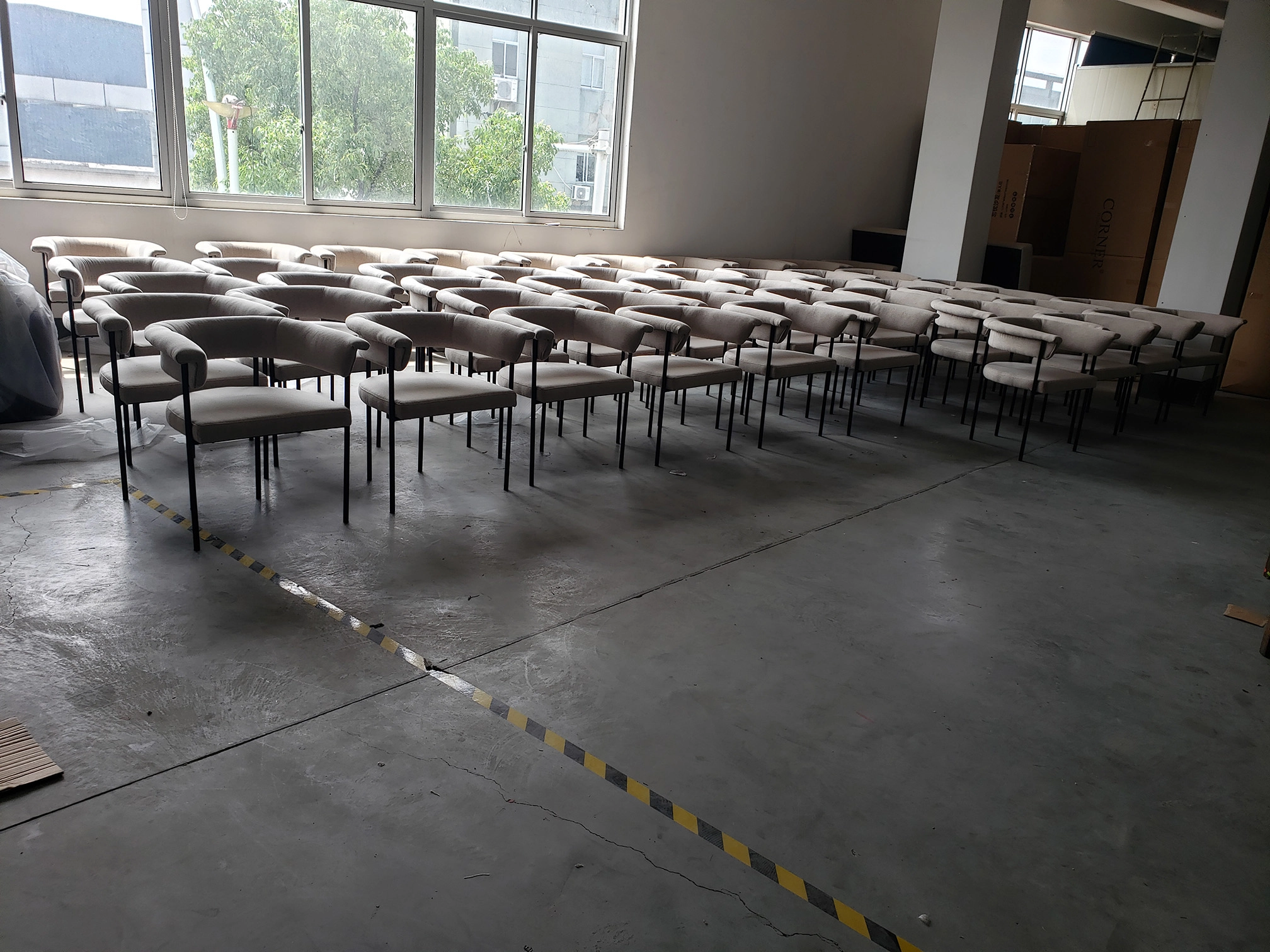
What Can Buyers Change When the Required Date Is Earlier Than the Credible Plan?
When the required date is earlier than the credible factory-ready date, the buyer and supplier need a decision, not a more optimistic label. Work backward from the business need, isolate manufacturing from logistics, identify the controlling dependency, and compare recovery options with their effects on quality, cost, evidence, inventory, freight, and coordination.
Start from the real required event
“Needed in June” is not a planning event. State whether the goods must be factory-ready, loaded, at the destination port, cleared, in the warehouse, delivered to a site, or installed. Add current freight, customs, local delivery, and installation time outside the manufacturing window unless the responsible party has explicitly included them.
Then compare the required factory-ready date with the released or conditional production plan. The companion guide to furniture production timelines and delay control covers milestone warnings and recovery after execution begins. At the quotation stage, the immediate task is to decide whether the order basis must change.
Choose an option and expose its trade-off
Possible options include freezing the design earlier, prioritizing critical SKUs, approving a technically verified alternative material, running genuinely independent work in parallel, splitting shipment waves, changing the pack or assembly strategy, or assigning the product to another suitable facility when that route is feasible. None of these options is automatically available, and each needs a fresh assessment.
A material substitution may affect appearance, performance, testing, price, or availability. Parallel work can increase rework exposure if upstream approval changes. A split shipment can protect a launch for priority items but increase freight, handling, customs, receiving, and inventory complexity. Changing facilities may require another capability, sample, quality, or schedule review.
Do not recover time by deleting evidence silently
Required sampling, testing, curing, inspection, or buyer approval should not disappear from the plan merely because the date is difficult. If the order changes, record the requester, date, affected SKUs, specification revision, price effect, timing effect, quality or compliance consequence, approval, and new schedule revision before execution.
When MrsWoods evaluates a proposed change, the relevant business, procurement, production, and quality functions consider its effect on price, lead time, inventory, manufacturability, and quality before the plan is updated in writing. Buyers seeking an order-specific review can use the custom furniture manufacturing support page to provide the information needed for that assessment.
Frequently Asked Questions
What is furniture manufacturing lead time?
Furniture manufacturing lead time is the elapsed working or calendar time between an agreed start trigger and an agreed finish event for a defined order. It is not automatically the same as sample-development time, shipping time, customs clearance, or site delivery. The quotation should state which periods are included.
When does a furniture factory’s quoted lead time start?
It starts at the event defined in the quotation or schedule. Depending on the project, that may require commercial authorization, an agreed payment event, final drawings, approved materials or finishes, sample approval, quantities, packaging, and other release conditions. The buyer should not assume that payment alone starts every order.
Does production lead time include sample development?
Only if the supplier explicitly includes it. Sample development and bulk production should normally be shown as separate windows because they have different inputs, approvals, and finish events. If bulk work begins before final sample approval, the released scope and accepted risk should be written down.
Does furniture manufacturing lead time include shipping?
Not necessarily. A manufacturing estimate may end at completed production, passed inspection, finished packing, factory release, or loading. International freight, customs, inland delivery, and installation should be planned separately unless the quote clearly includes those services and finish events.
Why do custom furniture lead-time estimates change?
They change when the design, quantity, SKU mix, material or hardware availability, sample status, testing, packaging, production route, capacity, approval timing, or other stated assumption changes. A change is manageable when its cause, affected scope, evidence, owner, and revised date are recorded.
What information should a buyer provide for a reliable lead-time estimate?
Provide the required warehouse, site, or launch date; destination; product list and quantity by SKU; current drawings and specifications; sample, material, and finish status; special hardware; testing and document requirements; packaging basis; and whether phased shipment is possible. Also identify who can approve open decisions.
A useful furniture production lead time does not promise certainty where the order is still undefined. It makes the current level of certainty visible. Buyers can then distinguish an early range from a conditional estimate, a released baseline, and a later forecast, while keeping the evidence and trade-offs attached to each change.
For an order-specific timing review, send MrsWoods the required date and destination, product list, quantity by SKU, current specification revision, sample and finish status, material or hardware constraints, testing and documentation needs, packing basis, and any acceptable shipment phases. The team can identify the relevant company-owned production route, unresolved start conditions, and the earliest factory-ready window that can be assessed without presenting logistics time as manufacturing time.
