

A credible answer connects three things: recent accepted output for comparable products, available time at the process that limits the order, and a schedule that accounts for current commitments. If one of those elements is missing, the capacity figure should remain an estimate rather than an approved production commitment.
This guide gives furniture brands, retailers, wholesalers, rental businesses, designers, and project buyers a practical verification route. It explains how to define the order, trace the process, test the evidence, assess controlled scaling, and use an on-site or remote review without treating one visit as a permanent guarantee.
Key Takeaways
- Define the order before testing capacity. SKU mix, batch size, finish, packaging, quality basis, and factory-ready dates determine which resources the order will use.
- Follow the product route to the constraint. The limiting step may be machining, sanding, finishing, curing, upholstery, inspection, or packing rather than the most visible machine.
- Ask for available-capacity evidence. Recent accepted output, current load, work in progress, material status, and the proposed production slot are more useful than an unsupported monthly maximum.
- Scale through defined stages. A successful sample or trial proves only the conditions under which it was made. Higher volume may introduce different people, suppliers, batches, tools, or facilities.
- Record the limits of every review. A factory visit, video call, photograph, or spreadsheet is evidence for a particular time and scope, not proof of all future capacity.
What Must Buyers Define Before They Verify Furniture Factory Capacity?
Start with an order profile that production staff can test. List the SKU, quantity by batch or shipment wave, construction, dimensions, material, finish family, hardware, inspection or testing needs, packaging format, and required factory-ready date. Mark new products, repeat products, and variants that share the same route. A statement such as “5,000 pieces this season” is too broad to reveal where the load will fall.
Define accepted output for the actual product mix
The capacity basis should be conforming, completed output rather than pieces started or gross machine cycles. Define what must be complete at the measurement point: inspection passed, required records closed, packaging finished, and goods ready for the agreed handover stage. If the supplier reports sets, cartons, containers, labour hours, machine hours, or finishing batches, check that the unit matches the buyer’s order.
Product mix changes the answer. A repeat oak side table with one standard finish does not consume the same resources as a mixed collection with stone, custom hardware, several colours, upholstery, or knock-down packing. Furniture factory production capacity is therefore meaningful only when it is tied to the relevant route, rather than presented as an average for the entire factory.
Keep installed, demonstrated, available, and committed capacity separate
Installed capacity describes potential under stated assumptions. Demonstrated capacity describes output the route has actually achieved. Available capacity considers other orders, maintenance, labour, material timing, changeovers, quality losses, and other known demands. Committed capacity is the portion the supplier agrees to reserve for the buyer. These are useful procurement definitions, not universal ISO categories.
ISO 22400-1 provides an industry-neutral framework for manufacturing-operations KPI concepts and terminology. It does not certify a furniture factory or validate a supplier’s capacity claim. Its practical relevance is definition discipline: the measure, calculation basis, period, source, owner, and context should be clear. See the ISO 22400-1 overview.
For the broader decision framework that connects capacity, capability, continuity, and approval, use the furniture factory capacity and reliability guide. The remaining sections here focus on the evidence needed for one order or programme.
How Do You Map the Product Route and Find the Real Bottleneck?
Follow one representative SKU from material release to packing
Choose a representative SKU and trace every required step. Depending on the product, the route may include incoming material checks, cutting, machining, component preparation, moisture conditioning, assembly, sanding, surface preparation, finishing, curing, upholstery, hardware fitting, inspection, testing, packing, and factory handover. Add any external processing and identify the record that releases each stage.
The route should show shared resources. Several product families may use the same spray booth, specialist team, jig, curing area, inspection station, or packing line even when their earlier steps are separate. The buyer needs to know what else competes for the same resource during the proposed window.
Test the limiting process instead of averaging the factory
The bottleneck is the step that limits complete, accepted output under the current product mix and operating conditions. Review its available hours, realistic processing rate, current queue, changeover pattern, normal downtime, yield, rework, and staffing. If that step changes after a trial, the original capacity conclusion may no longer apply.
Furniture production bottlenecks can move. A machining centre may limit one collection, while finishing, curing, upholstery, final inspection, or export packing limits another. Adding capacity upstream can simply move the queue to the next constrained step. The route should therefore be reviewed as a connected flow.
NIST MEP describes supply-chain work that includes mapping, risk assessment, process improvement, bottleneck reduction, demand visibility, and supplier metrics. Its public guidance is not a furniture capacity standard, but it supports checking the full supply path instead of treating one resource in isolation. See the NIST supply-chain management overview.

What Evidence Shows Available Capacity for the Actual Order?
A furniture supplier capacity assessment should not depend on one document. The buyer should combine records that answer different parts of the question and keep each record’s limitation visible. Confidential customer names and commercial details can be redacted, but the product family, period, quantity basis, production stage, and source should remain traceable.
Compare recent accepted output for comparable products
Request recent good-output or completed-order records for a comparable product route. Check the product type, complexity, finish, batch size, staffing, shift pattern, yield basis, and whether external work was included. A historic peak may demonstrate that the route once achieved a level of output, but it does not prove that the same capacity is open now.
Look for continuity rather than one impressive period. A check sheet or simple trend view can help reveal repeated stoppages, rework concentration, or unstable output that a monthly total hides. NIST’s process-control handbook lists tools such as check sheets, Pareto charts, cause-and-effect diagrams, and control charts. These are general analysis methods, not mandatory furniture audit requirements. See NIST process-control techniques.
Review current commitments and the proposed production slot
Ask for a dated load view covering the required period. It should show the relevant process or line, working calendar, released orders, reserved work, planned maintenance, major trials, and the proposed slot for the buyer’s order. The factory does not need to disclose other customers’ identities. It should be able to show whether the constraint has unallocated time and which assumptions could remove that availability.
Check the start condition as carefully as the production slot. Drawings, samples, colour standards, packaging, labels, testing requirements, and material releases may need approval before the slot can be used. Record the latest approval dates and what happens if the buyer or supplier misses them.
Cross-check work in progress, material readiness, quality, and packing
Work in progress can support the load view when its status matches physical material and route records. Compare a small sample of production orders, batch cards, WIP locations, inspection holds, rework, and packing status. The aim is not to count everything on the floor. It is to test whether the schedule, records, and physical flow tell the same story.
Material readiness also limits capacity. Confirm the critical timber, veneer, stone, fabric, foam, finish, hardware, cartons, and protective materials for the order. A purchase request is weaker evidence than accepted stock or a supplier commitment aligned with the production slot. Identify the latest date at which a shortage would force the plan to change.

How Should Buyers Test Scaling from Trial Order to Repeat Volume?
Use the trial to validate the route and assumptions
Buyers trying to scale furniture production should use the trial to test more than product appearance. Record the material source, approved specification, actual route, people and equipment used, processing and waiting time, quality findings, rework, packing result, and final accepted quantity. Compare these results with the assumptions used in the capacity proposal.
One successful trial does not establish repeat volume if the next stage uses new operators, another material lot, parallel tooling, an additional processor, or a different packing method. The supplier should state what changes at each volume step and which evidence must be accepted before the next release.
Increase volume through defined release stages
A controlled ramp may move from sample approval to a trial batch, a limited commercial batch, and then the planned repeat volume. The exact stages depend on the product and risk. Each stage should have an accepted output basis, open-issue limit, material confirmation, quality gate, packing gate, production milestone, and named decision owner.
If output rises only by shortening curing, reducing inspection, carrying unresolved rework, or compressing packing, the factory has not demonstrated acceptable scaling. Capacity and lead time are related, but they answer different questions. Once the route and slot are credible, the furniture production lead-time guide can be used to define the schedule and its assumptions.
Which Dependencies Can Reduce Available Furniture Production Capacity?
Check skilled labour, materials, tooling, and maintenance
Some capacity depends on scarce people rather than total headcount. Ask which operations require qualified finishers, upholsterers, programmers, inspectors, or packing staff and whether those people are available during the proposed run. Additional shifts may require recruitment, training, supervision, and stable first-output checks before they count as usable capacity.
Tooling, jigs, templates, maintenance, and spare parts can also constrain furniture manufacturing capacity planning. A machine may be present but unavailable, shared, awaiting maintenance, or unsuitable for the exact component. Treat planned purchases and future hiring as actions with dates and owners, not as capacity already available.
Clarify external processes and backup routes
Identify any external machining, metalwork, stonework, coating, upholstery, testing, or packaging process. Record who controls the specification, schedule, incoming check, outgoing evidence, and corrective action. An external process can support the order, but its capacity should not be counted until the provider, timing, responsibility, and approval basis are clear.
A backup route needs the same review. Product capability, tooling, material access, sample status, current load, quality controls, documentation, and transfer time determine whether it is usable. The detailed guide to in-house and outsourced furniture production covers production ownership, multi-SKU allocation, peak-season planning, and continuity in more depth.
What Should Buyers Check During an On-Site or Remote Capacity Review?
Request the evidence before the review
Useful furniture factory audit questions should follow the order and its proposed route. Send the order profile and evidence request in advance. Ask for the proposed route, current load view, recent comparable output, material status, bottleneck basis, external-process scope, ramp plan, and open assumptions. This lets the review follow unanswered questions instead of becoming a general factory tour.
Follow one SKU and compare records with the physical flow
During an on-site review, select a representative SKU or live batch and follow its route. Compare the planned operation, workstation, WIP status, inspection point, and packing requirement with the records already supplied. Ask how the constraint is scheduled, how changeovers are handled, what current work is ahead of the order, and what evidence will show that the slot is protected.
A remote review can support preliminary screening and project discussion. Ask for a live walkthrough around the same route, with current date and location context, rather than a prepared promotional video. Remote viewing cannot fully confirm records, measure all queues, or replace an appropriate on-site or independent audit when the risk requires one.
Record the scope, date, limits, and next decision
Write down what was checked, which evidence was sampled, who provided it, the date, the products and periods covered, and what remains open. The result may be proceed to a defined next stage, proceed with conditions, request further evidence, reduce or phase the quantity, use another route, or pause. Reopen the decision when a critical assumption changes.
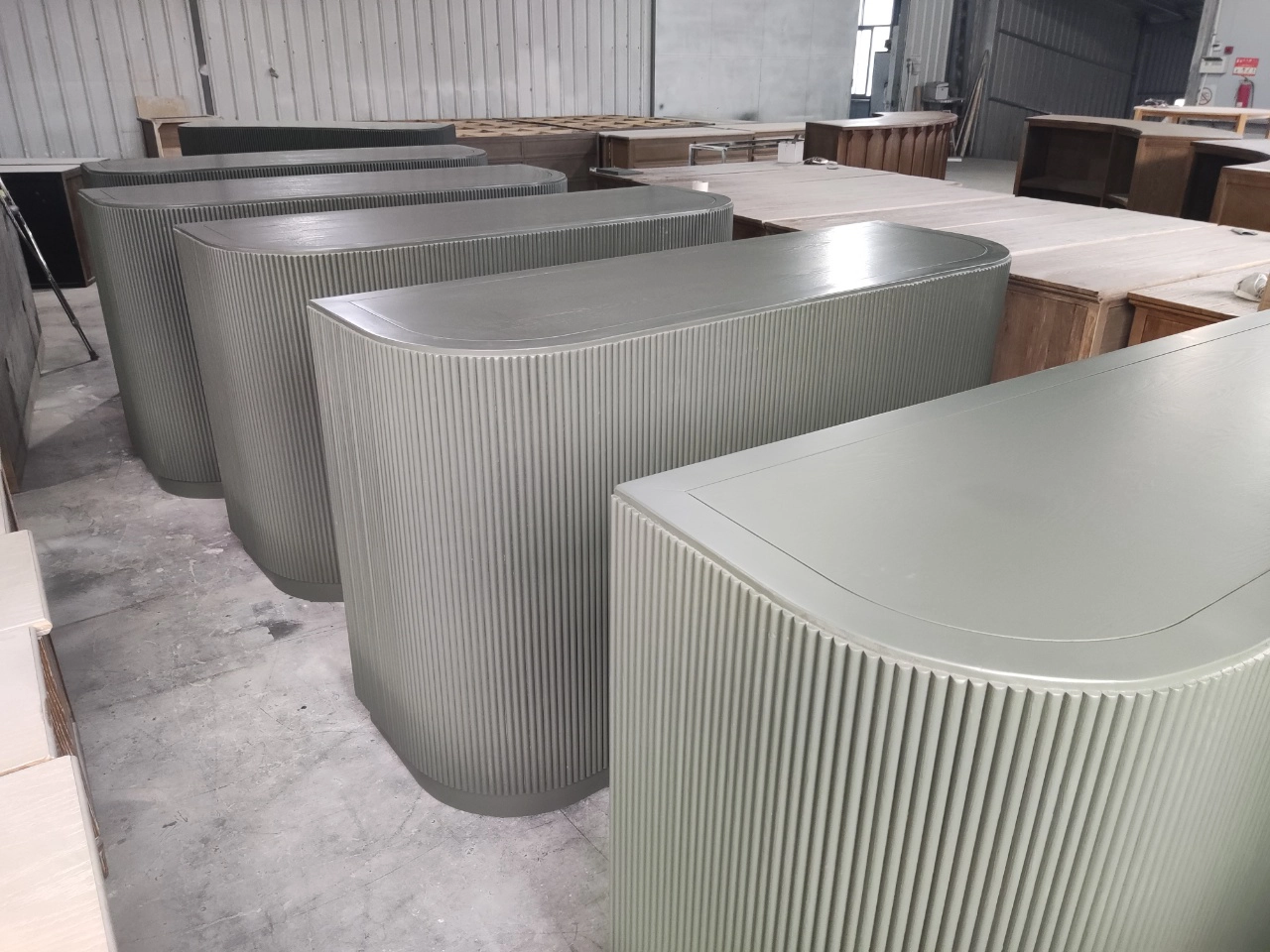
MrsWoods has more than 15 self-owned furniture factories and assigns products according to category, material, process, and production fit. That network should not be converted into one universal output figure. Before relevant factories take a bulk production order, MrsWoods reviews production conditions on site. Overseas buyers can also request a remote viewing or visit facilities in China, while recognising that a remote view is not a substitute for MrsWoods’ own on-site production review.
Frequently Asked Questions
How can buyers verify a furniture factory’s real capacity?
Define the actual SKU mix and delivery window, map the production route, find the limiting process, and compare recent accepted output with current commitments and material status. Confirm the proposed slot through dated records and, where appropriate, an on-site or live remote review.
What are common furniture production bottlenecks?
Common bottlenecks include specialised machining, sanding, finishing, curing, upholstery, skilled labour, inspection, and export packing. The limiting step changes with product construction, finish, batch size, SKU mix, current queues, and available people.
Does more machinery always mean greater furniture production capacity?
No. Additional machines increase usable output only when materials, trained operators, downstream processes, quality control, maintenance, and packing can support them. A machine count does not show the current load or capacity already committed to other work.
How should a supplier scale from a trial order to repeat volume?
The supplier should increase volume in defined stages and show that accepted output, quality findings, rework, material supply, packing, and production milestones remain controlled. Any new people, tools, suppliers, processors, or facilities should be identified and approved before they support the higher-volume claim.
Can a remote factory tour prove available production capacity?
A live remote review can support preliminary verification, but it cannot prove every record, queue, commitment, or future condition. Use it with dated documents and follow-up evidence. Arrange an on-site or independent audit when the order value, complexity, or unresolved risk justifies it.
A defensible capacity decision starts with the order, follows the product route, tests the bottleneck, and states what remains available after current commitments. It should also explain how the supplier will prove the next volume stage without weakening quality or schedule controls.
If you need to verify furniture factory capacity for a furniture programme, send MrsWoods the SKU list, target quantities, batch requirements, drawings or reference images, materials and finishes, packaging basis, inspection or testing needs, and delivery window. The team can identify the relevant production route, evidence to review, and conditions that need verification before volume is released. For the wider supplier decision, see the guide to choosing a furniture manufacturer in China.
