
Oak veneer furniture can use genuine oak grain across broad panels, coordinated doors and curved details. Its quality is not determined by the word veneer alone. Buyers need to inspect the face selection, substrate, bond, edges and finish, then confirm that the approved appearance can be repeated across production.
This guide goes beyond the basic solid oak vs oak veneer furniture decision. It focuses on what makes a veneered piece convincing up close, where problems often appear and how a B2B buyer can specify the result.
Key Takeaways
- Genuine oak veneer is real wood, but it covers a core whose construction must be named.
- Grain matching across adjacent panels should be approved as a complete visual layout, not one door at a time.
- Rounded edges and curves demand a suitable veneer, radius, core, bond and finish; a flat-face photo cannot prove the detail.
- Sanding and repair options depend on the actual veneer thickness and finish, so avoid general promises that every face can be refinished.
- A retained full-size sample and clear acceptance range help protect quality across repeat orders.
What Makes a Good Oak Veneer Surface?
A good veneer surface starts with an appropriate oak face and a suitable product design. The visible grain should match the intended appearance, the panel should be properly bonded, and its edge should be as carefully resolved as its face. A fine-looking veneer on an unsuitable core or with a poorly finished edge is not a high-quality result.
The Decorative Hardwoods Association’s veneer resource explains that decorative veneer is a thin sheet of genuine hardwood. The face may show natural color and grain variation. Quality control therefore requires both acceptance of real wood character and a clear definition of which variation is suitable for the collection.
Inspect the panel in the light and position in which the customer will see it. A sample viewed flat on a bench may hide a seam that becomes obvious when a cabinet is upright. A photograph can help record a decision, but a physical reference is stronger for color, texture and edge feel.
Veneer Selection and Grain Matching
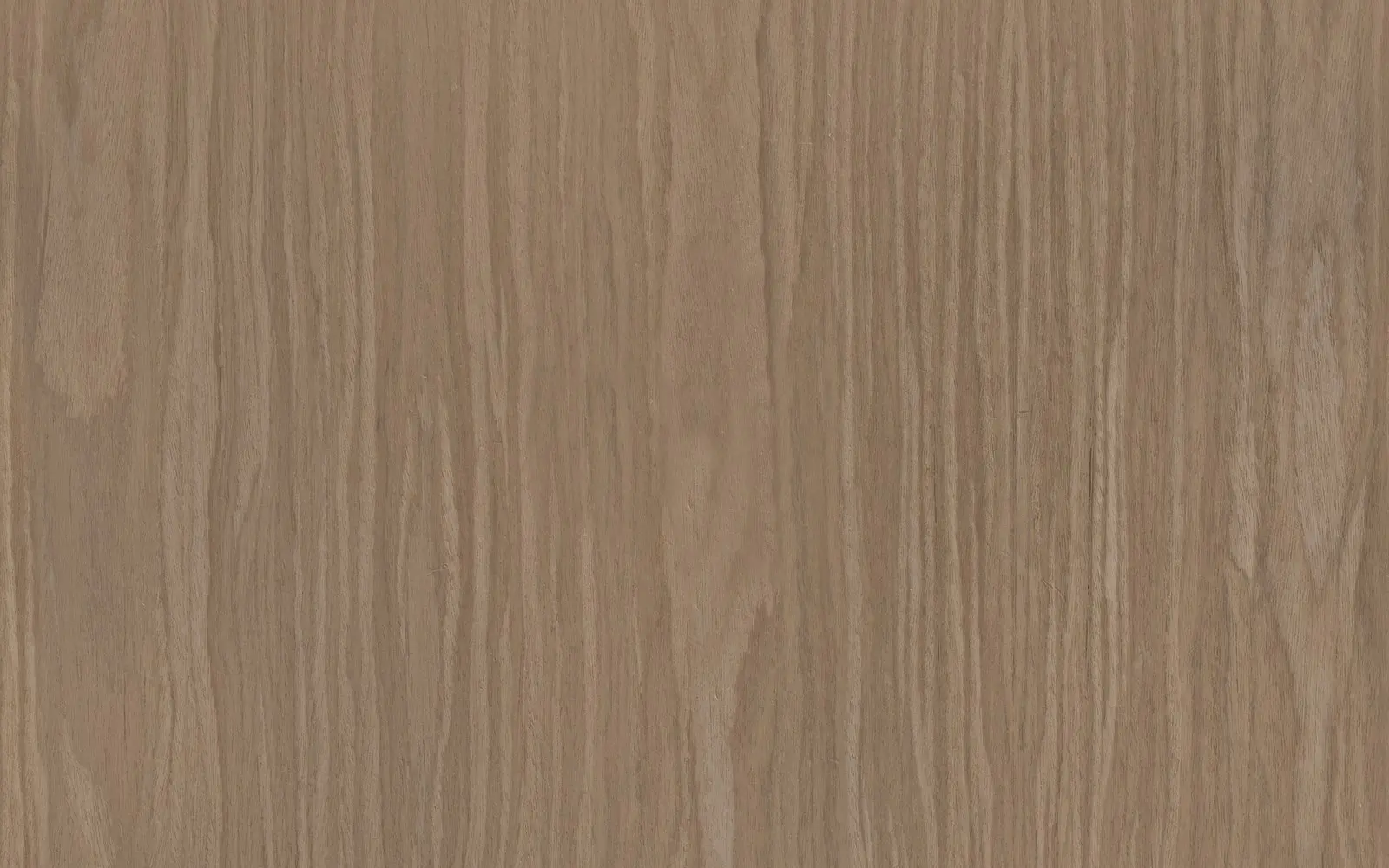
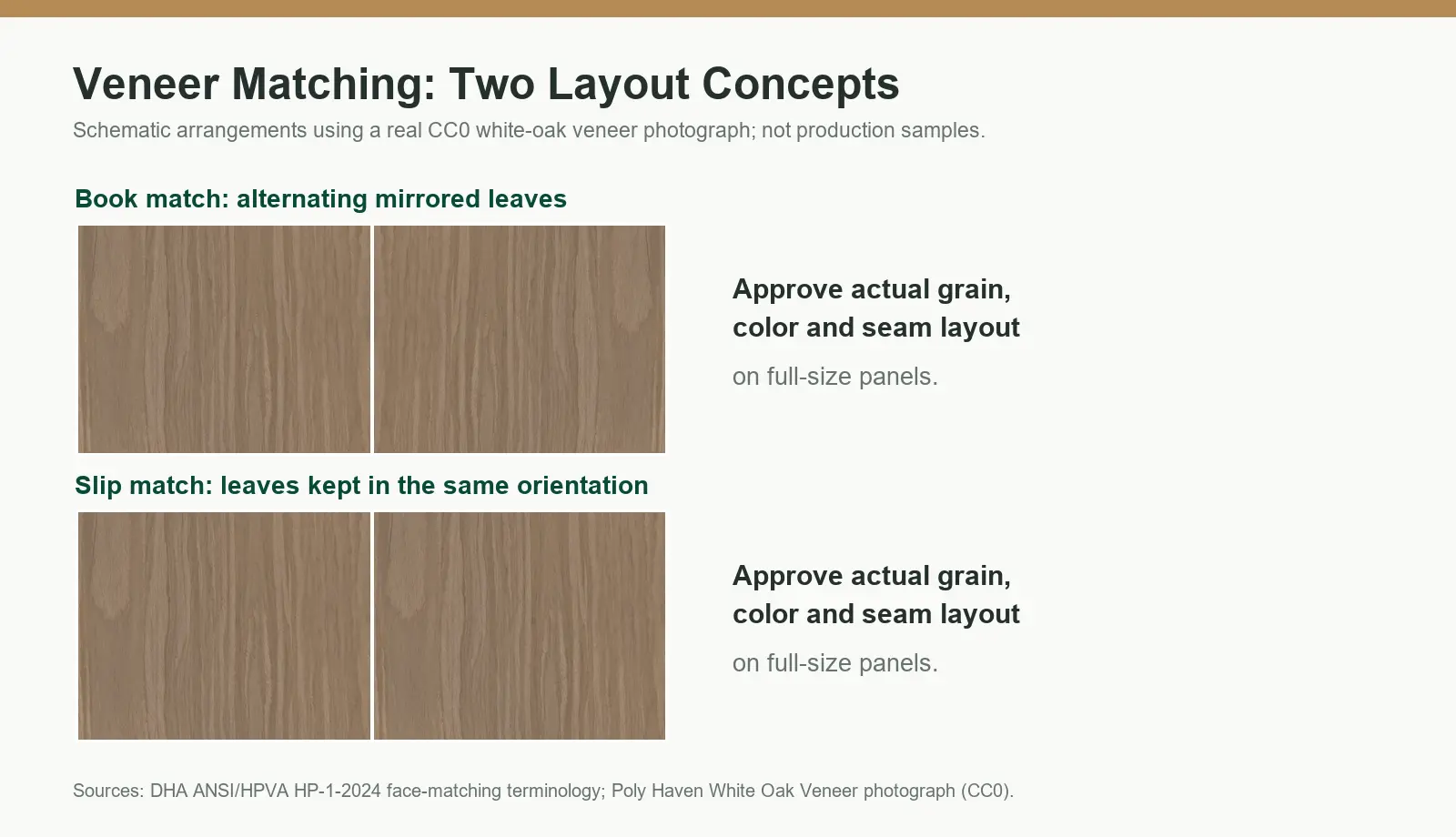
Veneer leaves can be arranged in different sequences and patterns. The chosen layout changes the rhythm of the grain across a broad face. A book-matched or slip-matched appearance may suit one design, while a quieter sequence may suit another. The important point is not to name a pattern for its own sake, but to approve the visual result and confirm it can be supplied again.
The ANSI/HPVA HP-1-2024 hardwood and decorative plywood standard describes face matching and oak veneer face grades for the panel products within its scope. It is a technical reference for those materials, not proof that a finished MrsWoods cabinet conforms unless its panels and production records are actually checked against the relevant requirements.
For a sideboard, lay all doors and drawer fronts together before approving the veneer. Agree on grain direction, sequence, sapwood allowance, knots, color range and whether strong ray figure is desired. If the furniture is sold as a coordinated collection, compare the sideboard with the table and other storage pieces. The approval should cover the whole composition.
Substrates and Stability
The visible oak is only one part of a veneered component. The substrate may be hardwood plywood, MDF, particleboard or another specified core. These products have different structures and must be chosen for the component’s size, fastening, edge profile, environment and intended use. The USDA Wood Handbook chapter on wood-based composites explains how veneers, fibers and particles are used in distinct panel products.
Ask whether the panel is balanced, how its back is treated and what supports or fasteners will be attached. A core appropriate for a broad decorative door may not be suitable for every shaped or heavily loaded part. A dense panel may also be heavier than expected. Do not assume that veneering alone makes a component light or immune to humidity.
For U.S.-bound products made with regulated composite wood panels, the EPA formaldehyde standards for composite wood products may be relevant. The rule covers specified categories including hardwood plywood, MDF and particleboard. Whether a particular panel and finished good fall within the requirements must be checked for the actual materials and market; “oak veneer” by itself is not a compliance certificate.
Veneering Flat Panels
A flat panel may look straightforward, but success depends on selecting the face, preparing the core, applying a suitable adhesive and pressing the assembly under controlled conditions. The surface should be checked for bubbles, telegraphing, open seams, contamination and uneven thickness before finishing.
The USDA Wood Adhesives chapter explains the importance of surface condition and bonding process in wood products. It does not prescribe one adhesive as universally best for every furniture substrate. Buyers should focus on the agreed material specification, sample performance and production checks appropriate to the proposed product.
For wide cabinet fronts, inspect several panels from the same production run. Do they remain visually coordinated after trimming and finishing? Does the grain continue across the intended sequence? Are face and edge color compatible? A one-off showroom panel cannot establish repeat-order consistency unless the supplier records how the face was selected and approved.
Veneering Rounded and Curved Edges
Curves can be a distinctive feature of oak veneer furniture, but they are less forgiving than flat faces. The veneer must follow the proposed radius without unacceptable cracking, lifting, distortion or an awkward seam. The edge construction must also protect the core and give the touch and visual transition the design requires.
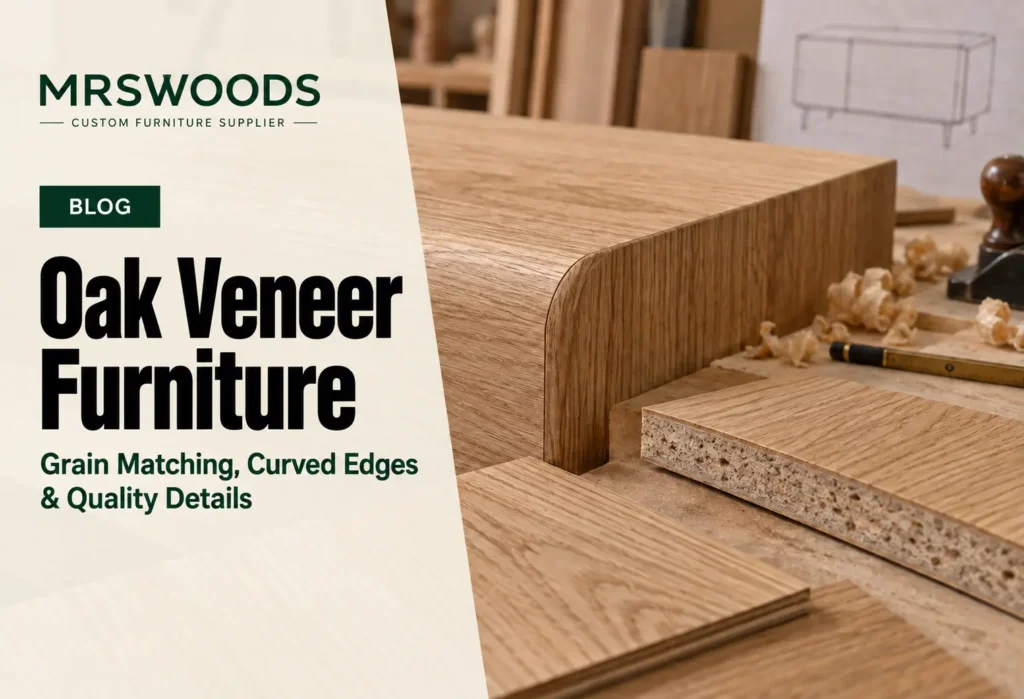
Ask for a full-size edge sample at the tightest radius, not a photograph of a large flat panel. View it from the front, side and underside. Run a hand over the transition and check the grain direction around the curve. An edge that appears seamless from one angle may reveal a join or color difference from another.
The feasible detail depends on veneer thickness, cut, substrate shape, pressing method, adhesive and finish. This is why “we can veneer any curve” is not a useful specification. Agree on the particular radius, edge profile, visible seam allowance and sample approval before placing the order. MrsWoods’ custom furniture development services can turn a reference image or drawing into a sample for review.
Adhesive and Pressing Considerations
Bond quality cannot be judged by the outer color alone. Poor substrate preparation, unsuitable adhesive handling or inconsistent pressing can create a surface that later shows bubbles, lifted edges or open seams. These symptoms have several possible causes, so inspection should include both the affected product and the manufacturing record.
The USDA wood-bonding reference provides the underlying principles: bonding depends on the materials, surfaces, process and intended exposure. The buyer need not dictate every process parameter, but should agree on the substrate, sample, visible quality and any tests required for the order.
If a supplier changes the veneer source, core or adhesive during production, the approved sample may no longer represent the product. Require change approval when a substitution could affect appearance or performance. For repeat orders, retain dated reference pieces and clear batch identification.
Sanding and Finishing Thin Veneer
Thin veneer leaves less material available for sanding than a thick solid component. This makes surface preparation and repair strategy important. A supplier cannot promise that every veneered face can be repeatedly sanded and refinished without knowing the actual face thickness, substrate and finish.
The finish should be sampled on the specified veneer, not only on a solid-oak board. Stain can emphasize grain, seams or preparation marks; a clear coating can change sheen and how a face reads beside a solid-oak edge. For a collection, approve the veneered face and adjacent solid components together.
Oak furniture finishes belong in their own selection process: color, sheen, cleanability and maintenance must fit the product’s intended use. Here, the additional question is whether the veneer face and its edges can receive that finish consistently without sanding through or revealing the core.
Common Veneer Defects
Buyers should look for raised or open seams, bubbles, patches that do not match the agreed appearance, visible glue marks, damaged corners, exposed core, veneer lifting and finish irregularity. Some natural grain or color variation is normal; whether it is acceptable depends on the approved range, not a blanket rule that every leaf must look identical.
Check defects at the distances and lighting relevant to the product, then inspect close details by hand. A dark finish may hide one kind of issue while making an uneven edge more visible. A very light finish can reveal color differences across adjoining panels. Agree on the inspection method before a dispute occurs.
A problem seen after delivery may also involve shipping damage, unsuitable cleaning or service conditions. Review the sample, production photos and packaging record before assigning a cause. Oak furniture quality is a whole-product question, even when the defect is first noticed on the face.
What Buyers Should Look for Up Close
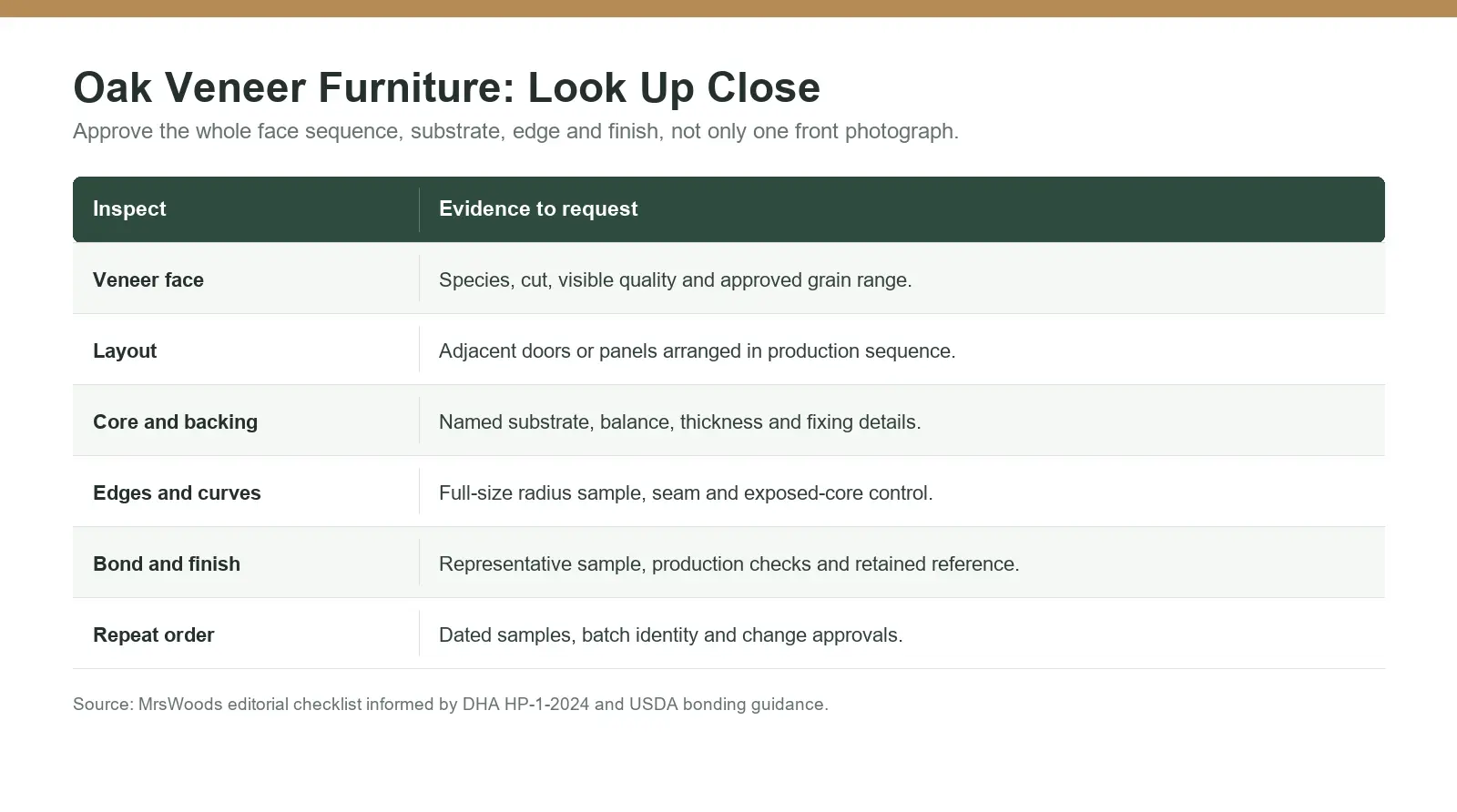
Begin with the material schedule: identify the oak veneer, core, backing, edge and finish. Then inspect a representative full-size sample and several production pieces. Compare adjacent faces, grain flow, seam placement and color under agreed lighting. Check the edge from every visible angle, especially around handles, curves and corners.
Next, confirm the product requirements beyond appearance. Open doors and drawers, check hardware fixing into the proposed substrate, review packaging and request any product-specific tests or compliance documents required by the destination market. A veneer grade describes one material aspect; it does not certify the complete cabinet or table.
The MrsWoods product collection can help buyers identify the furniture types they want to develop. For a specific oak-veneer project, send MrsWoods reference images, drawings, target dimensions, desired grain layout, finish, quantity and destination market. The team can then review material options and a physical sample before production.
Frequently Asked Questions
Is oak veneer furniture made of real wood?
Genuine oak veneer is real wood on the visible face. The core may be another specified material, which should be identified in the product documents.
Does veneer matching mean every door will look identical?
No. Matching creates an intentional layout, but natural wood still varies. Approve a representative arrangement and an acceptable range.
Can a curved oak-veneer edge be seamless?
Some designs can create a very clean visual transition, but the feasible seam and radius depend on material and process. Approve a full-size sample rather than a general promise.
Can oak veneer always be sanded and refinished?
No. This depends on veneer thickness, finish and the damage involved. Confirm the actual product construction and maintenance guidance.
Conclusion
The best oak veneer furniture is specified and inspected as a complete assembly. Genuine oak grain can create convincing broad faces and carefully coordinated curves, but the core, bond, edge and finish determine whether the product meets its brief.
Approve the whole layout, inspect close details and retain a physical reference for repeat orders. That gives buyers a stronger basis for judging veneer quality than either dismissing it as “not real wood” or accepting a polished front-view photograph as sufficient proof.
