

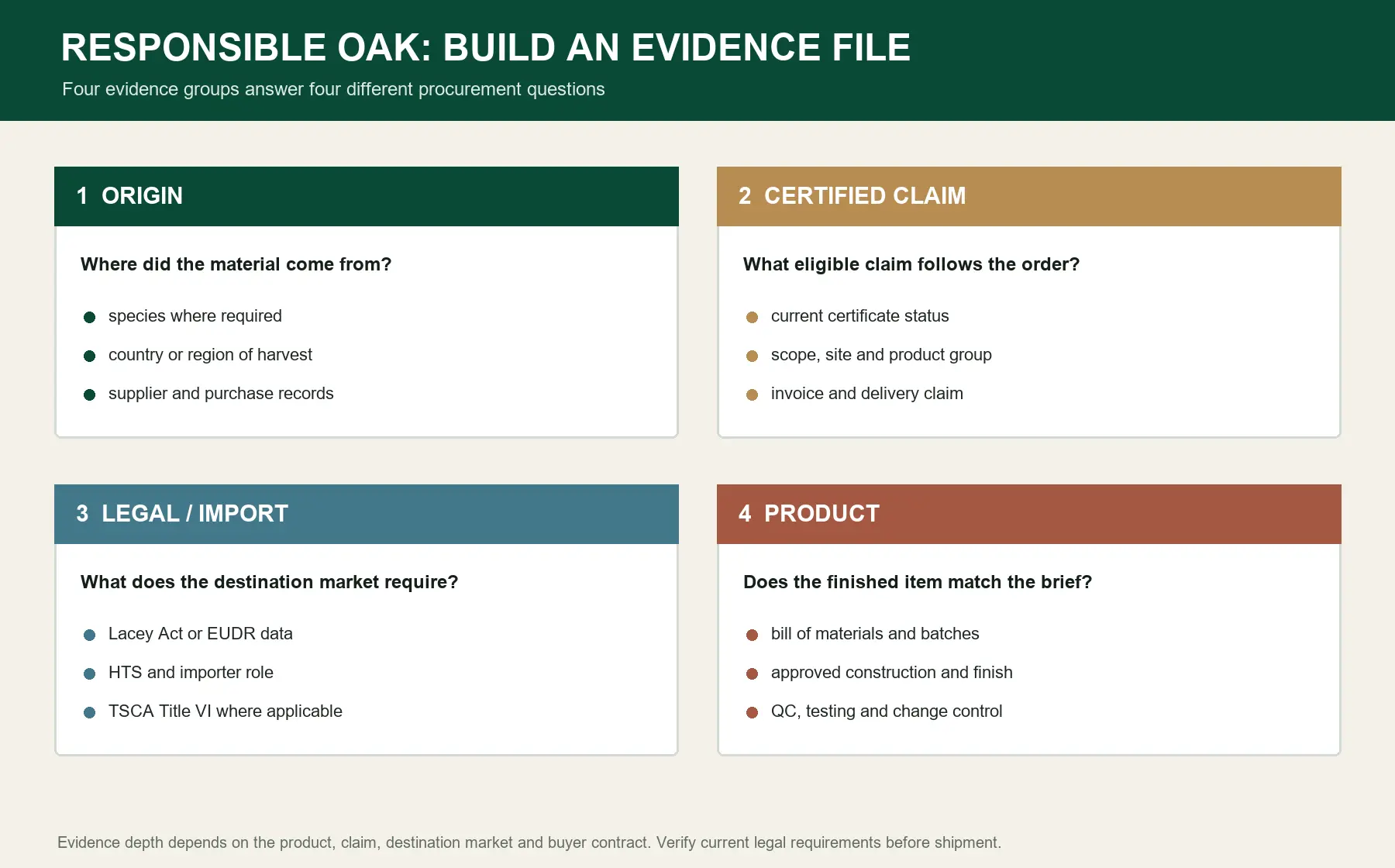
Credible sustainable oak furniture sourcing requires more than a natural finish, a green logo or a supplier statement. Buyers need evidence that connects the forest-based material to a valid sourcing claim, a documented supply chain, applicable import rules and the exact furniture order being purchased.
Certification can strengthen that evidence, but no single certificate proves every aspect of a product. A practical review separates forest management, chain of custody, material legality, composite-panel compliance, product quality and durability instead of treating them as one claim.
This distinction builds on the broader advantages and disadvantages of oak wood. Oak can be an effective furniture material, but responsible procurement depends on what is specified, documented and verified for each project.
Key Takeaways
- Sustainable oak furniture is a procurement claim that should be supported by origin, certification or risk-control evidence, supply-chain records and market-specific compliance.
- Forest management certification applies at the forest level; chain of custody controls how eligible material and claims move through processing, manufacturing and trade.
- An FSC certificate should be checked for status, scope, sites, product groups and the exact claim shown on sales documents. A logo or certificate image alone is not enough.
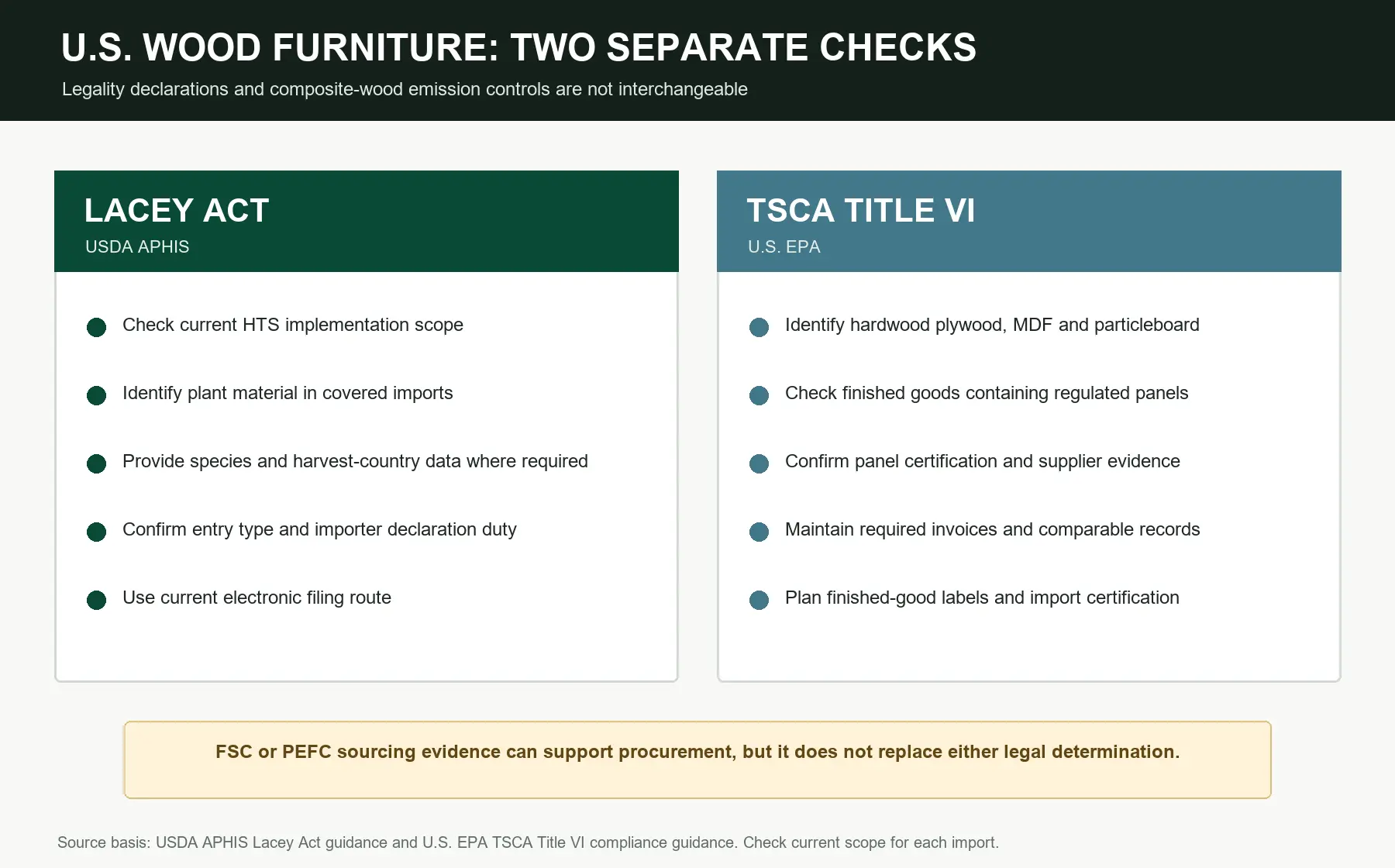
- FSC sourcing evidence does not replace product-quality testing, species specifications, U.S. Lacey Act declarations, EU due diligence or TSCA Title VI requirements for regulated composite wood.
- Durability can support a longer useful life, but it must be designed and verified through material choice, construction, finish, repairability and quality control.
What Does “Sustainable Oak” Actually Mean?
There is no useful one-line definition that covers every oak product, market and claim. For B2B procurement, responsible wood sourcing is better treated as a set of verifiable decisions.
First, the oak should come from a legal and clearly identified source. Second, any certification claim should remain valid through the relevant supply chain. Third, the furniture should meet the material, chemical and import requirements of its destination market. Finally, the product should be designed and made for its intended service life rather than relying on the word “sustainable” as a substitute for performance.
Useful evidence may include:
- the commercial and scientific name of the wood where required;
- country or region of harvest when required by the buyer or regulation;
- supplier and purchase records for timber, veneer and panels;
- a valid certification code and claim on transaction documents;
- batch, lot or production references that connect inputs with the order;
- composite-panel declarations and labels for regulated markets;
- approved material, construction, finish and quality specifications.
By contrast, an oak colour, leaf motif, recycled-looking carton or general environmental policy does not verify the source of the wood in a shipment.
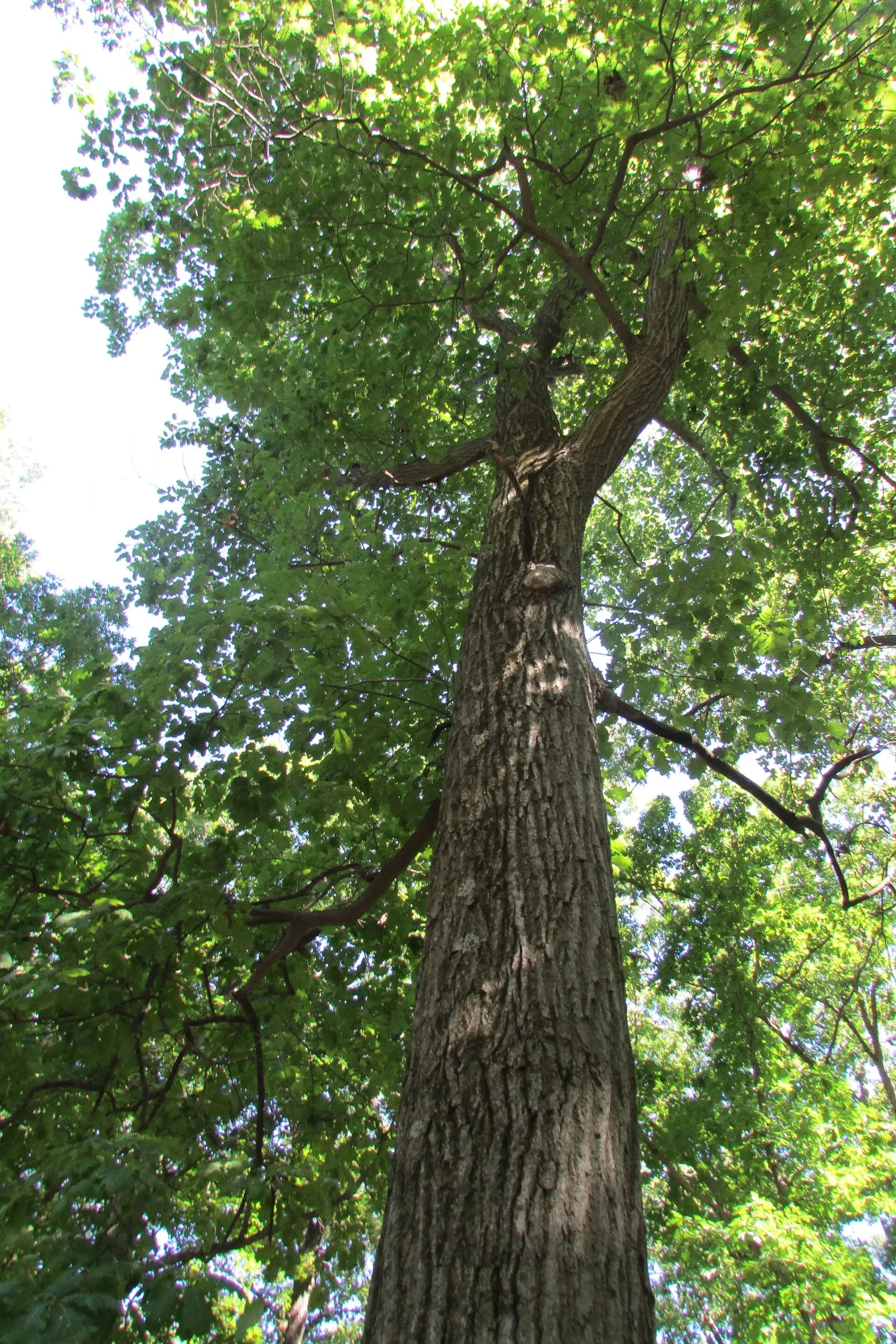
The central question is therefore not simply, “Is oak renewable?” It is, “What evidence supports this material, this claim and this finished order?” That is the working basis for sustainable furniture sourcing.
Forest Management vs Chain of Custody
Forest management and chain of custody answer different questions.
Forest management certification evaluates a defined forest operation against a forestry standard. Chain of custody, usually shortened to CoC, controls eligible material and claims as products move through organizations that take ownership, process, manufacture or distribute them.
The FSC explanation of chain of custody certification describes CoC as the system used to verify that qualifying forest-based materials are credibly carried from the forest through the path to finished goods. Independent certification bodies assess organizations against the applicable requirements.
PEFC operates a separate certification system. Its 2025 chain of custody guidance explains purchasing, tracking, manufacturing, sale, recordkeeping and due-diligence controls for certified forest and tree-based material. Buyers should define which certification system and claim their market or customer accepts instead of using “certified” as an undefined adjective.
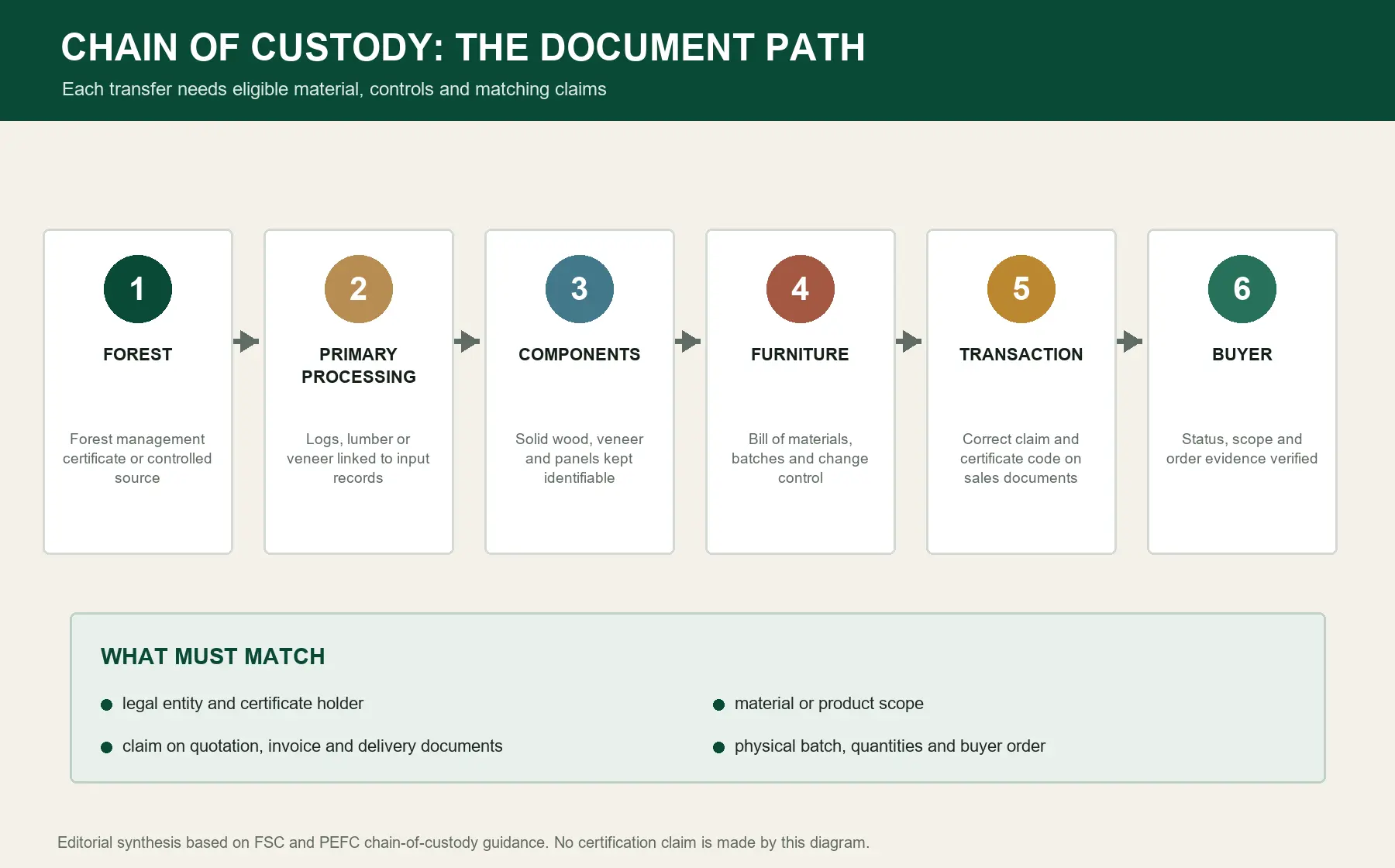
For furniture, the chain can be more complex than it first appears. One cabinet may contain solid oak, oak veneer, plywood, MDF, drawer components and paper packaging from different suppliers. The buyer must define whether the claim applies to the whole product, selected components or only certain inputs, and how that claim will appear on quotations, invoices and delivery documents.
What FSC Certification Does—and Does Not—Prove
FSC certification can provide credible evidence for a defined forest-management or chain-of-custody claim. However, buyers should read the exact claim rather than treating every FSC reference as identical.
The official FSC label guide distinguishes three on-product labels:
- FSC 100% means the forest-based material comes from FSC-certified forests.
- FSC Recycled means the forest-based material is made from recycled or reclaimed sources.
- FSC Mix can combine material from FSC-certified forests, recycled sources and/or FSC Controlled Wood, according to the applicable control system.
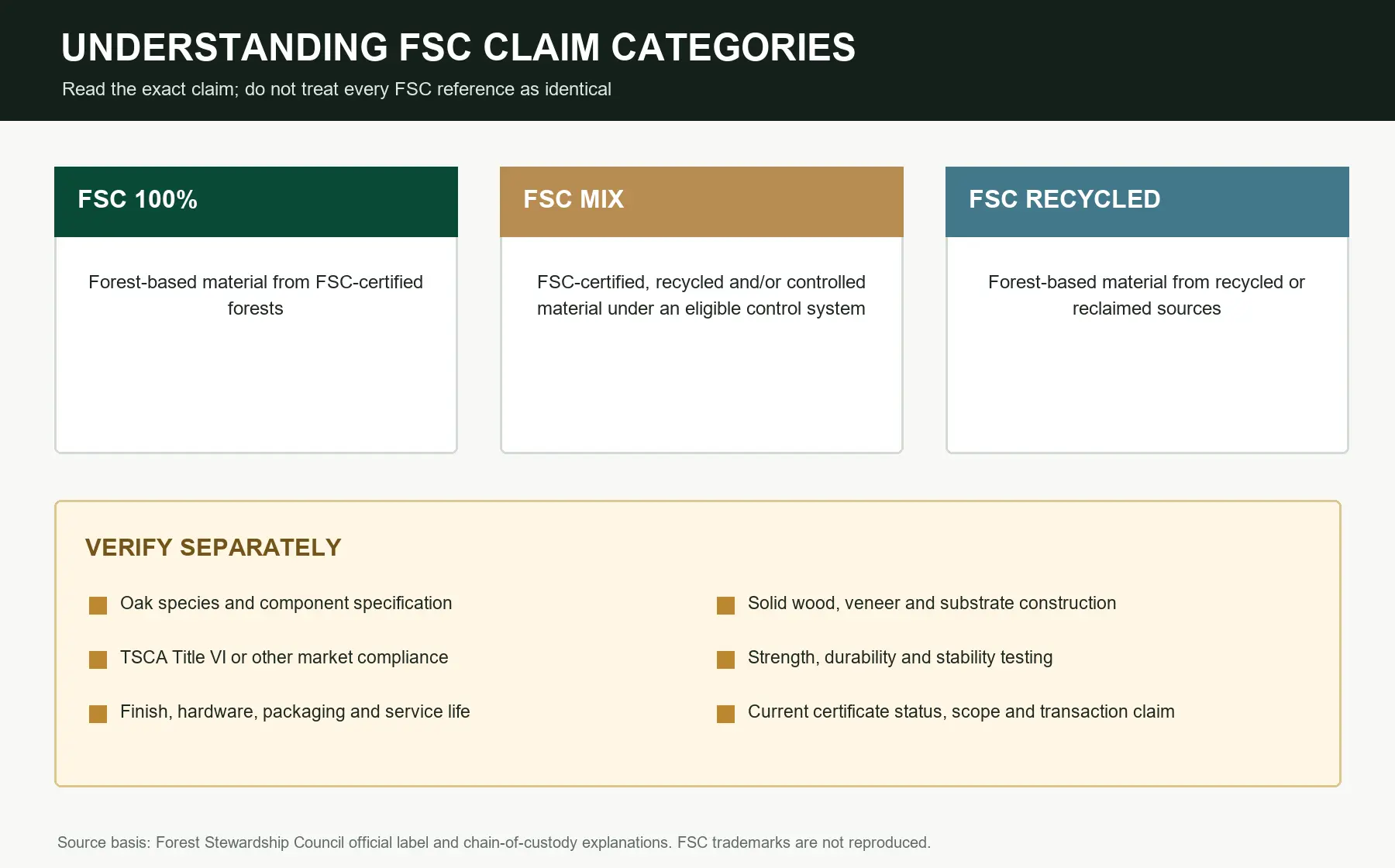
A valid claim can support FSC oak furniture procurement, but it does not automatically prove:
- that every wood component is oak;
- that all visible and hidden components carry the same claim;
- that the furniture is solid oak rather than veneer or a mixed construction;
- that the substrate meets formaldehyde rules for the destination market;
- that joints, finish, hardware or packaging meet the buyer’s specification;
- that the finished product passed strength, durability or stability testing;
- that a product will achieve a specific service life.
These are not weaknesses in forest certification. They are separate questions with separate evidence. Buyers create confusion when one certificate is expected to answer all of them.
This is why certified wood furniture should be described with the exact eligible claim and component scope, not with a broad promise that certification proves the entire product is sustainable in every respect.
How Buyers Can Verify Certified Claims
Verification should happen before an order is approved, not after the goods are ready to ship.
Start with the exact legal entity that will sell the claimed product. Ask for its certificate code and licence code, then use FSC Search to check the current certificate status, scope, certified sites and available product information. The database can also produce a time-stamped certificate record.
Then verify the transaction itself:
- Confirm that the quotation identifies the required certification system and claim.
- Check whether the certificate scope covers the relevant organization, site and product group.
- Define which furniture components are included in the claim.
- Require the eligible claim and certificate code on the appropriate sales or delivery documents.
- Confirm how certified and non-certified material are identified and controlled during production.
- Review the final invoice, packing list and order references before accepting the sustainability claim.
An expired certificate, a certificate issued to another company, a scope that excludes the product, or a claim missing from transaction documents should trigger clarification. A logo shown on a website is not a substitute for this review.
Certification verification also does not replace finished-product verification. Buyers can use oak furniture quality testing to separate sourcing evidence from dimensional, structural, functional and surface-performance checks.
Traceability Through the Supply Chain
Good traceability allows a buyer to move from the finished order back through the components and purchase records without relying on memory or marketing language.
For a simple solid-oak component, the record may identify species, supplier, input claim, quantity and batch. For veneered furniture, the veneer face, core, MDF or particleboard, edge material and solid-wood parts may need separate entries. A mixed-material product may also require records for rattan, paper, upholstery or packaging if those materials are included in a buyer’s sourcing policy.
This is one reason the oak furniture manufacturing process matters to procurement. Material approval, cutting, veneering, assembly, finishing, inspection and packing each create points where a batch reference or component identity can be maintained—or lost.
U.S. legality information
The U.S. Lacey Act is separate from FSC. USDA APHIS states that it is unlawful to import illegally harvested plant products and that certain imported products require a declaration. Its current Lacey Act filing guidance notes that Phase VII expanded declaration coverage to many products, including furniture, and advises importers to obtain plant species and harvest-country information from suppliers. As of January 1, 2026, APHIS no longer accepts paper PPQ 505 or 505B submissions.
Importers remain responsible for checking the current HTS implementation schedule, entry type and declaration requirements for their goods. A supplier can provide material data, but it should not make the buyer’s customs determination.
EU due diligence
Certification may support a due-diligence system, but it does not remove an operator’s legal responsibility. At the time of publication in September 2026, the European Commission EUDR page lists application from December 30, 2026 for large and medium operators and certain smaller operators already covered by the EU Timber Regulation, and June 30, 2027 for other micro and small operators. Buyers should confirm product scope, operator role and current guidance for each shipment.
Composite Wood Compliance for U.S. Imports
Oak furniture can include veneer, hardwood plywood, MDF or particleboard. These constructions may improve panel stability, appearance or material use, but they create a second compliance question that is independent of forest certification.
The EPA compliance guide for importers, distributors and retailers explains the U.S. formaldehyde requirements under TSCA Title VI for regulated composite wood products and finished goods containing them.
Hardwood plywood
Hardwood plywood can be used beneath a decorative oak face or as a structural panel. Buyers should identify the panel construction and confirm whether it falls within the regulated category, including current rules for applicable laminated products.
MDF
MDF is often used where a smooth, stable substrate is needed for veneer or finishing. For U.S. orders, the buyer should obtain compliant panel information and ensure the finished-good documentation and labelling route is defined.
Particleboard
Particleboard may be used in casegoods or internal components. Its hidden location does not remove applicable requirements. The bill of materials should identify it so the compliance evidence can be connected to the finished product.
The solid oak vs oak veneer furniture guide explains why a mixed construction can be technically appropriate. The sourcing specification must still identify every regulated substrate and every claimed forest-based component.
Sustainability vs Durability and Product Life
Responsible origin and long product life support different parts of a procurement decision. One cannot replace the other.
A source claim does not prove that a table is stable, that a chair is strong or that a cabinet finish will suit commercial cleaning. In the other direction, a durable product does not prove that its wood was legally or responsibly sourced.
Product-life planning can include:
- dimensions and joints appropriate for the expected loads;
- moisture targets suited to production and destination conditions;
- finishes selected for the use environment and maintenance plan;
- replaceable hardware and accessible service components;
- approved samples and measurable quality criteria;
- packaging that protects the product through its actual distribution route;
- spare-part, repair or after-sales arrangements where practical.
Avoid claiming that solid oak is always more sustainable than veneer, or that veneer is always more efficient. Yield, substrate, adhesive, construction, expected life, repairability, weight and logistics all affect the result. A project-specific evaluation is more credible than a universal material ranking.
For repeat B2B programs, quality records also help prevent short-lived products caused by uncontrolled substitutions or inconsistent production. That is where sourcing, development and QC need to remain connected.
Questions to Ask a Furniture Supplier
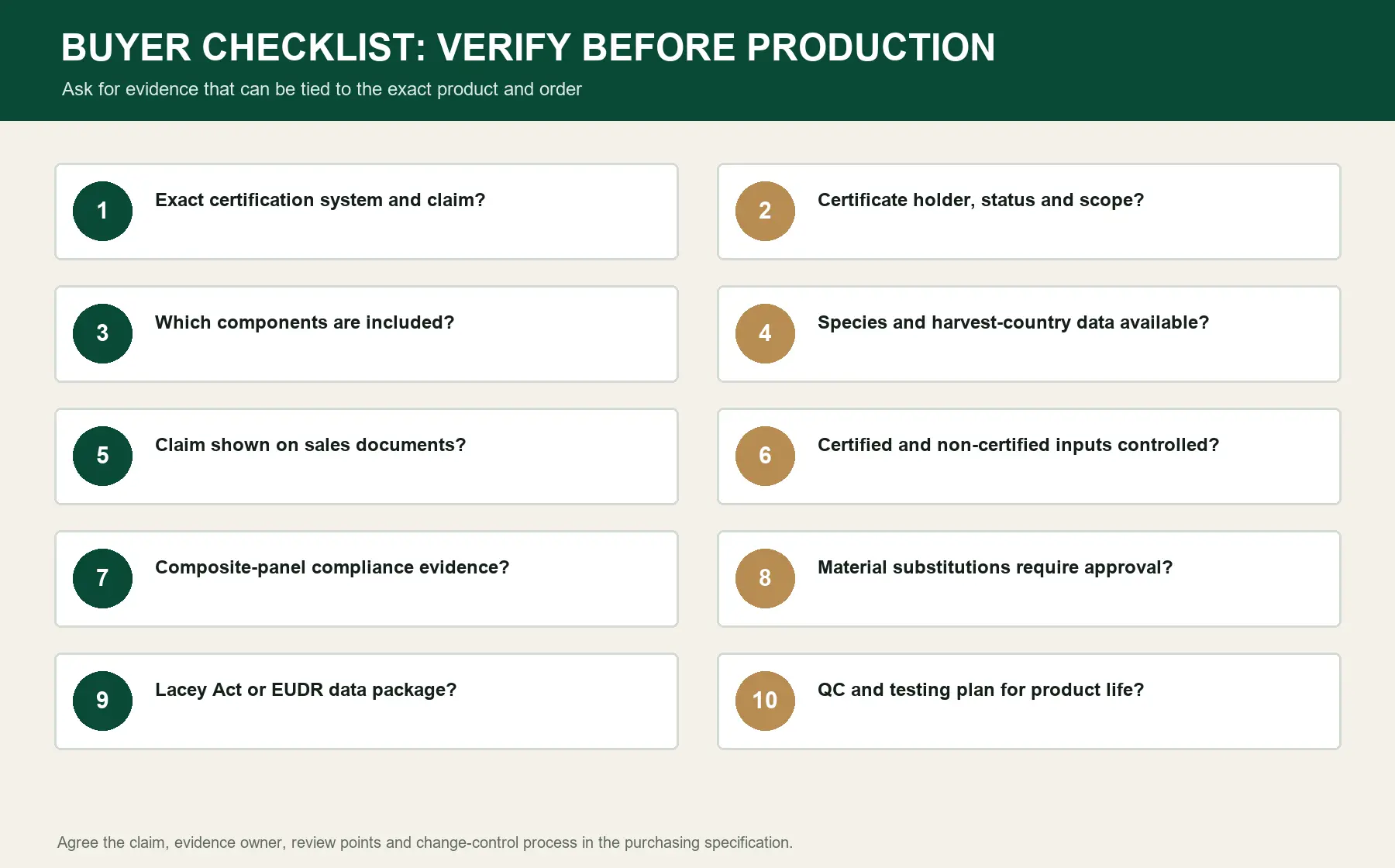
A serious oak furniture supplier should be able to discuss the required evidence before confirming a sustainability claim. A responsible furniture supplier will also explain limits and missing evidence instead of replacing them with broad marketing language. Use questions that can be answered with documents and process controls:
- Which certification system and exact claim can be supplied for this order?
- What is the certificate holder’s legal name, code, status and product scope?
- Which components are included or excluded from the claim?
- What oak species and country-of-harvest information can be provided where required?
- Will the correct claim appear on quotations, invoices and delivery documents?
- How are eligible and non-eligible materials identified during storage and production?
- Which veneer, plywood, MDF or particleboard substrates are used?
- What TSCA Title VI evidence is available for regulated U.S. orders?
- What information can support Lacey Act or EUDR due diligence?
- How are material changes approved after sampling?
- Which quality checks protect the intended product life?
- Who keeps the final evidence file and for how long?
A company should not present itself as a sustainable oak furniture manufacturer or FSC oak furniture supplier for a specific order unless the claim is supported by the required scope and transaction evidence. A more reliable position is to confirm the buyer’s target, identify the available material route and state exactly what documentation can be supplied.
MrsWoods supports brands, retailers, wholesalers and project buyers through product development, multi-category sourcing, manufacturing coordination, specification-based QC and export planning. Its furniture sourcing and production services connect quotations, samples, material decisions, inspection and shipment records. The MrsWoods company and supply-assurance overview also states that responsible wood-sourcing documentation is available for client review; project-specific claims should still be confirmed against the actual order.
Certification is only one factor when choosing an oak furniture manufacturer. Material knowledge, development capability, production control, testing, packaging, communication and order flexibility must also match the buyer’s program.
Frequently Asked Questions
Is FSC oak furniture always made from 100% FSC-certified forest material?
No. FSC oak furniture may carry FSC 100%, FSC Mix or another eligible claim. Read the exact claim and verify it against the supplier’s certificate scope and transaction documents.
Can a supplier call furniture FSC-certified if only one component is certified?
Not automatically. The eligible product, component scope, control system and sales-document claim must follow the applicable FSC requirements. Ask the certificate holder and certification body to clarify the permitted claim before marketing the finished furniture.
Is oak veneer a sustainable material?
It can support efficient use of a visual wood surface, but veneer is not automatically sustainable. Check the veneer source, substrate, adhesive, applicable emissions rules, construction quality and expected product life.
Does FSC certification replace the Lacey Act, EUDR or TSCA Title VI?
No. Certification, legality due diligence and composite-wood emissions compliance are separate systems. Buyers and importers must identify which obligations apply to the specific product and destination market.
How do you source sustainable oak furniture?
The practical answer to how to source sustainable oak furniture is to define the accepted claim, component scope, species and origin data, transaction documents, market compliance and quality requirements before quotation and sampling. Verify the records again before shipment.
What should buyers request from a responsible oak wood supplier?
For responsible oak wood sourcing, request the supplier identity, material specification, certification or legality evidence, batch references, relevant import data, change-control process and the final documents that will travel with the order.
Conclusion
Sustainable oak furniture procurement is credible when the claim can be followed from defined material requirements through eligible suppliers, production records, transaction documents and destination-market compliance. Certification is valuable, but only within its actual scope.
The best buyer files separate five questions: where the wood came from, how the claim moved through the supply chain, whether the import is legal, whether regulated composite materials comply, and whether the finished furniture meets its quality and service-life specification.
When discussing a new oak program, send MrsWoods your product drawings, component list, target certification claim, destination market and required documents. The team can review the sourcing route, sampling plan, manufacturing coordination, QC points and export information before production decisions are fixed.
