
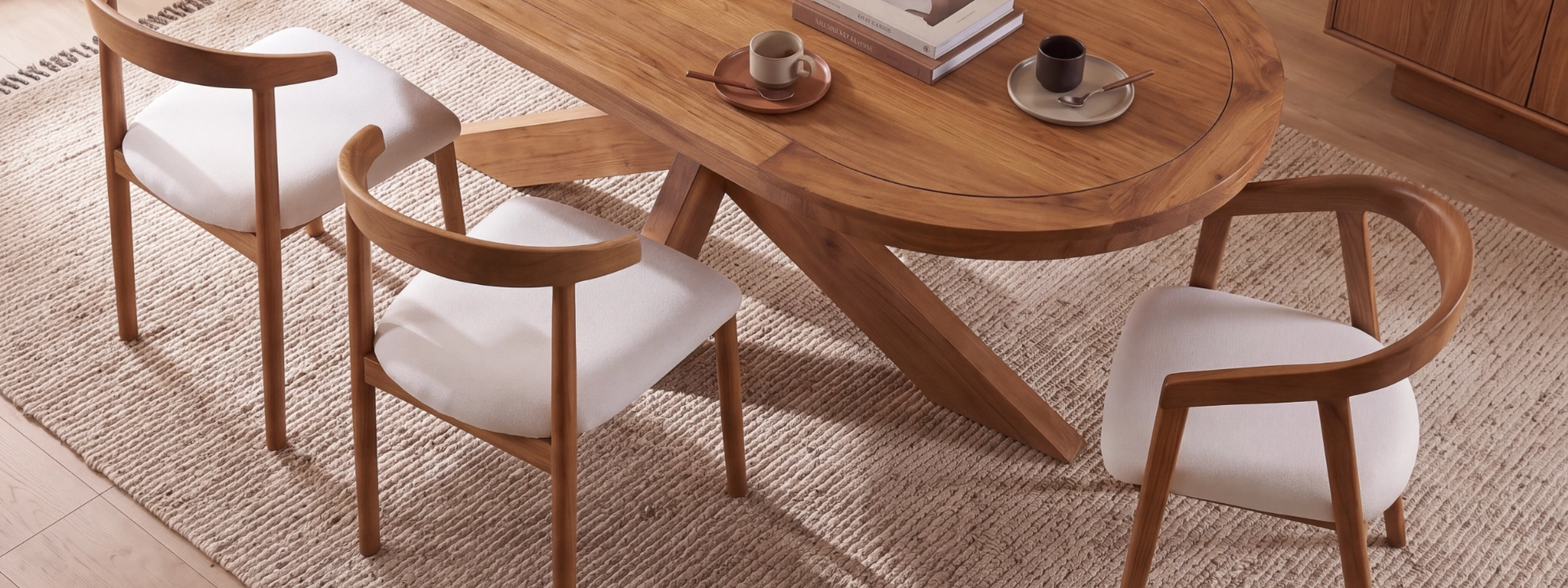
That task becomes harder when a collection combines cabinets, tables, seating and mixed materials. The buyer may need solid wood in one item, veneer in another, stone or metal details elsewhere, and one finish language across the range. Each product can require a different technical route, yet the collection must still look and operate as one commercial programme.
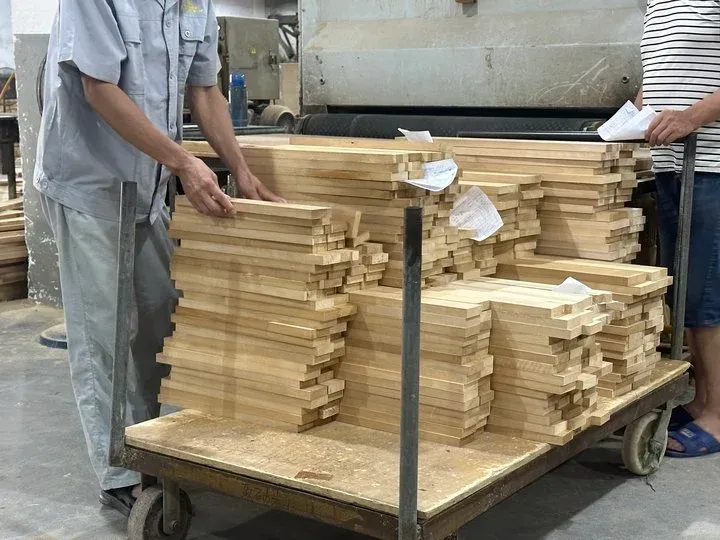
This guide explains how to evaluate that development and manufacturing capability. It focuses on the handover from design brief to production definition. For the broader question of matching supplier support to retail, brand or wholesale operations, see what different B2B buyers need from a furniture manufacturer.
Key Takeaways
- Define “high-end” as a product requirement. Materials, visible details, construction, function, finish range, packaging and approval evidence must be stated for the actual collection.
- A design brief is a starting point, not a production specification. Drawings, modelling, engineering review and controlled revisions need to close the gaps between appearance and manufacture.
- A coherent collection can use more than one construction route. Different products can use different materials and factories when the visible design language and technical responsibilities remain coordinated.
- Approve named attributes and references. A sample should connect to current drawings, material references, finish standards and unresolved items before bulk production.
- Evaluate the route for each product. A multi-factory network adds value only when the buyer can see which facility is responsible, why it fits and how the whole collection is controlled.
What Should a High-End Furniture Manufacturer Deliver for a B2B Collection?
A high-end manufacturer should deliver more than an attractive sample. The buyer needs a product definition that can guide quotation, sampling, production, inspection and repeat orders. It should make the important design decisions visible, identify open questions and show how each product will move through a suitable manufacturing route.
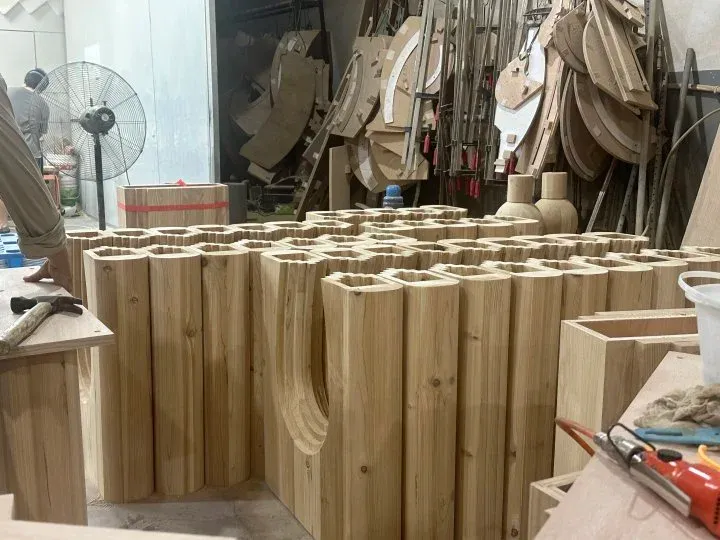
Define High-End Through Agreed Product Requirements, Not Marketing Labels
“High-end” has no single furniture specification. For one brand, it may mean carefully selected natural grain, restrained colour variation and precise visible joints. For a hospitality collection, it may place more weight on repeated use, cleanability, replaceable components or project-specific test evidence. For a retailer, packaging, assembly experience and repeat-order consistency may be equally important.
Convert the label into decisions: intended use, target market, price positioning, dimensions, material and finish direction, visible quality points, functional requirements, packaging and any required testing. Then define how each decision will be approved. This follows the practical value of ISO’s quality management principles: customer requirements, process control and evidence-based decisions are more useful than an unsupported claim of excellence. The reference does not imply that MrsWoods or a particular factory holds an ISO certification.
Separate Product Quality, Manufacturing Capability and Market Positioning
Product quality asks whether the item meets the approved requirements. Manufacturing capability asks whether the relevant people, process and resources can make it. Market positioning asks whether the design, materials, price and presentation fit the buyer’s customer. These questions influence one another, but they are not interchangeable.
A beautifully photographed prototype does not prove repeatable production. A large factory does not prove the right finish skill. An expensive material does not rescue an unresolved structure. Buyers should also review a supplier’s furniture manufacturing and export experience against the target product, destination and order responsibilities rather than relying on a company age or an export-market list.
How Does a Design Brief Become a Production-Ready Furniture Specification?
A design brief becomes production-ready when the intended appearance, use and commercial conditions have been translated into current, reviewable requirements. The process should expose missing decisions before they become sample delays, quotation assumptions or unapproved production changes.
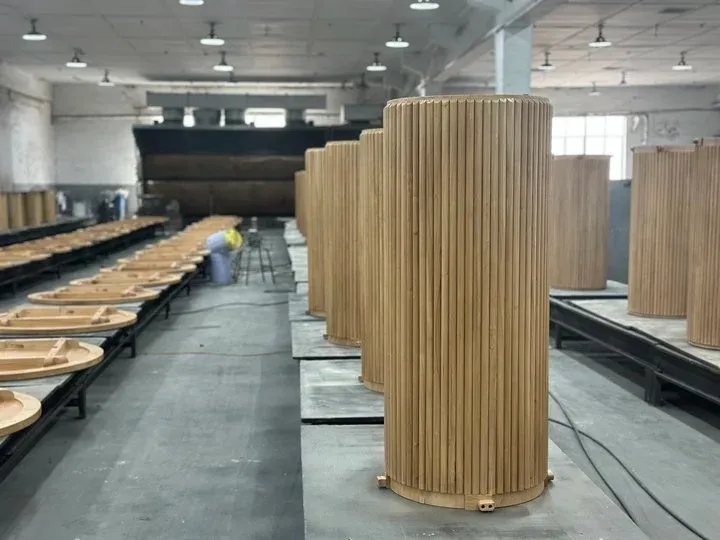
Start With Drawings, Reference Images, Dimensions, Use and Target Market
The brief should show what is fixed and what remains open. A reference image may communicate silhouette, proportion or mood, but it rarely defines concealed construction, exact dimensions, hardware, material build-up or packaging. A drawing may be detailed but still omit intended loads, installation conditions, target-market requirements or acceptable appearance variation.
Begin with the best available inputs: drawings or reference images, overall dimensions, intended use, destination, quantity by SKU, material and finish direction, price position, assembly method and packaging needs. If the buyer is working through an OEM furniture manufacturer, the supplied design may already be developed. An ODM or custom route may need more design input. The labels should not replace a written division of work. The custom furniture OEM and ODM guide explains those responsibilities in more detail.
Use Modelling, Rendering and Engineering Review to Resolve Unclear Details
Modelling helps teams review proportion, geometry, component relationships and difficult junctions before committing to a physical sample. A rendering can clarify colour placement and material combinations. Engineering review asks a different set of questions: can the parts be made and assembled as intended, what structure carries the load, where will tolerances accumulate, and what must be tested or sampled?
MrsWoods has a design team and can discuss product drawings, industry-standard modelling including 3D models, renderings, structure confirmation and development support according to the project. These tools help convert an image, sketch, drawing or concept into reviewable information. They do not replace a physical sample, product-specific testing or the buyer’s final approval.
Convert Approved Decisions Into Drawings, Specifications and Controlled Revisions
The production definition should identify the current drawing, dimensions, construction, material or substrate, veneer and grain direction where relevant, finish reference, hardware, function, assembly, labels and packaging. It should also state which elements remain subject to a separate sample, test or buyer decision.
When a decision changes, revise the affected reference and record the consequence. A new stone thickness can alter support, weight, packing and cost. A different hinge can change drilling and door movement. A colour change can make an approved finish board obsolete. The useful discipline is not paperwork for its own sake; it is preventing the factory, buyer and inspector from working to different versions.

How Should Materials, Finishes and Product Details Be Coordinated Across a Collection?
Coordinate a collection by defining what must remain visually and functionally consistent, then allow each product to use the construction that suits its role. The goal is not to force every SKU into one material or process. It is to stop material and production differences from changing the collection without approval.
Choose Solid Wood, Veneer and Mixed-Material Structures by Product Function
Solid wood, veneer and engineered substrates solve different design and manufacturing problems. The correct choice depends on dimensions, grain direction, movement risk, edge treatment, load, weight, finish, target cost and expected use. A visible solid-wood edge can be important to one design, while a veneered panel may provide better control across a broad surface in another.
Wood also carries natural variation. The American Hardwood Export Council’s 2024 hardwood species guide notes that species and regions can differ in colour, grain, character and performance. That makes “oak finish” too vague for a controlled collection. Specify the species, solid and veneered locations, substrate, grain direction, appearance reference and acceptable range. The detailed comparison of solid oak and oak veneer furniture covers this decision without treating either construction as universally superior.
Coordinate Grain, Colour, Finish, Hardware, Stone, Metal, Rattan and Upholstery
A multi-material collection needs interfaces as well as material names. Record where wood meets stone, whether metal is structural or decorative, how a removable top is restrained, how upholstery affects overall dimensions, and which visible fasteners or gaps are acceptable. Finish references should identify the substrate because one colour can appear different on solid wood, veneer and metal.
MrsWoods can coordinate wood, veneer, stone, metal, rattan, upholstery and composite materials for suitable projects. That does not mean every material or operation is produced in one facility. The buyer should confirm the responsible source or factory, the approved reference and the inspection point for each important interface.
Keep a Consistent Collection Identity Across Different Product Constructions
Choose a limited set of collection rules that remain visible across products. These may include edge profiles, leg geometry, reveal widths, grain direction, colour family, sheen, metal tone, handle language or upholstery details. Then let the hidden construction respond to the product. A dining table, sideboard and lounge chair should not be forced into identical engineering simply because they share a finish.
A collection matrix is useful here. List each SKU against the common design rules, product-specific construction, material source, finish reference, sample status and responsible factory. This reveals where a shared phrase such as “same walnut colour” hides different substrates or production owners that need separate confirmation.
How Are Samples and Approval References Used Before Bulk Production?
Samples reduce uncertainty when their purpose is defined. A material board, finish panel, component sample, packaging mock-up or complete product can each answer a different question. Approval should identify what the reference proves, what it does not prove and which documents remain controlling.
Approve Structure, Material Appearance, Finish, Function and Packaging Evidence
Review the sample by attribute. Check dimensions, proportions, materials, concealed and visible construction, stability, moving parts, hardware fit, colour, sheen, grain or pattern, touch points, assembly and packaging. The exact list depends on the product. A finish panel cannot approve table stability, and a complete cabinet cannot prove a test result that requires a specified laboratory method.
Use the furniture sample approval process to separate sample acceptance, production release and shipment approval. Those are different decisions. A buyer can approve a colour while hardware or packaging remains open, but the approval record must prevent that limited decision from being treated as permission to produce every unit.
Define the Reference Evidence and Change Process Before Bulk Production
Before release, connect the approved sample or board with the current drawing, material and component references, finish standard, packaging instruction and known exceptions. Name unresolved items and decide who can approve them. Where the physical sample and written requirement conflict, the team needs a way to stop and settle the controlling version.
The production specification freeze should therefore show what is fixed, conditional or still open. Production checks then compare work with that baseline. The broader furniture quality control framework explains how requirements, evidence and release decisions should remain connected through the order.
How Can a Multi-Factory Manufacturing Network Support a Custom Collection?
A multi-factory network can support a custom collection when products are assigned according to real material, construction and process fit. The network must still operate as a controlled programme: product responsibility, references, timing, quality evidence, packaging and shipment coordination cannot disappear between facilities.
Match Product Structure and Process Requirements to the Relevant Factory
Start with the product route, not the factory count. Identify the dominant construction, material interfaces, specialist processes, finish risk, sample history, expected quantities and packing needs. A facility suited to veneered casegoods may not be the best route for a stone-and-metal table or an upholstered chair, even when all three belong to one collection.
MrsWoods has more than 15 self-owned furniture factories, and different products can be assigned to facilities suited to their type, material and process. The useful evidence is the proposed route for the actual SKU. The number of factories does not by itself prove a single facility’s area, equipment, staffing, capacity, certification or lead time, and it does not mean every process or material is internal.
Coordinate Multi-SKU and Multi-Material Items Without Assuming One Production Route
Create one collection-level control view and separate product-level plans. The collection view tracks shared finishes, launch timing, packaging language and shipment needs. Each product plan records its factory, current specification, material dependencies, sample status, inspection points and unresolved risks. This preserves a common commercial programme without pretending that every SKU follows the same process.
Coordination also needs change impact review. If one finish formula changes, identify which factories, substrates, samples and purchase orders are affected. If a stone source, hardware item or fabric becomes unavailable, check appearance, structure, price, testing, packaging and timing before accepting a substitution. A replacement is a new decision, not an automatic equivalent.
Request Order-Specific Responsibility and Capacity Evidence
For each factory or production route, request the responsible product scope, comparable manufacturing evidence, current sample and document status, material dependencies, planned inspection stages, packing responsibility and the person coordinating changes. Capacity should be assessed for the proposed SKU mix and time window, not as one permanent company-wide number.
The detailed guide to furniture factory capacity and supply reliability separates theoretical, demonstrated, committed and available capacity. Use that evidence after confirming product fit. A large open floor or an installed machine list cannot show whether the required materials, finish, labour, quality checks and packing resources are available for this collection.

What Should Buyers Provide Before Requesting Development and Quotation?
Buyers should provide enough technical and commercial context for the manufacturer to identify assumptions, development work and production constraints. An incomplete brief may still receive a price, but the price can be based on a different product from the one the buyer expects.
Prepare a Useful Product-Development Brief
For each SKU, provide a drawing, sketch, model, reference image or existing sample; dimensions and units; intended use; important design features; target material and finish; functional requirements; target market; and known quality, testing or compliance requirements. Mark whether the input is an exact requirement, a visual reference or an area open to manufacturing advice.
For a collection, add a short design-language sheet. Identify shared colours, profiles, junctions, hardware tones, grain directions and appearance references. This gives a custom furniture manufacturer a way to review individual products without losing the relationships between them.
Define Quantities, SKU Mix, Market, Commercial and Packaging Requirements
Provide quantities by SKU, expected order pattern, launch or project window, destination, sales channel, packaging and labelling needs, assembly expectations and any container or delivery constraints. Quantities influence materials, setup, tooling, unit cost, production allocation and packing. A collection total is not enough when one finish has five units and another has two hundred.
MrsWoods’ stated baseline is 10 pieces per SKU and shipments are mainly full-container loads, but special materials, fabrics, hardware, tooling, finishes, packaging or testing can create additional minimums. Review the furniture MOQ guide to separate the manufacturer’s order minimum from material and process constraints. The final requirement belongs in the project quotation.
Record Unresolved Decisions Before Quotation and Sampling
Do not hide unknowns to obtain a fast price. List them: material grade not selected, internal construction open, finish reference pending, hardware unconfirmed, packaging test undecided or target-market requirement under review. Ask the manufacturer to show the assumption used, the price or timing risk and the point at which the decision must close.
Compare offers on the same product definition. The guide to comparing furniture factory quotations shows why an apparently lower price may exclude development, material, packaging, testing or quality responsibilities contained in another quotation. Resolve material differences before treating the totals as comparable.
Frequently Asked Questions
What Makes a Furniture Manufacturer High-End?
A furniture manufacturer is suitable for a high-end project when it can translate the buyer’s market position into clear product requirements, resolve design and manufacturing risks, produce relevant samples, control approved references and provide evidence for the actual production route. Materials and workmanship matter, but the claim also depends on repeatability, communication, packaging and the responsibilities agreed for the order.
Can a Manufacturer Develop Furniture From Drawings or Reference Images?
Yes, if the manufacturer has suitable design and engineering support and the input can be developed into a manufacturable specification. A reference image normally needs dimensions, intended use, material direction and clarification of visible details. Drawings may still need a feasibility review. The development scope, ownership, modelling, sample, revisions and approval responsibilities should be agreed for the project.
Is Solid Wood Always Better Than Veneer in High-End Furniture?
No. Solid wood and veneer have different advantages and constraints. The correct construction depends on product form, dimensions, grain direction, edge design, movement risk, weight, finish, target cost and use. High-end furniture can use either or both. The important point is to state the material build-up accurately and approve the appearance and performance requirements for that product.
Can One Manufacturer Coordinate Wood, Stone, Metal, Rattan and Upholstery?
A multi-material furniture manufacturer or supplier can coordinate these materials when the responsible sources, interfaces, specifications, samples, inspection points and packaging risks are clear. The buyer should not assume that every material is produced internally or that one factory performs every operation. Review how the materials meet, who owns each decision and how a substitution will be controlled.
How Are Different Products Assigned to Different Furniture Factories?
Products should be assigned according to construction, materials, specialist processes, finish requirements, sample evidence, quantity, capacity and packaging. The buyer should request the proposed factory for each SKU and the reason for that choice. Collection-level controls then keep shared finish, design and delivery requirements aligned across the separate production routes.
What Information Is Needed for a Custom Furniture Quotation?
Provide drawings or references, dimensions, intended use, quantities by SKU, target market, materials, finishes, hardware, function, packaging, labelling, testing or quality requirements and the support expected from the manufacturer. Identify open decisions and ask the supplier to state its assumptions. A quotation is more useful when it shows both price and the product definition behind that price.
A high-end collection reaches production through connected decisions, not through one luxury label. The buyer needs a clear brief, a production-ready specification, product-appropriate materials, controlled approval references, suitable factory allocation and evidence that each responsibility has an owner. Different constructions can support one collection when those decisions remain visible and coordinated.
MrsWoods works as a high-end furniture manufacturer and B2B furniture supplier for overseas brands, retailers, wholesalers, designers and project buyers. To discuss a custom collection, send your business type, target market, product categories, SKU list, drawings or reference images, dimensions, intended use, material and finish direction, modelling needs, quantity by SKU, price position, packaging, applicable quality or compliance requirements and target window. The team can then review product-development scope, manufacturing allocation, quotation assumptions, samples and the evidence needed before production.
