

The practical test is to separate two questions. First, which SKUs can share production inputs or operations? Second, which finished and packed SKUs can share a shipment? A buyer who combines those questions can fill a container and still approve an order that cannot be produced as quoted. Buyers who need the wider quantity, inventory and cost framework should first review the furniture MOQ decision guide.
A useful furniture trial order also needs a declared purpose. It may test customer demand, product conformity, supplier execution, packaging performance or document accuracy. Each purpose needs its own evidence. The trial should finish with a controlled decision: reorder without change, revise and test again, or stop. Anything it did not test should remain visible rather than becoming an assumed approval.
Key Takeaways
- Mixed shipping and shared production are different. Products can travel together even when they need separate materials, factories or production runs.
- A full container does not erase SKU-level minimums. Every line must still meet the conditions created by its product route, inputs, finish and packaging.
- Write the trial question before placing the order. A trial with no success, failure and not-tested conditions produces anecdotes rather than a reorder decision.
- Preserve the approved baseline. Product revision, material, finish, hardware, packaging and allowed changes must follow the order into any repeat purchase.
- Use the result to choose an order structure. The answer may be shared production, separate production with consolidated shipping, standardization, a phased reorder or removal of an incompatible SKU.
What Should a Furniture Trial Order Actually Prove?
A trial order is most useful when it reduces a named uncertainty. “Test the supplier” is too broad. One small order can show whether the supplier followed a controlled specification for those products, communicated deviations, packed the reviewed quantity and issued accurate documents. It cannot by itself prove performance at a much larger volume or under a later material batch.
Separate market, product, supplier and logistics questions
A market test asks which designs, finishes or price points customers accept. A product test asks whether the delivered item matches the approved specification and performs as intended. A supplier-execution test examines whether the factory used the controlled references, reported issues and delivered the agreed evidence. A logistics test examines packaging, labels, loading and condition on arrival. These questions may share one order, but the buyer should not treat a positive answer to one as proof of the others.
The peer-reviewed paper Starting small in an unfamiliar environment models a buyer using a trial order to learn whether a new supplier can successfully fill a larger order. That supports the learning purpose of a trial. The research is not furniture-specific, dates from 2003 and does not define a suitable trial quantity or a furniture acceptance standard.
Write success, failure and not-tested conditions before the PO
For each question, write the evidence and the decision it controls. If the trial is meant to test finish acceptance, define the approved colour or finish reference, viewing condition and the evidence required at inspection. If it tests document accuracy, identify the product codes, quantities, carton marks and commercial documents that must agree. A failed result should state whether the affected line can be corrected, needs another controlled test or should be removed from the program.
The not-tested column is equally important. A trial may not test peak-season production, a future timber or fabric lot, a revised carton, another destination label, later replenishment speed or loading at full planned volume. Recording those limits prevents a successful small order from becoming an unsupported claim about future capacity or continuity.
Can Different Furniture SKUs Share Production or Only a Container?
Production compatibility exists when SKUs can genuinely share the relevant input, process or preparation. Shipping compatibility exists when finished packages can be loaded, secured, identified and unloaded together for the intended route. One does not imply the other.
Check the route before adding quantities together
Two oak tables may share timber thickness and finish but require different machining, hardware and cartons. A chair and bar stool may use one frame concept but need separate dimensions, jigs or upholstery patterns. Two visually similar finishes may use different substrates or coating sequences. Before combining quantities, identify the product revision, material, finish, hardware, packaging version and relevant production route. The detailed causes of these constraints are covered in the guide to furniture MOQ by product, material and finish.
One purchase order can still contain several production groups
MrsWoods owns more than 15 furniture factories, with different products assigned to the relevant facilities. For a mixed order, this matters because one purchase order may contain products that follow separate manufacturing routes at different company-owned factories. The shared order reference does not make those products one production batch. Any later consolidation still depends on finished timing, packaging data, loading feasibility and the agreed shipping arrangement.
That distinction gives buyers four realistic outcomes. Compatible SKUs may share production. Others may be produced separately and consolidated only after completion. A variation may need to be standardized to join a workable group. An incompatible SKU may need a later phase or separate shipment. The objective is an executable order, not the largest possible assortment on a spreadsheet.
How Should Buyers Build a Mixed-SKU Quantity Matrix?
A mixed container furniture order should begin with a line-level matrix, not a total piece count. Give every product and variation its own row. Include the product or drawing revision, quantity, material, finish, upholstery, hardware, packaging version, target market and known production route. Mark unknown items as pending. Do not fill gaps with an assumption copied from another SKU.
Classify each line by what it can share
Use one of four working classifications. “Shared production” means the supplier has confirmed that the relevant inputs and operations can be grouped. “Separate production, consolidated shipment” means the SKUs keep their own production conditions but may travel together. “Standardize” means an approved change to material, finish, hardware or packaging could create a workable group. “Defer or separate” means the SKU is not executable within the current order structure.
A total-volume check comes after this classification. If one SKU depends on an unconfirmed fabric purchase, unique carton artwork or separate facility schedule, unused space in the container does not resolve that line. The matrix should show the blocking condition, who must answer it and the latest point at which the line can remain in the trial.
Keep market requirements attached to the SKU
Destination requirements may differ across MrsWoods’ principal markets. A program covering Europe and Australia, for example, may not use the same labels, manuals, marks, test evidence or packaging instructions as one intended for the Middle East, South Africa, South America or the United States. Keep each requirement attached to the applicable SKU and destination. Combining products into one commercial program should not erase market-specific versions or let one market’s assumption flow into another.

How Do You Design a Trial Order That Produces Reorder Evidence?
The trial should preserve a baseline that another buyer, merchandiser or factory team can use later. That baseline includes the product revision, approved sample or drawings, material and finish references, hardware, packaging instruction, label version, quotation and any accepted deviation. If those references change without a decision record, the reorder is no longer a repeat of the tested order.
Collect evidence in four practical groups
Product evidence links the delivered item to the approved specification and records relevant inspection results. Process evidence shows whether questions, deviations and corrections were handled against the right revision. Packing and shipment evidence connects the SKU to carton contents, marks, packed dimensions, weights and loading information. Commercial evidence checks quantities, product codes, price terms and documents for agreement.
Evidence needs identity and context. An unlabelled photograph may show a chair, but it does not show which order, revision, finish reference or result it belongs to. A carton measurement without the SKU or packing version cannot safely support a later loading plan. Buyers should request enough identification to recover the decision, not merely a larger volume of files.
Choose one of three outcomes for every tested line
Reorder as-is when the line met the defined conditions and the baseline remains available. Revise and retest when the correction changes a feature that matters to approval, packaging or customer use. Stop or defer when the line failed the required condition, the evidence is incomplete, or the commercial result does not justify another order. Different SKUs in the same trial can reach different outcomes.

What Makes a Mixed Furniture Container Executable?
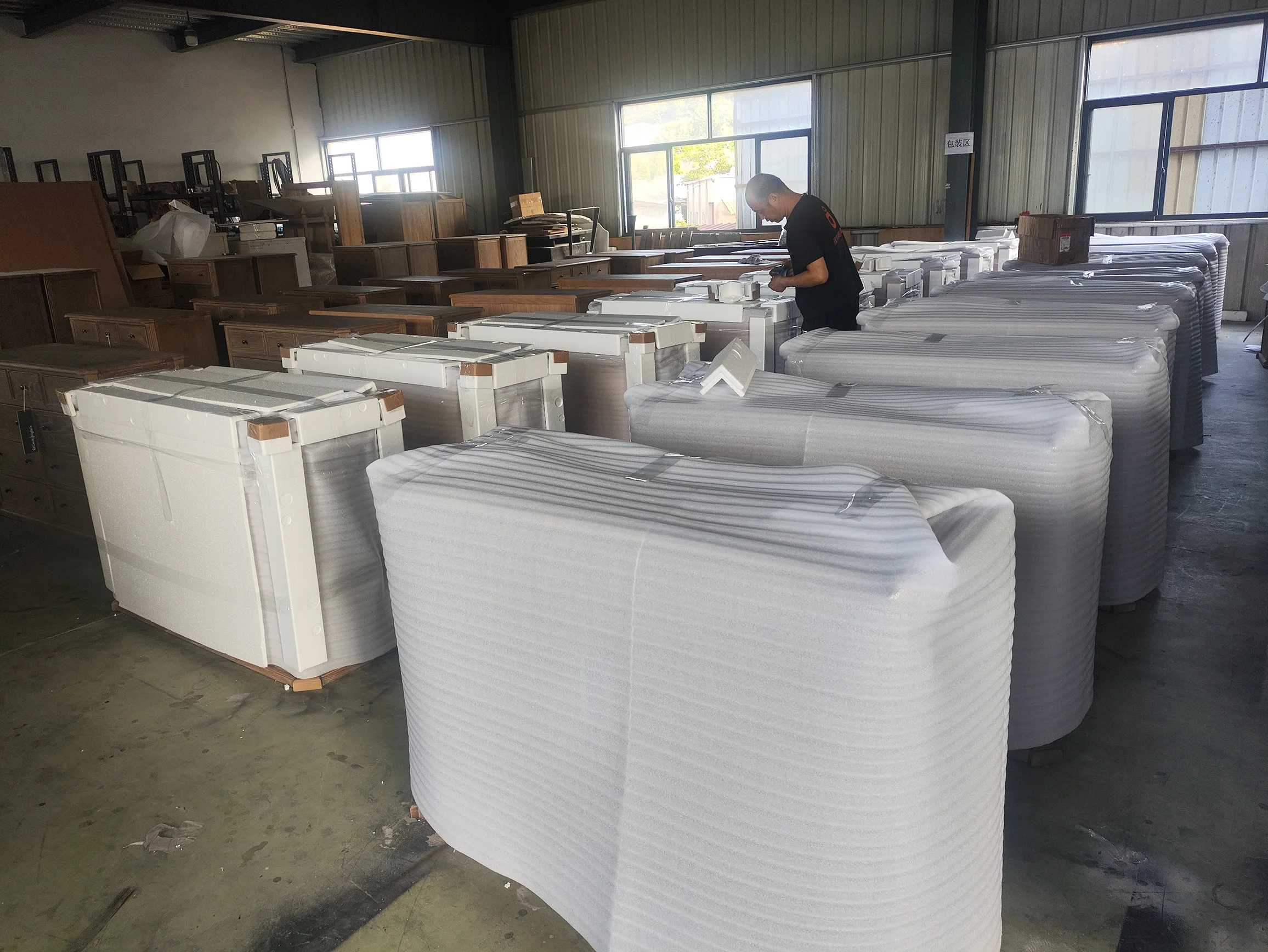
Container planning uses packed products, not showroom dimensions. The order needs the carton or crate dimensions, gross weight, packing quantity, orientation limits and handling information for each SKU. A nominal product size cannot reveal the effect of protective packaging, disassembly, protruding hardware or a fragile top.
Check compatibility before optimizing space
The official IMO/ILO/UNECE Code of Practice for Packing of Cargo Transport Units addresses planning, cargo and packaging compatibility, load distribution and securing for cargo transport units. It is a non-mandatory global code, not a furniture container-utilization formula. Its relevance here is the order of decisions: confirm the packages and their compatibility before treating space utilization as the primary target.
For furniture, the loading review may need to consider fragility, stackability, moisture exposure, concentrated weight, orientation, loading sequence and the order in which SKUs will be unloaded. Labels must still identify the correct product and destination version. Detailed carton design, protection, tests and loading engineering belong in the guide to furniture export packaging and container planning.
Treat utilization as a result, not a promised percentage
A high fill percentage is not useful if cartons cannot carry the load above them, if fragile surfaces touch incompatible packages, or if the unloading plan creates avoidable damage. Do not use a universal “good” utilization percentage without the actual container, packages, route and securing plan. The correct result is a feasible loading arrangement with known assumptions, remaining space and unresolved risks.
How Should the Trial Order Become a Repeatable Reorder Plan?
A reorder should begin with the trial baseline, then identify what has changed. Confirm the product revision, materials, finish, hardware and packaging. Recheck input availability, quantity by SKU, destination requirements and the proposed production window. A repeated product code is not enough if an approved component has been discontinued or a label, carton or market version has changed.
Use a small set of measurable reorder criteria
The Buying for Victoria contract-management guide recommends keeping performance measures targeted, measurable, clearly understood and capable of objective assessment. It is public-procurement guidance rather than a furniture industry rule, but the principle helps prevent a trial scorecard from becoming an unmanageable checklist.
Choose criteria that control the next decision. These might include conformity to the controlled specification, closure of named issues, carton and label accuracy, document accuracy and the agreed timing evidence. Record the source, result, affected SKU, exception and required action. Do not convert subjective impressions into invented numerical scores merely to make the review look precise.
Reconfirm quantity and timing instead of copying the first PO
Materials, supplier conditions, production schedules and shipment plans can change between orders. A furniture reorder plan should therefore state the quantity band being quoted, the conditions that remain valid and the point from which lead time begins. Buyers who need the detailed sequence should use the guide to furniture manufacturing lead time.
MrsWoods normally begins an MOQ discussion at 10 units for each item or style, with full-container shipment as the main shipping model. The project still needs a line-level review. A material purchase, finish batch, packaging version or production route may create another constraint. Filling the remaining container space with more SKUs does not automatically make every line executable at 10 pieces.
For a mixed-SKU or trial inquiry, the MrsWoods team can review the product combination, quantities, packaging information, production arrangement and destination. Depending on the project, the workable structure may use separate production runs with later consolidation, standardized variants, a phased trial and reorder, or removal of an incompatible line. This review is not a promise of arbitrary mixing, unlimited SKUs or a fixed loading result.
Frequently Asked Questions
Can different furniture models be combined in one order?
Yes, when the supplier confirms the commercial and production conditions for each line. The models may share production, or they may remain separate production groups under one purchase order. The order document should state which arrangement applies.
Does a mixed container remove MOQ by SKU?
No. A mixed container can combine finished packages for shipment, but product, material, finish, component and packaging minimums may still apply to individual SKUs. The supplier should identify the governing condition for every line.
What should a furniture trial order prove before a bulk order?
It should answer the questions defined before the order, such as product conformity, issue handling, packaging performance, document accuracy or market response. It should also list what was not tested, including any change in volume, material lot, destination version or production period.
Can products made at different factories be consolidated into one shipment?
They may be consolidated when completion timing, packing information, transport to the consolidation point, loading compatibility and commercial arrangements are confirmed. Different factories or routes make those checks more important; they do not guarantee or prevent consolidation by themselves.
Should a reorder use exactly the same specification as the trial?
A true repeat should start from the approved trial baseline. If the buyer or supplier changes the design, material, finish, hardware, packaging or label, the parties should record the change and decide whether it needs approval, another test or revised commercial terms.
When should a buyer revise, retest or stop after a trial order?
Revise and retest when a correction changes an approval-critical feature or when the evidence cannot support the next order. Stop or defer when the required condition failed, the line remains commercially unsuitable, or the unresolved risk is greater than the value of continuing. Other successful SKUs can still proceed separately.
A mixed order works when every line has an executable production path and the completed packages have a feasible shipment plan. The trial adds value when its evidence follows the exact SKU and specification into the reorder decision. Without those links, a larger assortment can hide risk rather than reduce it.
For a project review, send MrsWoods one controlled SKU list with quantity per item or style, product revision, material and finish, known or pending packed dimensions, destination market and port, the question the trial must answer, and the expected reorder window. Through the custom furniture manufacturing and project support service, the team can map the line-level constraints and discuss whether the order should use shared production, separate runs with consolidated shipping, standardized variants, phased reorders or a deferred SKU.
