
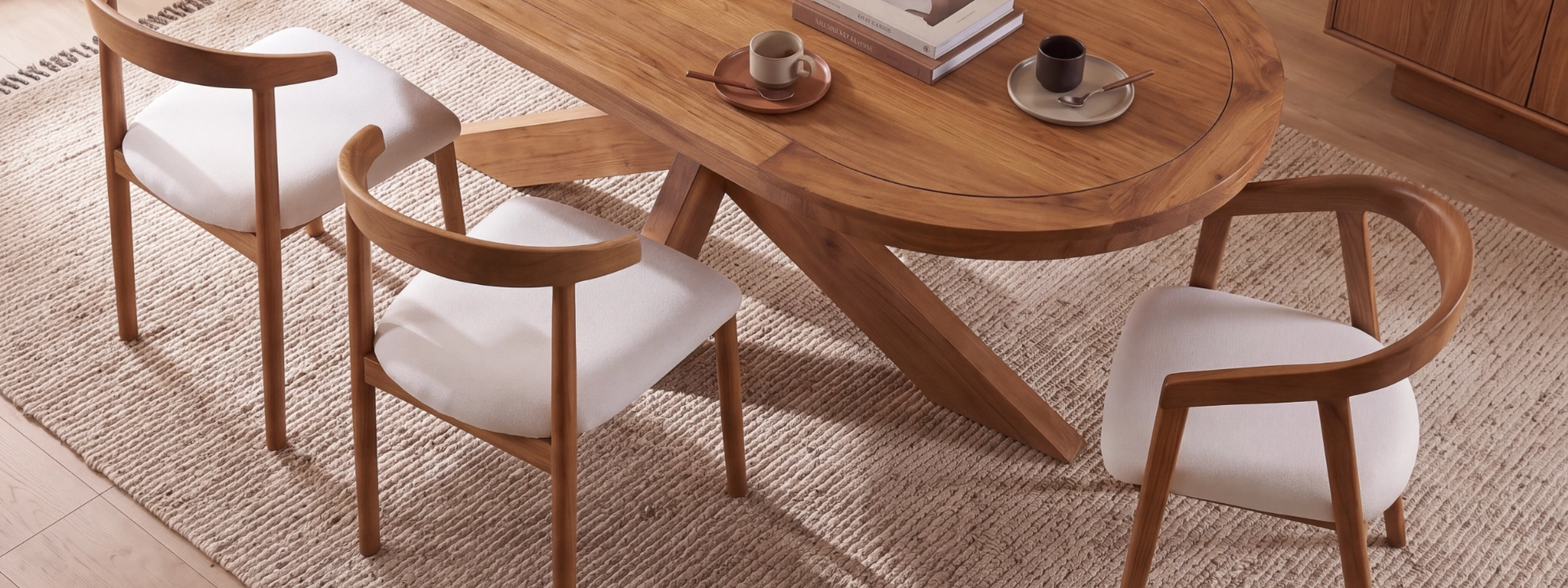

For a furniture brand, retailer, wholesaler or project buyer, the practical question is whether the differences across delivered products remain acceptable for their intended use. A cabinet can operate correctly yet look wrong beside its matching unit. A chair can resemble the approved design while containing a different fitting. Those are different problems, and each needs a suitable comparison.
This guide explains what to assess before committing to volume, which records can support that assessment, and what still needs checking on the actual order. It focuses on product consistency rather than repeating the wider process of choosing a furniture manufacturer in China. The aim is to help you turn a broad request for consistent quality into questions a manufacturer can answer with identifiable products, references and results.
Key Takeaways
- Define consistency around agreed requirements, including how products must work and look together.
- Review dimensions, finish, structure, hardware and permitted natural variation separately.
- Distinguish evidence from previous production from verification of the order you will receive.
- Compare individual pieces, matching sets and relevant batches without treating every difference as a defect.
- Agree how unresolved differences will be checked, corrected and reviewed before shipment.
What Does Furniture Quality Consistency Mean in a Bulk Order?
Consistency Means Meeting Agreed Requirements, Not Making Every Piece Identical
Quality consistency in furniture manufacturing means that the relevant characteristics of the products remain within the requirements agreed for the order. Those requirements may include numerical dimensions, a physical finish reference, a functional check or a defined appearance range. They should describe what the buyer needs, not just how the supplier describes its workmanship.
Identical appearance is not always the correct target. Natural oak surfaces can show different grain patterns, while the doors on one sideboard may still need a coordinated appearance. Conversely, describing wood as natural does not excuse a construction fault or a surface outside the agreed appearance range. The specification needs to separate permitted variation from unacceptable differences.
The public explanation of ISO 9001 quality management requirements connects quality management with customer requirements, controlled operations and performance evaluation. This supports asking how requirements are translated into repeatable work. It does not supply furniture-specific tolerance values or prove that a particular shipment is acceptable.
Start by naming the commercial consequence of a mismatch. Does the part fail to fit, does the product fail to function, or does a set lose the appearance the customer ordered? This gives the discussion a useful priority without inventing a universal quality score.
Separate Pre-Order Evidence From Verification of the Actual Batch
Before ordering, you can review a manufacturer’s relevant production experience, inspection examples and approach to the characteristics that matter for your product. You cannot inspect a future batch that has not been made. Historical evidence supports a decision about readiness; it does not approve the goods that will eventually ship.
Keep the two questions separate in your notes. First: what evidence suggests that this product and finish can be produced consistently? Second: what evidence will be required from this order? An inspection record for a similar cabinet may help answer the first question, but the second needs results linked to your specification and goods.
An approved sample also has a defined role. It can establish an intended result or provide a physical comparison. It does not tell you how often that result was achieved across production. Ask which sample features were checked on other pieces and what the results showed. Detailed sample approval and specification-freeze procedures belong in the next stage of production planning.
Which Furniture Quality Characteristics Should Stay Consistent?
Dimensions, Fit and Alignment
Separate dimensions that merely describe a product from dimensions that determine whether it works. Overall height matters, but so can a shelf opening, a fixing-hole location, a drawer clearance or the relationship between adjacent fronts. Two components can each look reasonable in isolation and still fail to assemble correctly together.
For bulk furniture quality consistency, identify the drawing reference, measurement location and acceptable limits for the important features. Measurements must describe the same feature in the same way before they can be compared. A total width recorded at different points on a shaped cabinet is not necessarily a meaningful comparison.
MrsWoods’ procurement checks include overall dimensions, panel thickness, hole positions, drawer dimensions and hardware fixing locations against the customer’s drawings and requirements. Its team uses tools such as calipers, tape measures and angle gauges, and requires rework when products do not meet the applicable requirements. This makes a clear drawing especially useful when discussing a custom furniture order.
The guide to furniture dimensional tolerances develops the measurement details. Here, the key question is whether the measurements being presented actually address fit, alignment and the intended use.
Color, Sheen and Surface Finish
Describe the intended finish with more than a color name. Buyers may care about tone, sheen, grain visibility, texture, edge treatment and the relationship between adjoining surfaces. A consistent color label does not, by itself, define all those characteristics.
Consider a sideboard with neighboring oak doors. The buyer may accept different grain figures while expecting a coordinated tone and sheen across the front. Compare the doors together against the agreed reference, not only as isolated close-ups. Record the viewing conditions so that a change in lighting or camera presentation does not become confused with a change in the product.
MrsWoods uses customer-provided color references, retained samples or confirmed color boards to communicate the expected surface. Its procurement team also describes layered finish boards that show successive finishing steps, with sheen noted on retained references. These practices help make the intended result concrete when a buyer and production team discuss the finish.
You can use the MrsWoods material and color references to begin that discussion. The material page includes wood tones and stone references and explains that final wood color is confirmed through physical samples. Treat online swatches as a selection aid, then confirm the physical reference for the project.
For the detailed comparison method, see furniture color and finish consistency. This includes deciding which surfaces need to coordinate, rather than assuming one appearance rule suits every part.
Structure, Joinery and Functional Performance
Visual similarity does not establish structural consistency. A joint can be neatly concealed while differing in fit or construction. A cabinet door can look aligned in a photograph but bind when operated. The buyer should identify the connections and functions that are important to the product’s use.
Separate visible workmanship checks from performance verification. A photograph of a connection can show its arrangement; it cannot, on its own, demonstrate load capacity or durability. Where a test is required, its method, product configuration and result need to be identified. Do not treat an informal demonstration as equivalent to a specified test.
Product use also matters. A residential dining chair, an event chair intended for repeated handling and a cabinet with moving parts do not present the same questions. Compare results for the relevant construction and application. A report for another model may be informative, but its applicability must be established rather than assumed.
The separate article on furniture structure and joinery quality examines these details. At the overview level, identify which evidence supports construction, which supports function and which supports a stated performance requirement.
Hardware and Component Compatibility
Hardware consistency concerns more than whether all parts are present. A replacement hinge, runner, connector or foot may change fit, adjustment, visible appearance or operation. Matching the general description of a component does not establish that it is interchangeable.
For a repeatable furniture specification, record the component identity or approved reference and the characteristics that matter to the design. Where the buyer has not specified a brand, confirm the proposed hardware rather than implying that every order needs a premium branded component. Any brand claim should match the actual agreed part.
Ask what would happen if a replacement became necessary. The relevant comparison might involve fixing positions, dimensions, movement, load suitability or finish. A proposed substitution needs to be checked against the affected requirements; an attractive finish cannot compensate for a functional mismatch.
See the detailed guide to furniture hardware consistency for component-level controls. In this article, the buyer’s task is to identify the interfaces that must remain compatible across the order.
Natural Wood Variation Within Agreed Limits
Wood appearance and behavior need their own discussion. Grain, tone and permitted natural features should be assessed against the intended design. A specification for a rustic piece can differ from one for a tightly coordinated collection. Neither label should replace an actual description of what the buyer will accept.
The USDA Forest Products Laboratory’s chapter on wood moisture relations and physical properties explains that wood exchanges moisture with its surroundings and that this affects its properties and performance. Its technical discussion is a reason to consider environmental conditions, not a source of one universal moisture limit for every furniture shipment.
Keep natural appearance variation separate from damage, construction problems and deviations from the order. A visible feature should be assessed by its location, condition, agreed appearance limits and effect on use. Avoid accepting or rejecting everything described as a knot without considering those distinctions.
The article on natural wood variation versus furniture defects develops this boundary. For an oak collection, agree how much variation is suitable within one item, across a set and across separately sold pieces.

What Evidence Should Buy ers Review Before Ordering in Volume?
Review Results From Relevant Products and Production Batches
Request evidence that resembles the challenge in your proposed order. A record from an unfinished solid-wood table is not a direct demonstration of consistent color on a veneered cabinet. Product type, construction, finish and production context affect how useful a comparison will be.
Useful material may include relevant inspection records, measured results, identified production photographs and examples of how an unacceptable result was corrected. Request only what can be shared appropriately. A supplier’s inability to disclose another customer’s confidential records does not, by itself, prove poor quality.
Ask whether the evidence covers several relevant pieces or only one selected example. Where records allow it, compare observations from different production occasions. Do not impose an arbitrary number of records as a universal qualification rule; the question is whether the evidence addresses your actual concern.
MrsWoods manufactures different furniture categories across its own factories. When allocating an order, the team considers the product’s style, material and finish alongside each facility’s production strengths. Buyers evaluating MrsWoods as an oak furniture manufacturer can therefore focus the discussion on the proposed product and relevant facility, rather than relying only on a broad company introduction.
Match Each Result to Its Requirement, Product and Inspection Scope
A result is only useful when you can understand what was examined. Look for a product or order identifier, the applicable reference, the inspection date, the characteristics checked and the findings. If an image or measurement cannot be connected to those details, record the limitation instead of treating it as complete batch evidence.
FIRA International’s furniture sourcing guide discusses production control and the need for continuing products to conform, not only the first manufactured item. Its quality-control and traceability discussion supports connecting production results to requirements. The guide has a UK market context; it is not a substitute for checking current rules in the destination market.
Consider a record that says only “finish passed.” Before relying on it, ask which finish reference was used, what product was compared and whether matching surfaces were viewed together. A concise record with those answers can be more useful than a large photograph folder without them.
Record unresolved questions explicitly. “Not checked,” “not shown” and “outside the report’s scope” mean different things from “failed.” Keeping those distinctions avoids both unjustified rejection and approval based on missing information.

How Can Buyers Tell Whether Variation Is Isolated or Systematic?
Compare Individual Pieces, Matching Sets and Relevant Batches
Review consistency at the level at which the customer will experience the furniture. An individually sold side table may have different matching expectations from a pair of bedside tables. Doors on one cabinet create another comparison: their relationship is visible within the same product.
For illustration, imagine two bedside tables intended to sit together. Both meet their individual dimensions and each drawer operates correctly, but their fronts show noticeably different sheen. The functional results do not resolve the matching question. Check the agreed paired-product expectation before deciding whether the difference is acceptable. This example is not a MrsWoods customer case.
Across batches, keep comparisons like for like. A revised finish, changed construction or different approved reference may explain a difference without establishing uncontrolled production. Identify what changed before comparing outcomes. Where nothing relevant changed, repeated differences deserve a targeted discussion.
Furniture batch consistency therefore needs a clear comparison group: pieces within one order, coordinated products within a collection, or repeated production against the same requirements. Without that group, claims that quality is “consistent” remain difficult to evaluate.
Use Repeated Differences to Guide Further Checks
A repeated observation should lead to a focused question, not an unsupported diagnosis. If similar alignment differences occur on several cabinet fronts, examine the corresponding measurements, assembly arrangement and adjustment checks. Do not immediately conclude that one machine, worker or material caused the problem.
Ask the supplier to explain the affected scope and show how it was established. Are the findings confined to identified pieces, a component group or a wider portion of production? Keep uncertainty visible when the available evidence cannot yet answer that question.
The seriousness of a finding also matters. One observation involving safety or a critical function may justify immediate action even when no repetition has been found. Conversely, a permitted appearance difference should not become a defect simply because several pieces display it. Frequency does not replace the agreed requirement.
A practical review note records the requirement, observation, affected product, unresolved question and next check. This supports a useful discussion without turning the overview into a statistical sampling procedure or a claim about the manufacturer’s overall defect rate.
What Should Buyers Confirm Before Production and Shipment?
Agree on Quality Requirements and How They Will Be Verified
Before production, identify the requirements that will be used to judge the actual order. The approved references must be available to the people carrying out the work and inspection. If a visual requirement remains ambiguous, resolve it while there is still time to discuss the intended result.
For each important characteristic, agree what will be checked, by which method and at which stage. Inspection coverage, performance testing and customer review are related but distinct. Avoid leaving all three hidden inside a phrase such as “standard QC.”
SGS furniture inspection services distinguish checks at different production and shipment stages, including component dimensions, materials, finished products and assembly. This illustrates why a buyer should identify the scope of the check. It does not establish a compulsory inspection sequence or mean that every furniture order requires the same service.
The quality request should also identify which products will be used together. If the concern is a matched collection, arrange for that relationship to be assessed rather than expecting separate product records to answer it automatically. The detailed sample, production-control and testing procedures can then be developed around these defined needs.
Confirm How Nonconformities, Rechecks and Shipment Approval Will Be Handled
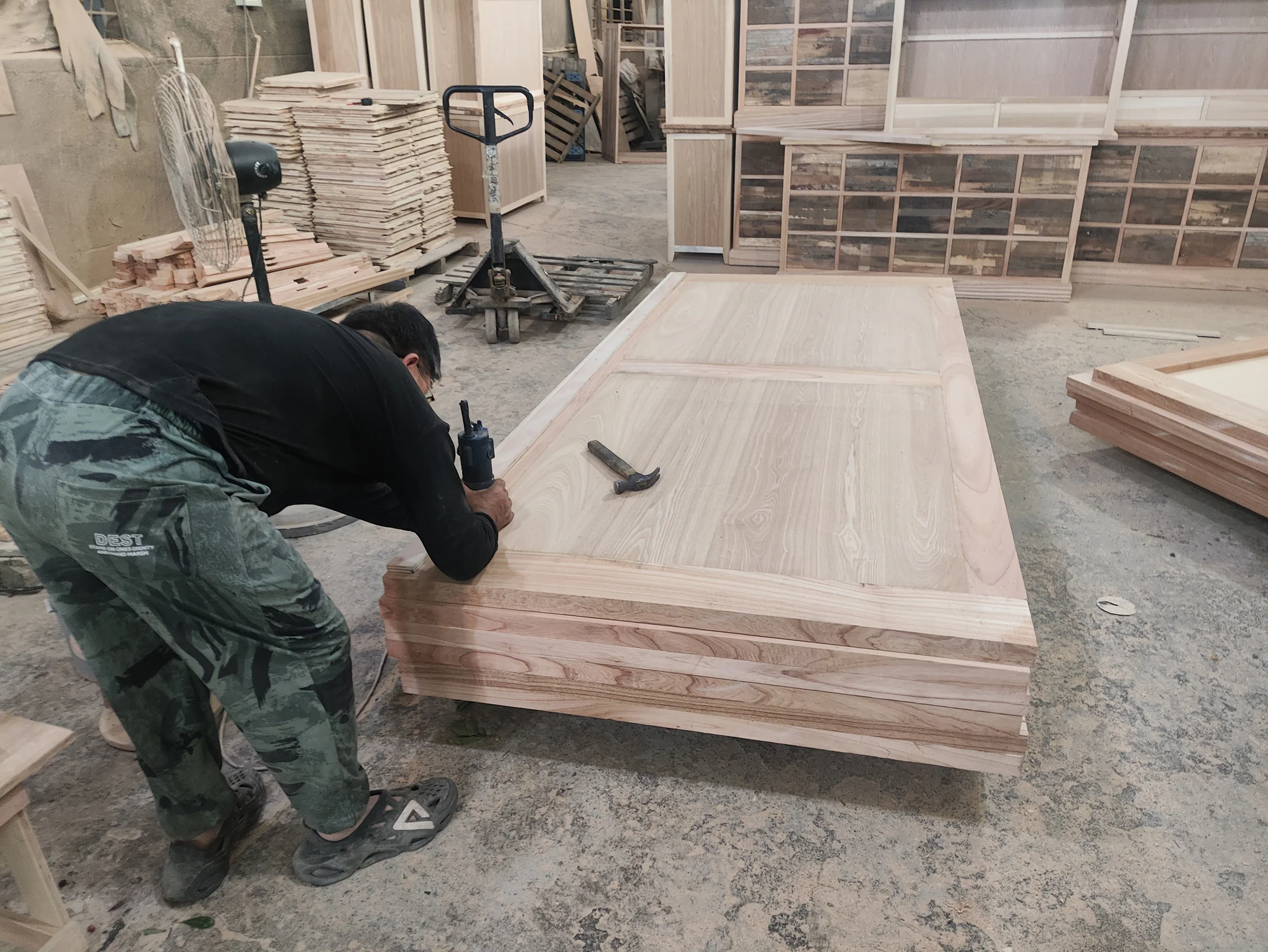
MrsWoods carries out 100% pre-shipment inspection, covering materials, structure, dimensions, surface quality, workmanship and packaging. Shipment is arranged after the customer confirms the inspection results and photographs. MrsWoods also supports customer-designated third-party testing or inspection. These are practical checkpoints for discussing the quality requirements of a specific order.
Inspection coverage and test coverage should still be described separately. Checking every piece does not automatically mean performing every possible strength, durability or destructive test on every piece. The relevant performance verification must be specified for the product and intended application.
When a product does not meet a requirement, identify the affected characteristic and the proposed response. Rework should be followed by an appropriate recheck. If an appearance exception is proposed, make the difference and affected products clear to the buyer; do not silently change the reference for the rest of the order.
Unresolved safety or mandatory compliance issues are not ordinary cosmetic concessions. They require appropriate resolution before release. For other findings, document whether the issue was corrected, accepted within the agreed requirements or remains open. A shipment decision should be based on that actual status, not merely on the presence of an inspection photograph.
Frequently Asked Questions
Does an Approved Sample Prove Bulk Furniture Will Be Consistent?
No. An approved sample can define the intended result, but it does not show how that result is repeated across production. Review relevant production evidence before ordering and agree what will be checked on the actual batch. Keep sample approval and batch verification as connected, separate decisions.
Can Natural Wood Color Variation Still Meet Quality Requirements?
Yes, when it falls within the appearance range agreed for the product and its use. A naturally varied surface can be acceptable while an unmatched pair of cabinet doors is not. Confirm the reference, acceptable features and matching expectations before judging the delivered pieces.
Does 100% Inspection Mean Every Piece Receives Every Performance Test?
No. The number of pieces inspected and the types of checks performed are separate matters. Clarify which dimensional, visual and functional checks apply to each piece and which performance tests use a defined test arrangement. A full inspection claim should not be interpreted as proof of tests that were never specified or recorded.
Can Inspection Photos Alone Demonstrate Batch Consistency?
Not completely. Photographs can support an appearance review and document observations, but they need product identifiers and context. They cannot independently establish hidden construction, every dimension or performance under a stated test. Request the measurements or test results needed for those questions, alongside relevant photographs.
What Should a Buyer Do When Pieces Pass Individually but Do Not Match as a Set?
Review them against the agreed set-level requirement. Establish whether the mismatch concerns tone, sheen, dimensions, alignment or another characteristic, then confirm the affected scope and response. If set matching was never defined, resolve that gap explicitly rather than assuming individual inspection results settle the issue.
Make Consistency Part of the Product Discussion
A useful furniture quality consistency review connects the intended product to relevant, interpretable evidence. Define what must remain consistent, distinguish acceptable natural differences from nonconformities, and check whether individual results also answer the needs of matching sets and collections. Keep previous production evidence separate from verification of the order being purchased.
For buyers working with a furniture OEM manufacturer, this approach makes an inquiry more specific. Instead of asking only whether the factory can maintain quality, explain the dimensions, finish relationships, construction features and functions that your customers depend on. Identify what is already approved and what still needs discussion.
Send MrsWoods the product drawings or reference images, intended materials, finish direction, quantities, destination market and any matching or performance requirements. Include the particular concern you want resolved, such as paired fronts, compatible hardware or appearance across a collection. The team can discuss material and finish choices, product development and inspection requirements around that project, with physical references and customer confirmation guiding the expected result.
