
This guide is for furniture brands, retailers, wholesalers and project buyers who have moved beyond initial supplier identification. It connects the wider process of choosing a furniture manufacturer in China with a practical first-order assessment. The five areas below organize the discussion; they are not a certification, a universal scoring system or a promise of future performance. Use them to decide which questions need resolving, who should answer them and what your next purchasing step should be.
Key Takeaways
- Evaluate a defined furniture order, not a supplier’s general reputation alone.
- Match experience to the product, market, sales channel and work the supplier actually performed.
- Record the limits of each piece of evidence, including missing or contradictory information.
- A serious unresolved issue should not disappear behind strengths elsewhere in the assessment.
- Continuing discussions is different from approving production or releasing payment.
What Does Reliability Mean for a First Furniture Order?
A reliable furniture manufacturer needs to be evaluated against the work being proposed. For a first order, focus on whether the company understands the requirement, can explain a credible production arrangement and will address unresolved questions before the relevant commitment. Previous work provides evidence, not certainty.
A Real Factory Is Not Automatically the Right Supplier
Confirming that manufacturing takes place at a stated location answers an identity and activity question. It does not establish suitability for every product or order. If that foundation remains uncertain, first verify a furniture manufacturer. This assessment begins with those findings rather than repeating registration checks or a factory-tour checklist.
For example, evidence of producing occasional tables does not settle whether the same arrangement suits a customized dining collection. Ask which experience transfers and which features need development or further review. The same principle applies when moving between home furniture and event or rental products.
Assess Suitability for This Order, Not a Permanent Label
Treat furniture manufacturer reliability as a judgment with a stated scope. Note the products, facility or production route, quantities and timing discussed. If those change, reconsider the affected conclusions. An assessment for one table model should not silently become approval for an unrelated upholstered range.
Someone seeking a reliable furniture supplier in China should therefore ask for explanations tied to the proposed purchase, rather than a blanket assurance that the business is dependable.
What Should Buyers Define Before Comparing Manufacturers?
Give each manufacturer a comparable brief before evaluating its answer. Include what you know and identify what remains undecided. Otherwise, one quotation or schedule may assume an established product while another includes development work, making the apparent comparison misleading.
Product, Material and Destination-Market Requirements
Describe the furniture category, intended use, drawings or reference images, material construction, finish and destination market. For an oak furniture manufacturer inquiry, distinguish the proposed solid-wood and veneer components instead of relying on “oak finish” to describe the whole product. If the construction is undecided, request clarification rather than treating an assumption as an agreed specification.
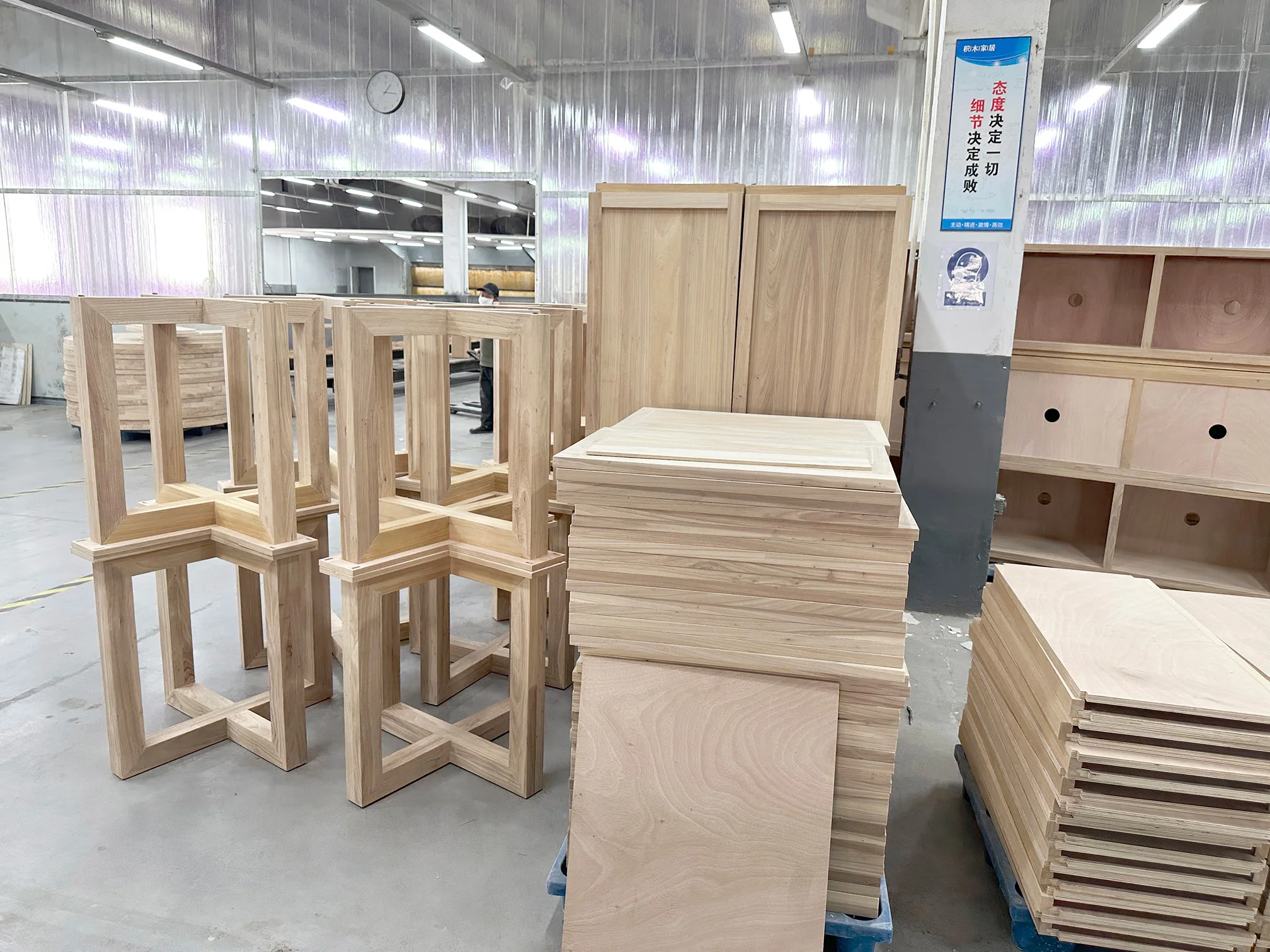
MrsWoods owns several furniture factories, with product categories manufactured at different facilities. Buyers can discuss their intended furniture with the team so that questions about production relate to the relevant facility and work. This makes the product brief a useful starting point for understanding the proposed manufacturing arrangement.
Quantities, Timing and Acceptance Expectations
State the quantities by product and variation, the required delivery stage and any immovable project date. Explain what needs approval before production and what the buyer expects to review before shipment. Separate known requirements from preferences that can still be negotiated.
Keep the initial brief short enough to use. A buyer developing an oak dining table might identify the drawing revision, top construction, finish reference, order quantity and destination. The assessment then asks whether the manufacturer understands those points and can explain how it would handle them. Detailed sampling, test methods and delivery terms require their own agreement.
How Should Buyers Evaluate a Furniture Manufacturer Across Five Areas?
Use the five areas as connected questions, not points that automatically add up to a pass. For each one, record the requirement, the evidence available and the remaining question. The depth of review should reflect the order and the consequences of getting an important assumption wrong.
The NIST MEP supplier-selection article recommends looking beyond unit price to supplier capabilities, quality systems, business fit and operational dependencies. It is professional guidance published on a government website, not a furniture acceptance standard. The framework below applies that broader perspective to a furniture buyer’s first-order discussion.
Relevant Export and Product Experience
Ask which previous work resembles your product and intended market. Then identify the supplier’s role: manufacturing, development, sourcing, export coordination or a combination. Years in business are useful background, but do not answer those questions by themselves.
Discuss a comparable order and the requirements the team handled. What product information, packaging instructions or shipping documents were involved? The objective is to assess relevant furniture export experience, not to collect impressive country names. Experience in another market may still be useful, provided the differences are acknowledged and addressed.
Verifiable References and Project Roles
A project photograph needs context. Establish the product, approximate timing, work performed and records that connect the supplier to that work. A matching catalogue image alone does not show who manufactured the item or whether the customer was satisfied.
When you verify furniture supplier references, seek relevant, shareable evidence rather than demanding an unrestricted customer list. Redacted records or an authorized reference discussion may help. Record any limitation that prevents you from reaching a conclusion; do not replace missing evidence with an assumption of either credibility or dishonesty.
Commercial and Communication Warning Signs
Compare the proposal with the brief and with earlier explanations. An unexpected material substitution, changing price basis or unexplained delivery commitment deserves a specific question. A price change after an agreed specification change is different from a new price with no explanation.
Use furniture supplier red flags to identify what needs checking and which commitment should wait. Do not treat one slow reply as proof of fraud. Look at whether the team can resolve the actual discrepancy and explain its effect on the order.
Current Operational Stability
Previous projects describe past work. Ask what has changed since those projects and whether the proposed arrangement still fits your purchase. Relevant questions may concern the people responsible, material availability, equipment dependencies or work assigned elsewhere.
The purpose of reviewing furniture manufacturer operational stability is to uncover current dependencies and unresolved disruption, not to calculate capacity from a workshop photograph. If a key operation is unavailable, ask how the proposed solution would be checked. Do not assume an alternative facility is interchangeable merely because it belongs to the same organization.
A Workable First-Order Plan
Ask what must be settled before production, what remains subject to development and how changes will be agreed. A furniture OEM manufacturer should be able to discuss the proposed work in relation to your drawings and requirements, rather than relying only on unrelated finished-product examples.
In its purchasing work, MrsWoods considers whether the style, material and paint or finish requirements suit a factory’s production strengths. When the proposed products do not fit the same production arrangement, the team considers dividing the work rather than assigning everything to one factory. Order planning therefore follows the products and customer requirements, not a rule that every first order must be tiny.
Develop the details of a first order with a new furniture supplier separately. This evaluation should identify whether an actionable plan is possible, without inventing a standard deposit percentage, trial quantity or automatic reorder commitment.

How Should Buyers Handle Missing or Conflicting Evidence?
Record the question that remains unanswered, not just the document that is missing. Ask what evidence could resolve it and whether the uncertainty affects the next commitment. Some gaps can be addressed through clarification; others require a targeted visit, professional review or a revised proposal.
Separate Claims, Supporting Evidence and Remaining Uncertainty
For useful furniture supplier evaluation, keep three statements separate: what the supplier says, what you have reviewed and what you can reasonably conclude. “We make oak cabinets” is a claim. Identifiable production records may support particular work. Neither statement automatically establishes suitability for your new cabinet design.
Consider an illustrative buyer requesting an oak-veneer cabinet. The supplier provides photographs of a similar silhouette, but the material description is unclear. The next action is to establish the photographed construction and the proposed construction, not to approve or reject the supplier on appearance. This is a hypothetical decision example, not a MrsWoods customer case.
Resolve Material Contradictions Without Demanding Confidential Data
If two records disagree, identify the exact difference and request an explanation tied to the affected requirement. Ask for the relevant page or redacted extract rather than unrelated customer information. Keep the correction with the original question so that everyone evaluates the same answer.
MrsWoods’ procurement team reviews unexpected changes in pricing, materials or delivery through communication with the factory and internal evaluation. For a price change, the team may seek written clarification before ordering; delivery difficulties are considered against the customer’s timing and the proposed solution. The response depends on the situation rather than treating every change as an automatic rejection.
ISO 31000 risk-management guidance provides a general framework for identifying, evaluating and addressing risks. Its public overview also makes clear that it is not a certification standard. Here, that distinction matters: documenting a review does not certify a supplier or remove the uncertainty in a purchase.
When Should Buyers Continue, Seek More Evidence or Pause?
Choose the next action according to the unresolved issue. Continue discussions when the proposed work is sufficiently understood for that step. Seek additional evidence when a defined question can be answered. Pause a commitment when a material requirement remains unclear or the proposed response is inadequate.
Continue With Clear Conditions or Arrange Targeted Checks
Name the condition attached to the next step. You might continue technical discussions while waiting for confirmation of a material, but not treat that discussion as approval to manufacture. Record who must respond and what needs to be agreed before the commitment changes.
Choose specialist work by its purpose. Intertek’s furniture inspection services distinguish factory evaluations from pre-production, during-production and final inspections. These are different opportunities to examine the work; a factory assessment is not a substitute for checking the products covered by a later inspection. Agree the scope of any commissioned service rather than assuming its name answers every question.
Pause When Material Issues Remain Unresolved
Pause when the outstanding issue affects something you need to commit to: the product construction, responsible party, production arrangement, required timing or another essential condition. Explain what would allow the discussion to resume. A pause can be a request for a better-supported proposal, not an accusation.
Avoid averaging away a serious gap. Strong references do not explain an unresolved material substitution; an attractive sample does not clarify who will perform an essential operation. For furniture supplier due diligence, the useful output is a documented decision with conditions, not a high score that conceals unanswered questions.

Frequently Asked Questions
Does a Verified Factory Automatically Qualify for a First Order?
No. Identity and manufacturing activity are starting points. You still need to assess the proposed product, production arrangement, commercial scope and unresolved requirements. Choosing a reliable furniture factory means connecting those findings to your particular purchase rather than treating verification as blanket approval.
Is Experience With Another Product or Market Relevant to My Order?
It can be, but identify what transfers and what does not. A supplier may have useful manufacturing or export experience while lacking experience with a particular construction or destination requirement. Ask how the remaining differences would be addressed before relying on the comparison.
What if a Manufacturer Cannot Disclose Customer Names?
Ask what relevant information can be shared with permission or redacted. Product references, the scope of work and selected records may support parts of the claim. Confidentiality alone is not proof of a problem, but it does not remove the need to resolve an important evidence gap.
Can a Good Sample Prove That Bulk Production Will Be Reliable?
No. A sample shows the item reviewed under its particular conditions. It does not demonstrate how an entire future order will be produced or checked. Clarify the production references, responsibilities and agreed inspection arrangements separately, without assuming sample approval settles them all.
Does Every First Order Need to Be a Small Trial Order?
No. The appropriate scope depends on the product, procurement need and agreed commercial conditions. A reduced order may help answer some questions but may not represent the intended production arrangement. Define what the order needs to establish instead of choosing a trial quantity by habit.
Conclusion: Make the First-Order Decision Specific
The practical answer to how to evaluate a furniture manufacturer is to connect each important requirement with relevant evidence and a clear next action. A supplier may have real factories, credible experience and attractive products while still needing to clarify how your proposed order would be handled. The evaluation should make those remaining questions visible.
Keep a short record of the brief, the evidence reviewed, unresolved issues and conditions for proceeding. Revisit affected conclusions if the product, material, production location or timing changes. Use targeted checks where they can answer a defined question, and distinguish the decision to continue discussions from later production, inspection and payment decisions. This makes the review useful to the people who will actually manage the order.
To explore a project through MrsWoods’ furniture OEM and ODM services, share your drawings or reference images, materials, quantities, target market and required timing. The team can discuss the relevant production arrangement and the points to clarify before your first order. Start with the furniture you need and the decisions still open.
