

AQL can support that decision when the buyer and supplier agree on an applicable sampling scheme. The result belongs to the sampled lot and inspection scope. It cannot repair an incomplete specification, turn photographs into laboratory evidence or decide who must accept a deviation. Those decisions still belong in the purchase order, quality plan or another agreed project document.
This guide follows the order from inspection readiness through release, rework or reinspection. For the wider system covering specifications, production controls, records and roles, use the furniture quality control framework for B2B buyers.
Key Takeaways
- Define the lot before selecting a sample. The inspection request should identify the PO, SKU or variant, current revision, quantity, production location and packing status.
- AQL is an index within a sampling scheme. It is not permission to ship a stated percentage of defective furniture, and a passing sample does not prove that every unit conforms.
- Classify defects before the inspection. Critical, major and minor need project-specific meanings tied to safety, function, saleability, appearance and packing requirements.
- Full factory checks and random acceptance sampling have different jobs. One screens the presented output; the other supports a buyer’s decision about the lot.
- A report needs a next action. Pass, fail and unresolved findings should lead to a named release, hold, rework, expanded check, reinspection or concession decision.
What Must Be Ready Before a Furniture Pre-Shipment Inspection Begins?
The inspection should begin only when the goods and evidence match the scope being requested. The inspector needs to know which finished products form the lot, how much of that lot is available, what remains unpacked or inaccessible and which current documents define an acceptable result. Sampling an uncertain or partly presented population produces a precise-looking result with an unclear meaning.
Identify the lot that is actually being offered
Start with the purchase order, SKU, finish or upholstery option, drawing revision, order quantity and finished quantity. A mixed order may require separate lots when products, materials, factories or acceptance criteria differ. Combining unlike products into one convenient number can hide a problem in a smaller SKU or apply one finding to products it does not represent.
Confirm finished and packed status without inventing a universal percentage
The goods must be complete enough for the requested checks and available for unbiased selection. A visual and functional inspection needs finished furniture. A packaging review needs production packing, not a demonstration carton prepared separately. If some goods are unfinished, unpacked or unavailable, record the accessible quantity and treat the missing scope as a limitation rather than assuming it matches the sample.
Commercial inspection services may publish preferred completion thresholds, but those are service conditions rather than a universal furniture rule. If the presented lot does not permit random selection and the planned checks, move the inspection, change its scope or record a partial result that cannot release the missing portion.
Give the inspector a current decision package
A practical furniture inspection checklist starts with the latest purchase order, drawings, approved sample or finish range, dimensions and tolerances, hardware and accessory list, packaging instruction, labels, shipping marks and known approved deviations. Each requirement should state how it will be judged. “Good finish” is vague; a current finish reference and named unacceptable conditions create a usable comparison.
The buyer also needs to state the sampling scheme, inspection level, defect categories, dispute authority and action after failure. The Travis Perkins product inspection guidance offers a buyer-side example: its quality plan separates measured variables from yes-or-no attributes, defines pass and fail criteria, and uses accept and reject references for appearance. It is a company policy, not a furniture standard.
For a MrsWoods order, the inspection basis can include the current order, drawing or approved sample, finish reference, packing requirements, shipping marks and customer instructions. The actual shipment determines the inputs; one tolerance set or AQL does not fit every furniture category.

How Does AQL Sampling Turn a Finished Lot Into a Release Decision?
AQL sampling converts observations from a selected number of units into an acceptance or rejection result under an agreed scheme. The sequence matters: define the lot, choose the applicable standard and inspection level, set an AQL for each relevant defect class, select units randomly, count nonconforming items or nonconformities as required, and compare the result with the plan’s acceptance and rejection numbers.
Use the sampling scheme as a complete method
The current ISO 2859-1:2026 attribute-sampling standard describes lot-by-lot schemes indexed by acceptance quality limit, including single, double and multiple sampling and rules for changing inspection severity across a continuing series. A buyer should use the applicable plan as a system. Copying only an AQL number or a sample-size row removes the conditions that give the result meaning.
In a furniture AQL inspection, the AQL is not a promised defective percentage in the shipment. It indexes a sampling plan. The result says that the observed sample met the plan’s acceptance rule for the defined lot and defect class; units outside the sample remain unobserved.
Separate continuing production from an isolated order
ISO 2859-1 is designed for a continuing series of lots where switching rules can respond to inspection history. Custom furniture may be a unique project or short run. The official scope of ISO 2859-2:2020 for isolated-lot inspection covers situations where those switching rules do not apply.
This distinction does not select a plan for the buyer. A quality professional or competent inspection provider should consider the lot structure, contract and buyer risk. This article does not reproduce paid sampling tables because a table without its governing rules invites misuse.
Read a pass or fail within its real limits
A pass supports the agreed lot decision at the time and place inspected. A fail means the sample crossed a rejection rule; it does not decide whether to scrap the lot, inspect every unit, rework selected characteristics or accept a documented deviation. The contract must connect the statistical result to a commercial response.
An AQL furniture inspection addresses suitable attribute decisions in a sample. Timber species, chemical content, durability and destination-market compliance require separate, appropriate evidence.
How Should Furniture Defects Be Classified Before Inspection?
Furniture defect classification should describe the consequence of a failed requirement for the actual product. Critical, major and minor are useful only when the buyer and supplier agree what each category means and provide relevant examples. The label should follow the observed condition and its effect, not the inspector’s preference or a generic list copied from another order.
Classify consequence rather than furniture vocabulary
A condition associated with an unreasonable safety or regulatory risk may be critical. A defect that prevents assembly, intended function or normal sale may be major even when it is not dangerous. A limited appearance issue may be minor when it remains outside the primary viewing area and within the agreed workmanship rules. These examples illustrate consequences; they are not universal classifications.
The product changes the decision. A hole-position error may be harmless on a decorative part yet stop a knock-down table from assembling. A colour difference may fit the approved natural oak range on one item but break an intentionally matched dining set. Product use and the approved appearance range affect severity.
Record the condition before debating the label
A useful defect record states the SKU, sampled unit or carton, location on the product, requirement, observable condition, measurement where relevant and clear photograph. “Major finish issue” leaves too much room for argument. “Dark stain patch outside the approved range on the front edge of SKU X” gives the parties something they can compare and decide.
Count rules also need care. One unit may contain several observations, while a plan may make decisions about nonconforming units or about nonconformities per unit. The inspection request should state which basis applies. Changing the counting method after seeing the result destroys consistency.
Name the authority for disputes and concessions
The inspector records and classifies findings within the agreed brief. Release authority may remain with the buyer, a named quality manager or another role specified in the order. If the supplier disagrees with a category, the report should preserve the observation while the authorised parties resolve the classification.
A concession should identify the defect, affected scope and shipment. It should not silently redefine the standard for future orders. Update the project reference before the next inspection when an acceptance rule changes.
What Should a Finished-Furniture Inspection Actually Check?
A finished-furniture inspection should verify identity and quantity first, then judge accessible workmanship, dimensions, function, accessories and packaging against current project requirements. The check should reflect the product. A dining chair, extension table, cabinet and upholstered sofa do not share one complete test list.
Verify identity quantity and traceability
Match products and cartons to the PO, SKU, finish, configuration and approved revision. Reconcile ordered, packed and available quantities. Record where sampled units came from so the report shows that selection was not limited to preselected pieces.
The SGS furniture inspection scope describes final random inspection as a detailed visual review of randomly selected finished products covering quality, quantity, packaging, labelling and shipping marks. This is a service description rather than a mandatory method, but it identifies the broad finished-goods scope that a buyer should translate into project checks.
Check the finished product against identified requirements
Inspect visible workmanship, finish and approved natural variation under suitable viewing conditions. Measure dimensions from the stated datum and tolerance. Operate doors, drawers, extensions, adjusters or other functions relevant to the item. Check stability, assembly interfaces and accessory completeness using agreed methods. A quick movement check should not be reported as durability testing.
Finished-product access has limits. A packed cabinet cannot prove which substrate was used inside a sealed panel, and a visual review cannot confirm a chemical property. The related guide to furniture quality control during production explains where materials, machining, assembly and finish preparation should be checked before they become concealed.
Inspect the packed saleable unit
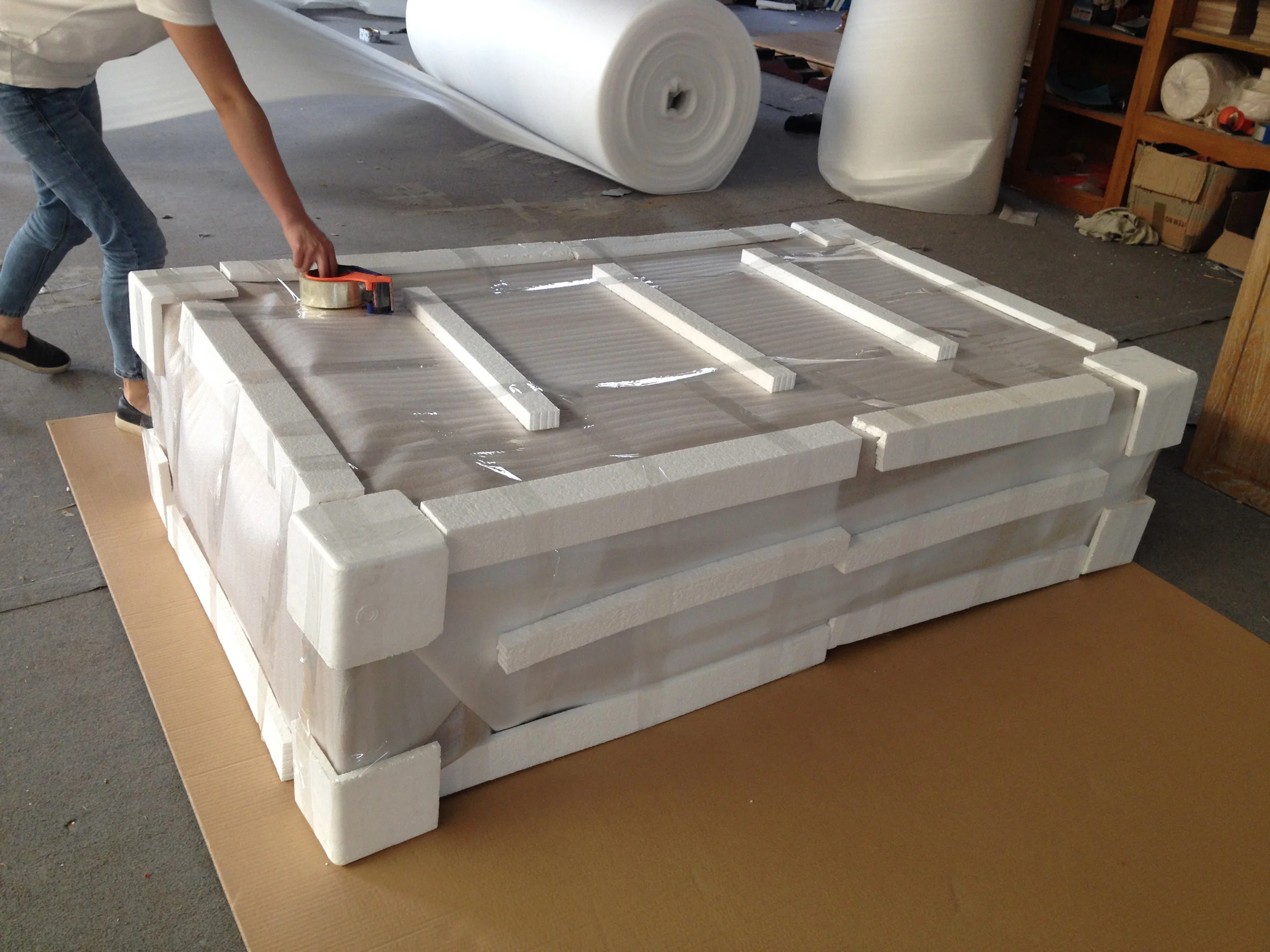
Open selected production cartons and verify the product identity, protection, hardware packs, instructions, care information, labels, barcodes, carton marks and agreed packing arrangement. Check carton condition and closing method. If loading supervision or container checks are required, define them as a separate scope rather than assuming a pre-shipment product inspection covers the loading event.
Keep compliance documents and laboratory reports separate. The inspection can confirm that an agreed label or document is present. It cannot establish that every destination requirement was identified or that an unrelated report applies to this product revision.

How Should Buyers Combine 100% Factory Checks With Random Buyer or Third-Party Inspection?
A supplier’s full finished-unit check and a buyer’s random acceptance sample form two layers. The supplier screens the output it intends to ship. The buyer or independent inspector selects from the presented lot to support an acceptance decision. A previous full check does not remove the value of independent selection, and a passing sample does not remove the supplier’s responsibility for the rest of the order.
Give each inspection a clear purpose
A 100% check can suit accessible, repeatable characteristics such as visible workmanship, an operation or an accessory confirmed on every finished item. Its result still depends on visibility, method and inspector consistency. It does not make destructive tests practical or create statistical independence when the supplier controls selection.
A buyer or third-party furniture inspection can add controlled random selection and evidence produced for the buyer. Independence still requires access, a clear scope and real decision authority. A third-party logo cannot fix a vague checklist, unavailable cartons or an unrelated AQL.
Separate the person who observes from the person who releases
Factory QC, buyer representatives and third-party inspectors can all record observations. The order should state who can resolve disputed findings, approve a concession and release the shipment. A sampling pass does not close a separate issue such as missing documents or an unapproved finish deviation.
When evaluating a new supplier, buyers should confirm inspection access and release rights before the deposit or production commitment. Those controls belong alongside the broader checks in our guide to choosing a furniture manufacturer in China.
How MrsWoods uses the two layers
MrsWoods checks every finished furniture unit before shipment and provides inspection results and photographs for customer confirmation. Buyers may also appoint an independent third-party inspector. If that inspection identifies a problem, the relevant items are corrected and updated evidence is assembled for the customer. This practice does not mean that every unit receives destructive or full performance testing, and it does not create a zero-defect guarantee.
The practical advantage is that supplier screening and buyer verification can refer to the same order, approved references and shipment scope. The buyer still decides whether the evidence is sufficient for release. Photographs communicate visible results; they do not replace the physical measurements, functional checks or tests required by the project.
What Happens When the Inspection Passes, Fails or Finds an Unagreed Condition?
The result should lead to a named action for the identified lot. “Pass” supports release within the agreed scope. “Fail” triggers containment and a disposition decision. An unagreed condition stays open until the authorised parties classify it and decide whether the requirement, product or shipment must change.
A pass supports release but does not erase limitations
Before release, confirm that the inspected lot still matches the shipping lot, all planned checks were completed and every known deviation has a disposition. The pre-shipment inspection report should identify unavailable goods, inaccessible features, omitted tests and pending documents. A pass with a visible limitation is more useful than an unconditional label that hides what was not checked.
A fail needs containment correction and reinspection
Hold the affected lot or release scope, review the defect records and identify potentially affected units. The response may include repair, replacement, sorting or checking every unit for a suitable characteristic, followed by reinspection. The method should follow the failure pattern and contract.
When a MrsWoods inspection or buyer-appointed third-party inspection identifies an issue, the team coordinates correction with the relevant factory and provides updated photographs or other agreed evidence for customer review. The final shipment decision remains tied to the order and customer requirements; the article does not assume one automatic approval chain for every project.
Keep an unagreed condition visible
An inspector may find a condition that the documents do not classify: a natural grain feature with no approved range, a dimension without a tolerance, or a packaging change that the buyer has not reviewed. The responsible response is “pending decision,” not an invented pass or fail rule. The buyer may request more evidence, approve a limited concession, revise the requirement for future production or reject the condition for this shipment.
Make the report reconstruct the decision
The report should identify the lot, accessible quantity, sample method and selected units, current references, actual results, defect records, category counts, corrective action, reinspection and final status. It should name the party making any concession or release decision.
A long gallery of unlabelled photographs is not a strong report. A smaller set linked to the SKU, requirement, sampled unit and finding allows the buyer to understand what happened and what changed after correction.
Frequently Asked Questions
What is checked during a furniture pre-shipment inspection?
The inspection normally covers product and carton identity, available quantity, visible workmanship, finish, accessible dimensions, relevant function and assembly, accessories, packaging, labels and shipping marks. The exact list must follow the product, current specifications and buyer’s release requirements.
Does AQL mean a buyer accepts a percentage of defective furniture?
No. AQL indexes an acceptance-sampling scheme. The plan uses the lot, inspection level, AQL and other rules to set a sample and acceptance or rejection decision. It does not promise acceptance of that percentage in the shipment.
Can a passed sample prove that the whole furniture lot is defect-free?
No. It supports the agreed decision under the selected sampling plan for the identified lot. Uninspected units remain unobserved, which is why supplier process control, full checks for suitable characteristics and clear remedies still matter.
Why use random inspection if the factory checks every finished unit?
The checks have different purposes. Factory inspection screens the full presented output under the supplier’s process. Random buyer or third-party selection provides separate evidence for the lot decision and reduces the risk that only selected good units are presented.
What should happen after a furniture pre-shipment inspection fails?
Hold the affected scope, review the findings, decide on sorting, repair, replacement, expanded checking or another disposition, and verify the corrected result. Shipment should proceed only after the named authority closes the failure or records a precise concession.
Does pre-shipment inspection replace furniture testing or compliance evidence?
No. It can confirm accessible features and the presence of specified labels or reports. Product performance, durability, material properties and market compliance require their own applicable methods, samples and documentation.
Make the Shipment Decision Traceable
A credible furniture pre-shipment inspection starts before anyone opens a carton. The parties identify the lot, references, scope, sampling method, defect rules and decision authority. The report then shows what was available and checked, so the buyer can release, hold or rework the shipment without overstating the evidence.
Supplier checks can cover every finished unit for suitable visible or functional characteristics. A random sample supports the buyer’s lot decision. Both require current references and a clear response to failure. The release record should preserve the lot identity, known limitations, corrective action and any buyer concession, giving receiving teams a traceable starting point if the shipment later raises a question.
For a custom or OEM project, send MrsWoods the PO and SKU list, finished and packed quantities, drawings or approved sample references, defect definitions, packaging requirements, target market and any buyer-appointed inspection scope. The team can align factory checks, customer evidence and reinspection steps through its custom furniture manufacturing and project support before the shipment decision.
