
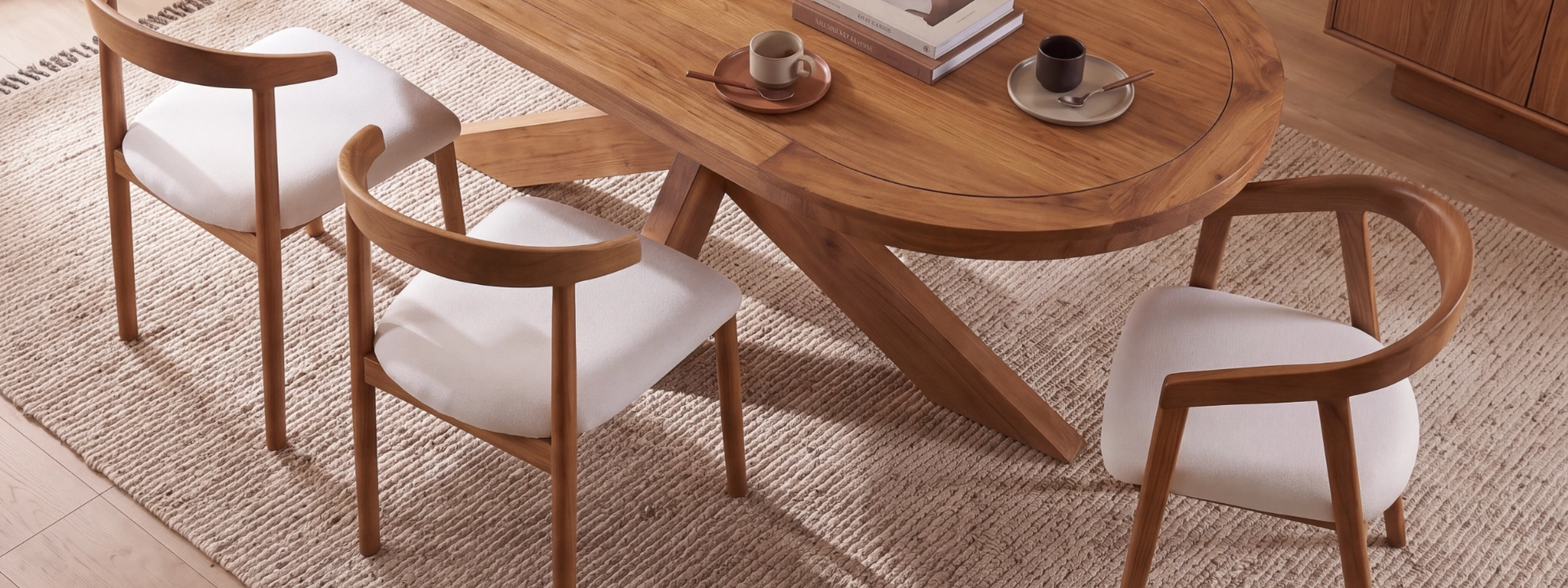

Key Takeaways
- Specify color, sheen and surface texture separately; matching one does not establish a complete finish match.
- Use an identified physical reference that represents the intended wood and finish, with any permitted variation agreed in advance.
- Compare under consistent conditions, then consider relevant lighting at the intended destination.
- Inspect the relationship between finished pieces, not just each piece against a small board.
- Keep the acceptance reference unchanged while investigating a mismatch; recheck reworked and replacement pieces in context.
What Does Consistent Color and Finish Mean for a Furniture Order?
Separate Color, Sheen and Surface Texture
Start with three questions: Is the tone right? Does the surface reflect light as intended? Is the visible texture acceptable? A chair can have the expected brown tone yet look wrong beside its companions because the finish is noticeably shinier. A close color match can also leave an unwanted difference between filled and visibly open grain.
For furniture finish consistency, record these characteristics separately. Terms such as “natural oak” or “warm walnut” are useful starting descriptions, not complete acceptance instructions. Mark which surfaces matter, including legs, backs and edges that remain visible after assembly.
Define What Must Match Within a Piece, Set and Batch
A buyer may require harmony between a chair’s legs and back, between chairs sold as a set, and across the wider order. Those relationships need not have identical acceptance requirements. Tell the supplier which pieces will be displayed together and which combinations would be unacceptable.
Natural grain does not need to repeat like a printed pattern. However, “wood varies” should not excuse every unexpected difference. Agree the permitted appearance range and distinguish it from natural wood variation versus defects. This article addresses comparison and matching; the separate guide covers that classification in detail.
What Should Buyers Confirm on a Physical Finish Reference?
Use a Reference That Represents the Intended Material and Finish
Effective wood finish color matching starts with the surface actually being ordered. Ask whether the reference represents the specified solid wood, veneer or other construction, with the intended finish. If a product combines solid oak components and an oak-veneered panel, discuss how both will be represented rather than assuming one small sample proves the entire combination.
The online material and color references can help narrow a design conversation. They do not replace physical finish confirmation. When approaching an oak veneer furniture manufacturer, identify the visible veneer and the components it must coordinate with, not just the preferred image on a screen.
Record the Approved Appearance and Permitted Range
Identify the reference clearly and state what it controls: color, sheen, grain visibility and texture. If a single board cannot explain the acceptable range, discuss additional examples showing the boundaries. Such examples must be agreed by both sides; collecting several different boards does not automatically make every shade acceptable.
MrsWoods uses signed-off samples or customer-supplied color boards as finish references, and compares against retained samples where available. Its retained finish boards carry a sheen indication and a company sign-off. This gives the appearance discussion an identifiable physical point of reference, rather than relying only on a finish name in an email.
Keep the reference linked to the product and order, and resolve conflicting or superseded samples before production. The broader furniture sample approval process explains approval responsibilities and changes; here, the priority is making the finish reference usable for comparison.

How Should Color Be Compared Under Controlled Conditions?
Keep Lighting, Viewing Direction and Presentation Comparable
Compare the reference and production surface together, with comparable lighting, orientation and presentation. Avoid deciding that a finish is wrong by comparing a brightly lit board with a chair standing in shadow. Record enough about the setup for the supplier and buyer to repeat the comparison.
The public scope of ISO 3668:2017 on visual color comparison describes comparing paint or related films with a standard under artificial illumination in a standard booth. This supports a controlled comparison approach; an ordinary factory lamp is not, by itself, evidence that the ISO method has been followed.
For large or assembled furniture, ask how the relevant surfaces will be presented and assessed. Maintain a comparable viewing direction relative to the grain. If the product cannot fit in the proposed setup, agree a practical comparison method instead of silently changing conditions between the reference and the finished item.
Check Whether the Match Changes Under Relevant Lighting
Two surfaces can look alike under one light source but differ under another. X-Rite’s explanation of lighting and metameric effects describes this matching problem and the value of reviewing items under different relevant light sources. Not every change in how one object looks is metamerism: the issue is a change in the match between samples.
For a hotel dining area or event furniture collection, discuss the lighting conditions that matter to the intended use. Identify which conditions govern acceptance and which are additional checks. This avoids an unresolved disagreement in which one party approves under production lighting and the other rejects under a different, previously unspecified setup.
Use Photographs and Instrument Readings Within Their Limits
Photographs help identify the affected piece, show where the difference occurs and document an inspection discussion. They should not be the sole evidence of precise color agreement: capture and display conditions can change the appearance. Include the reference in a comparison photograph where useful, but retain the agreed physical assessment.
If instruments are used, agree the method, settings, measurement locations and comparison basis before judging results. BYK’s guidance on wood-finish assessment highlights the challenge of visible grain and the importance of measurement direction. Representative readings must not become a reason to ignore a visibly unacceptable area.
Color readings and gloss readings answer different questions. The public scope of ISO 2813:2014 on gloss measurement covers non-textured coatings on flat, opaque substrates. Do not assume that the same procedure applies unchanged to a curved chair leg or a strongly textured surface.
A color-difference value without its measurement method and acceptance basis is incomplete. No single delta E limit or gloss-unit tolerance is proposed here for every furniture order. Agree suitable criteria for the actual material, finish, geometry and intended appearance.

How Can Production Checks Keep the Approved Finish Consistent?
Compare Material and Finishing Stages With the Reference
When investigating color variation in furniture production, work back through the relevant stages: the underlying wood appearance, surface preparation, stain and subsequent coatings. Ask where the difference first became visible. A final-piece comparison identifies the problem; intermediate references can help locate the stage that needs attention.
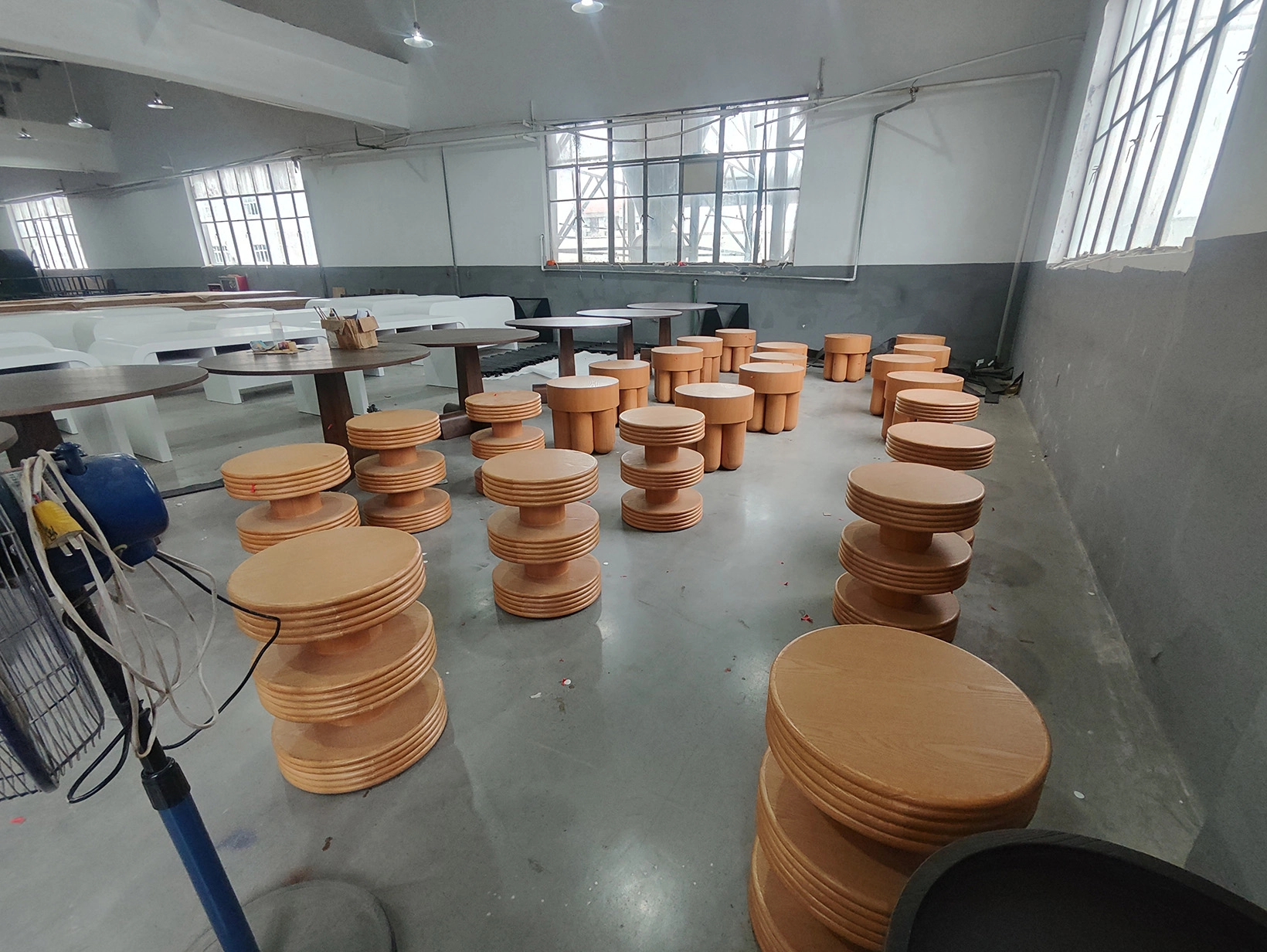
MrsWoods prepares layered finish boards so the team can examine the appearance at successive finishing steps and compare each step with its reference. For buyers, this makes the discussion more specific than “the final brown is wrong”: it provides intermediate appearances to review when checking how the finished result developed.
This is a practical question for an oak furniture manufacturer: can the team show how the intended appearance develops on the relevant material? For furniture stain color consistency, a stain name or formula is not enough evidence that the finished combination will match. Evaluate the resulting surface, not just the label on the coating.
Review Finished Pieces Together, Not Only Isolated Samples
Consider an illustrative event order of oak chairs. Each chair might seem reasonable beside the approved board, while one group looks noticeably warmer when arranged with the others. That is a set-comparison question, not proof that the reference should be changed.
Review finished items in the combinations relevant to use or sale. For batch color consistency in furniture, keep the reviewed pieces identifiable so an observation can be connected to the affected items. If a mismatch appears, clarify its extent before sorting, correction or release; do not assume it is isolated simply because only one piece was first noticed.
How Should Buyers Handle Mismatches, Rework and Replacement Pieces?
Investigate the Difference Before Changing the Acceptance Reference
First describe the difference: tone, sheen, texture or the relationship between pieces. Note the item, affected surface and reference used. Repeat the comparison under the agreed conditions, then determine whether the issue is a presentation difference, permitted natural variation or a departure from the approved appearance.
Do not approve a new board merely to make an unwanted production result appear compliant. If the buyer genuinely wants a different finish, treat that as a separate, explicit change. Otherwise, keep the original reference in place while the supplier proposes correction and the parties agree how the affected work will be rechecked.
Recheck Corrected and Replacement Pieces With the Intended Set
Check the corrected area and the surrounding surface for color, sheen and texture. Then compare the piece with its intended companions. Resolving a darker patch does not finish the task if the repaired surface now looks glossier than the rest.
For replacement pieces, establish whether the target is the retained production reference or furniture already in use. Those are not automatically interchangeable targets. An older reference also needs its condition reviewed. Avoid promising that a later piece will match indefinitely without reassessing what it must match.
MrsWoods’ pre-shipment process includes 100% inspection, covering surface appearance and workmanship alongside other specified checks. Inspection results and photos are provided for customer confirmation before shipment, and third-party inspection is supported. The photos communicate findings; they do not replace an agreed physical color comparison.
Place the appearance decision within the order’s wider furniture quality control process. Record whether the affected pieces are accepted, require correction or remain on hold, and who confirms that decision. A color match alone does not establish every other aspect of product quality.
Frequently Asked Questions
Can a Color Code or Photograph Replace a Physical Finish Sample?
Not as a complete reference for a visible wood finish. Codes and photographs can communicate a starting direction, but they do not fully specify grain, texture and sheen on the intended material. Confirm the physical appearance and how it will be assessed before relying on it for bulk production.
Why Can the Same Stain Look Different on Solid Oak and Oak Veneer?
The visible wood and its preparation may differ, so the same stain does not establish the same finished appearance. This does not mean veneer must look different from solid oak. Where both occur in one product, evaluate representative finished surfaces together and agree the required relationship.
What Color Difference Is Acceptable in a Bulk Furniture Order?
The acceptable difference is the one agreed for that product and comparison method. Define the physical reference, permitted range and which surfaces or pieces must coordinate. If numerical criteria are used, include the measurement basis; a number detached from its method is not a complete acceptance rule.
Why Do Two Furniture Pieces Match Under One Light but Not Another?
This can be a metameric mismatch. Compare the pair under the relevant agreed light sources before deciding. Also check presentation and reflections, since changes in angle or sheen can affect the apparent match without establishing metamerism.
How Should Reworked or Replacement Pieces Be Checked for a Match?
Check against the applicable reference and the pieces they will accompany. Review color, sheen and texture together. For a later replacement, clarify whether the target is an original finish reference or an existing used piece, then assess that target rather than promising an automatic exact match.
Discuss the finish before the bulk order. When contacting MrsWoods as your furniture OEM manufacturer, share the product or drawing, intended wood and construction, physical finish reference if available, sheen preference, matching-set requirements, quantity and destination. If no physical sample exists yet, start with material selection and a discussion of suitable finish samples.
