
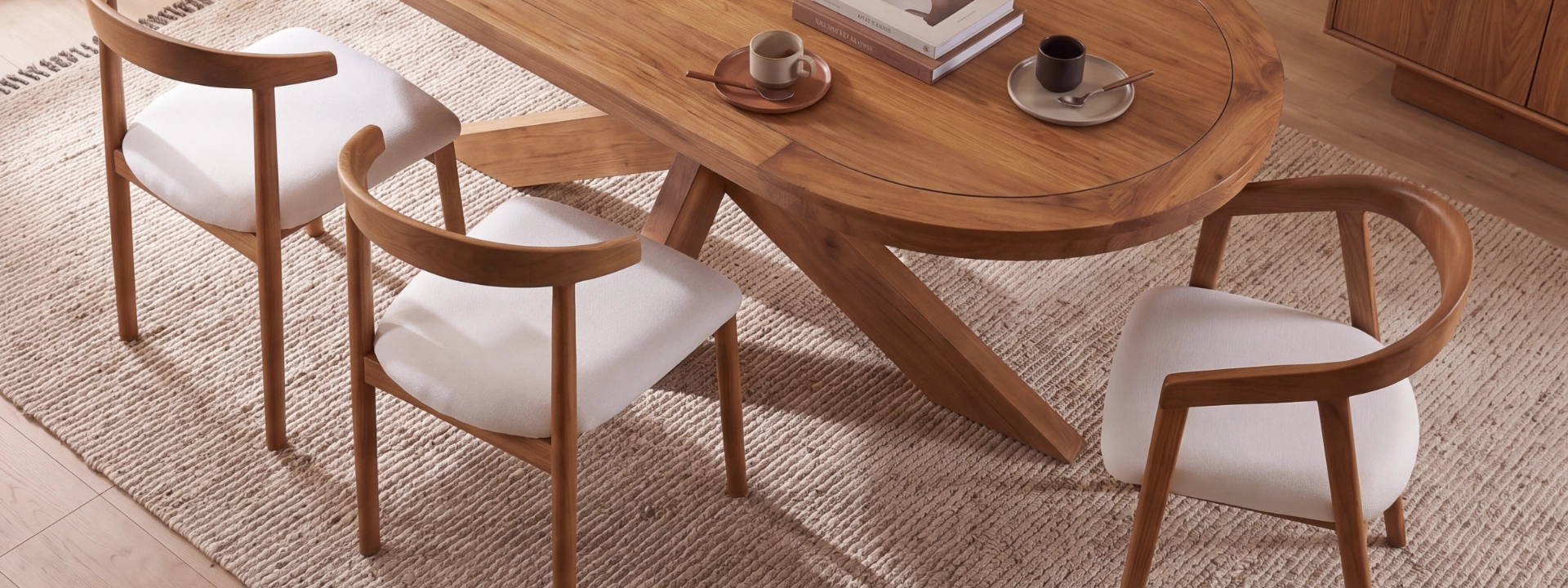

Oak furniture finishes should be chosen for the intended appearance, cleaning conditions, expected wear and production method, not just a color name. The same finish can look different on different oak boards, and a beautiful sample is only useful when its appearance and performance can be repeated in production.
For a brand or project buyer, finish selection is a specification and approval task. Ask what the surface is made from, what the coating system is intended to do, how the sample was prepared and what variation will be acceptable across the order.
Key Takeaways
- Oak’s visible pores and grain influence how stain, pigment and clear coatings appear.
- “Oil” and “lacquer” name broad finish families, not guaranteed levels of protection or easy repair.
- Approve finishes on the actual oak species and construction proposed for production, including veneer where used.
- Judge a large face, edge and joint under the same lighting; a small color chip rarely captures the whole result.
- Record the approved system, sheen, texture and acceptable range before release to production.
Why Does Finish Matter on Oak?
A finish contributes to how furniture looks and how its surface can be cleaned and maintained. It may add color, alter sheen, emphasize grain or create a protective film. It can also make a natural surface feel smoother or more textured. Each of these choices changes the buyer’s experience of the same oak construction.
The USDA Forest Products Laboratory’s Finishing Wood chapter frames finish selection around appearance, protection, cleanability, substrate properties and expected service life. Those factors need to be considered together. A dining table used daily has a different brief from a display cabinet, and an event table handled repeatedly has different demands from a piece kept in one room.
Finish is not a substitute for correct material and construction. It can slow moisture exchange, but it cannot stop wood movement or repair a poorly designed joint. It cannot turn an interior product into outdoor furniture without an appropriate whole-product design and test.
How Oak Grain and Pores Affect Finish
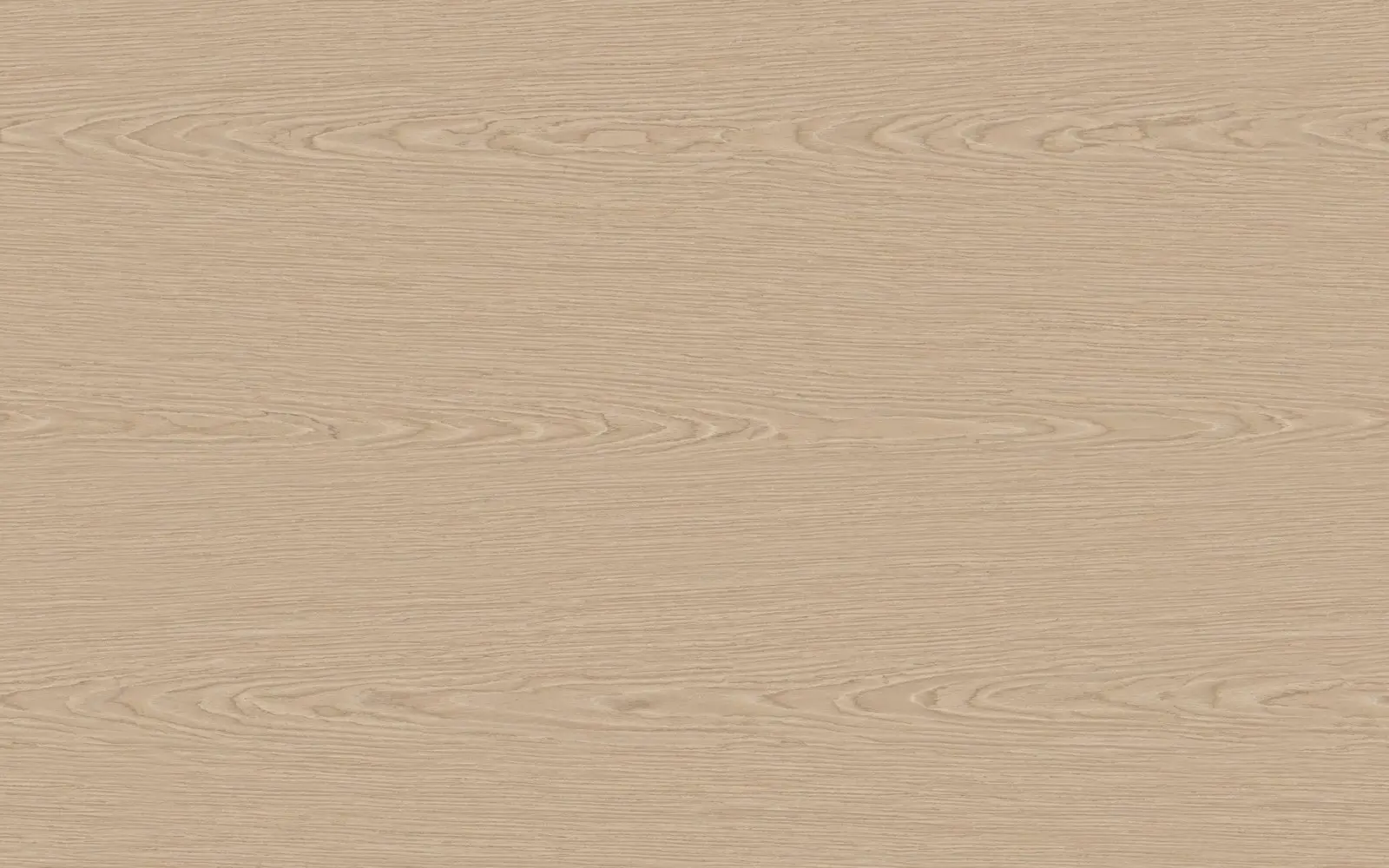
Oak is a ring-porous hardwood with visible growth-ring structure. Its pores and grain can make stain distribution, pore filling and surface texture noticeable. The finishing result depends on the oak group, board selection, cut, sanding process and coating system. A dark color code alone says little about whether grain will remain visible.
The AHEC white oak profile and red oak profile describe different grain, ray and porous characteristics. In a white oak vs red oak furniture comparison, these material differences are one reason to test the intended finish on both options rather than assuming one recipe will match.
Natural variation also matters within one oak group. A board with pronounced rays, a different grain angle or more sapwood may take the same finish to a visibly different result. Agree on an acceptable appearance range across several samples. For a collection, compare the dining table, chair and storage piece together so that their finished surfaces belong to the same design language.
Common Oak Furniture Finishes
“Clear,” “stained,” “oiled,” “lacquered” and “painted” describe different kinds of visual or process decisions. A clear system may protect while leaving the natural color prominent. A stain adds color but is commonly part of a larger system that also includes a protective finish. An oil-type finish may preserve a more direct wood feel, while many lacquer systems form a more continuous surface film. Paint changes the visual role of the grain altogether.
These labels are too broad to predict performance by themselves. Product formulations, application amounts, curing, sanding and use conditions vary. The USDA finishing reference explains that finishes should be evaluated as systems rather than names alone. A buyer needs a sample and a written schedule, not a promise that every product called “lacquer” behaves alike.
Ask the supplier to identify the finish system in commercially useful terms: substrate, preparation, color, primer or sealer where used, topcoat, sheen, texture and curing requirements. The complete recipe may be proprietary, but the agreed appearance and performance requirements should not be left vague.
Oil vs Lacquer
Oil and lacquer are often presented as a simple contest. In practice, each category contains products with different chemistry and performance. Selection should start with the product’s use: how often it is touched, cleaned, moved or exposed to spills, and what kind of maintenance the buyer is willing to support.
An oil-type appearance can highlight the texture of oak and may support certain repair approaches. A lacquer system may be chosen when the desired appearance and cleaning routine call for a continuous coating. Neither statement establishes that every oil is easy to repair or every lacquer is more durable. Ask for the exact proposed system and test the finished sample for the relevant use.
Some buyers want a low-sheen natural look but also expect intensive commercial cleaning. That combination needs careful discussion. Rather than relying on a finish name, define the appearance target and the cleaning or surface-resistance expectations separately. If a contract requires a test, specify the relevant method and pass criteria. ISO 4211-6:2025, for example, describes methods for assessing visible scratching on finished furniture surfaces; citing that method does not mean a particular product has passed it.
Surface Preparation Before Finishing
Finish consistency begins before the first coat. Machining marks, glue residue, scratches and uneven sanding can become more obvious after stain or clear coating. A surface that looks acceptable raw may reveal problems once color enters pores or a film catches the light.
Sanding needs to match the wood, the desired texture and the chosen finish. Excessive sanding or inconsistent grit progression can create differences between faces and edges. On veneered components, preparation must also respect the thickness of the face. Sanding through a thin veneer cannot be fixed by applying more color.
For sample approval, ask the supplier to use the same substrate and preparation proposed for production. A stain tested on a loose solid-oak board is not sufficient proof for a veneered cabinet face. A tiny flat swatch will also miss edge details, end grain and joints. Review those features in a representative product sample.
Color Consistency in Production
Natural wood does not arrive as an identical-color industrial sheet. Grain, cut, sapwood, heartwood and batch selection can all change the appearance beneath a finish. Production control should therefore define a range, not a single photographic “perfect match.”
Approve a set of physical samples showing the target and acceptable boundaries where appropriate. Record the lighting used for approval, because a color that appears balanced in one environment can look different in another. For cabinet doors or table leaves, check adjacent parts together instead of approving each piece in isolation.
The supplier should keep a retained reference sample and a practical process for checking first production pieces. If a later batch falls outside the agreed range, resolve it before finishing the entire run. This is especially important for repeat orders and mixed-material collections where oak sits beside metal, stone, upholstery or another wood species.
MrsWoods’ customization and quality-control services can support material, color and sample discussions. For any specific order, the approved finish range and inspection criteria should be recorded in the product documents rather than inferred from a website image.
Choosing Finishes by Furniture Use
A dining tabletop is exposed to hands, dishes, cleaning and occasional spills. Buyers should define a realistic cleaning method, desired sheen and any surface tests required by the target market. The intended finish should be reviewed on a representative top or large sample, including an edge and any seam. The MrsWoods dining furniture collection illustrates the range of product types that may need different surface decisions.
A cabinet or sideboard often makes appearance consistency across broad adjacent faces the main issue. Check the grain, color and sheen across doors under the same light. A finish that looks elegant on a small door can show unwanted contrast across a complete run of cabinetry. The core and veneer construction may also affect preparation and edge treatment.
For event and rental furniture, consider repeated setup, cleaning, handling and repair. The most suitable finish depends on the actual workflow and the product’s structure. A showroom sample alone cannot demonstrate how a table or chair will look after repeated service. If commercial-use testing is required, define it in the purchase specification and verify the finished product, not just the coating name.
How Buyers Approve Finish Samples
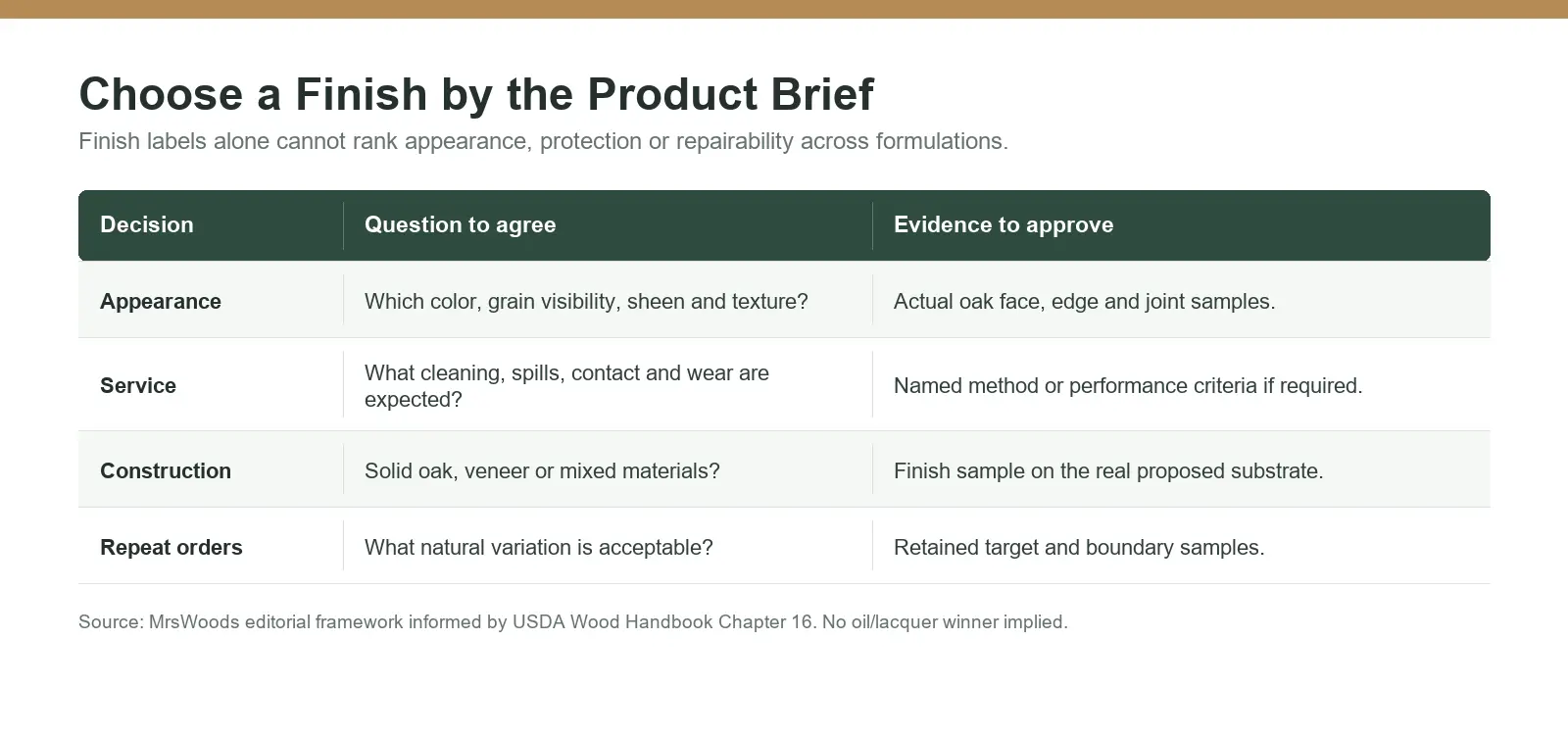
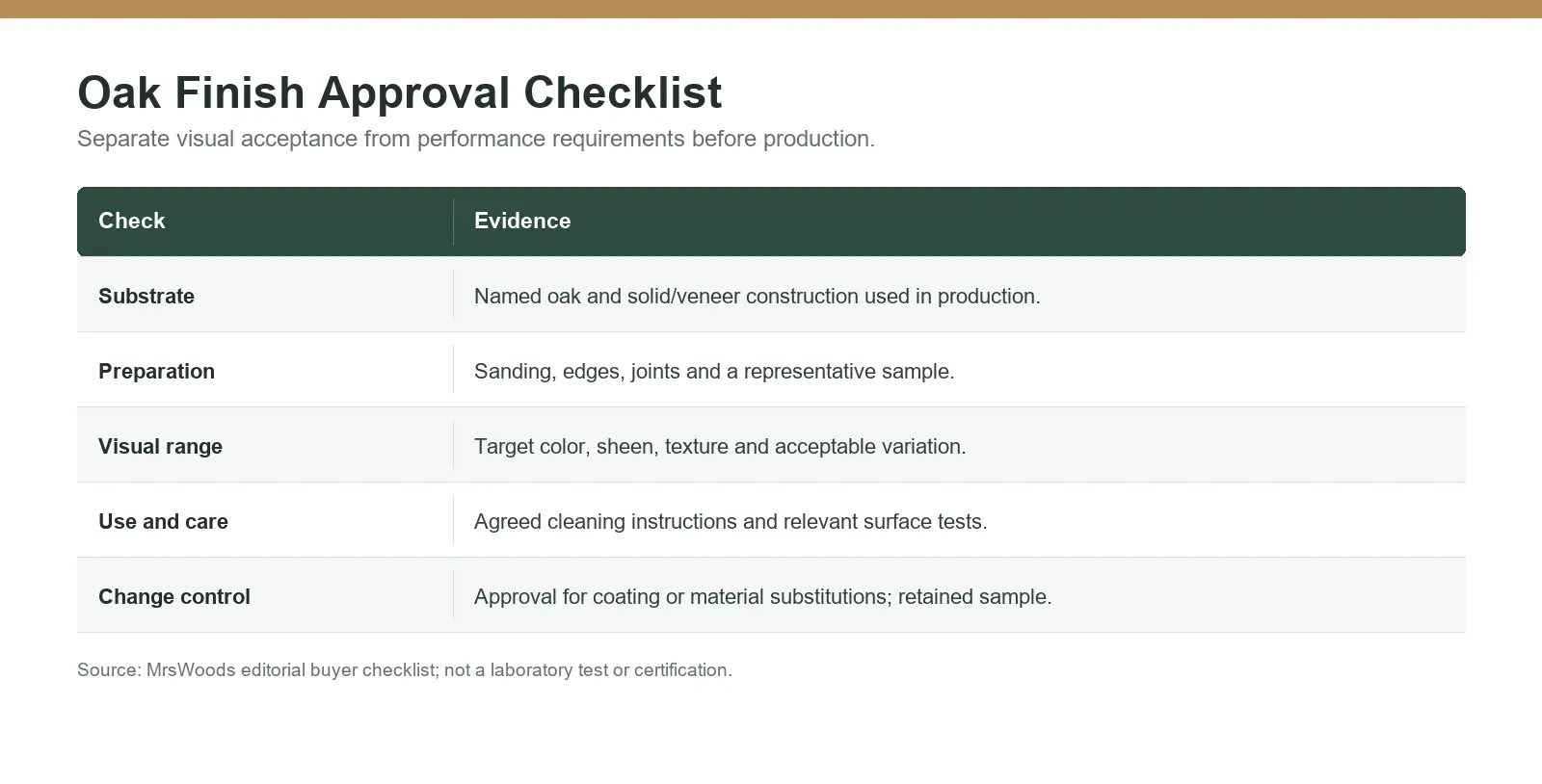
Begin with the real material and construction. Label each sample with the oak group, solid or veneer allocation, substrate, preparation and finish reference. Where appearance matters across a collection, approve pieces together. Include a broad face, visible edge and joint.
Next, separate visual approval from functional approval. Record color, grain visibility, sheen and texture in one part of the specification. Record cleaning instructions and relevant performance tests in another. The same sample may be used for both, but these are different questions. A pleasing color does not prove scratch or stain resistance.
Finally, control changes. A new oak source, veneer, sanding method or coating supplier may alter the result. Ask for renewed approval when a change affects visible appearance or required performance. Retain dated samples and inspection photographs for repeat orders; photos support the record, but physical samples remain more reliable for color and texture.
If you are developing a collection, send MrsWoods reference images, the proposed furniture use, desired oak, finish direction, quantity and destination market. The next step is to review real samples against an agreed brief, not to select a color from a screen alone.
Frequently Asked Questions
What is the best finish for oak furniture?
There is no universal best finish. Choose a system that meets the intended appearance, cleaning, maintenance and use requirements, then confirm it on the actual oak construction.
Does the same stain look identical on white oak and red oak?
No. Their grain and pore characteristics differ, and boards vary naturally. Test the proposed stain and topcoat on representative material from each option.
Is lacquer always more durable than oil?
No broad finish label guarantees a result. Compare the specific systems, maintenance needs and any relevant test results for the product’s use.
Can a photograph approve an oak finish?
A photograph can help communicate direction, but lighting and screens change the appearance. Retain a physical sample and an agreed range for production approval.
Conclusion
Choosing oak furniture finishes is a product decision, not a color-picker task. Oak’s grain and pores shape the visual result, while the coating system, preparation and intended use determine what buyers need to approve. Oil and lacquer can each suit different briefs, but neither name replaces a representative sample or a clear specification.
Start with the actual oak and construction, define the desired appearance and service conditions, then retain approved samples and test evidence where required. That gives a brand a better chance of reproducing the finish across production and repeat orders.
