
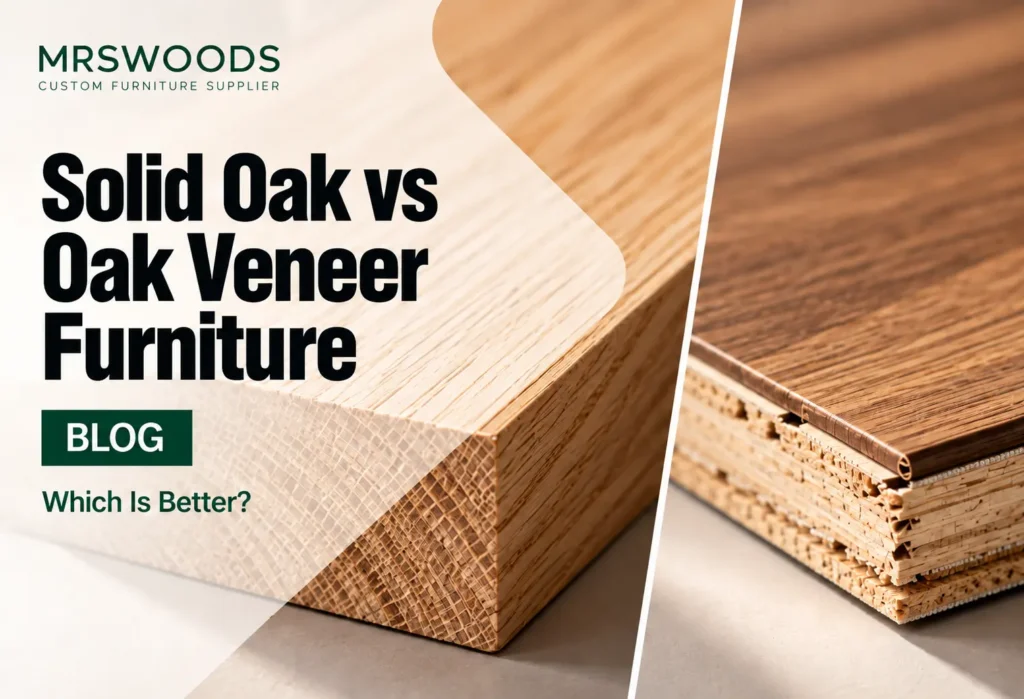
Solid oak vs oak veneer furniture is not a choice between real wood and fake wood. Solid oak is wood throughout the specified component; genuine oak veneer is a thin layer of real oak bonded to a core. Either can be the right construction when it suits the product, is made well and is described accurately.
For a furniture buyer, the better question is where each material belongs. A chair leg, broad cabinet door and large tabletop ask different things of a material. Appearance, movement, weight, repair expectations, cost and repeat-order consistency all matter.
The broader advantages and disadvantages of oak wood remain relevant to either construction, but the material schedule determines what is actually being purchased.
Key Takeaways
- Oak veneer is real wood on the visible face, but the core and edge construction must also be specified.
- Solid oak can be useful for exposed, shaped or structural components; it still expands and contracts as humidity changes.
- Veneered panels can offer a controlled layout across wide surfaces, but quality depends on the veneer, core, bond, edge and finish.
- A well-designed furniture piece may use solid oak and oak veneer together. Material allocation should follow the product brief, not a blanket quality label.
- Compare quotes only after both suppliers describe the same components, visible quality, finish and inspection requirements.
What Is Solid Oak?
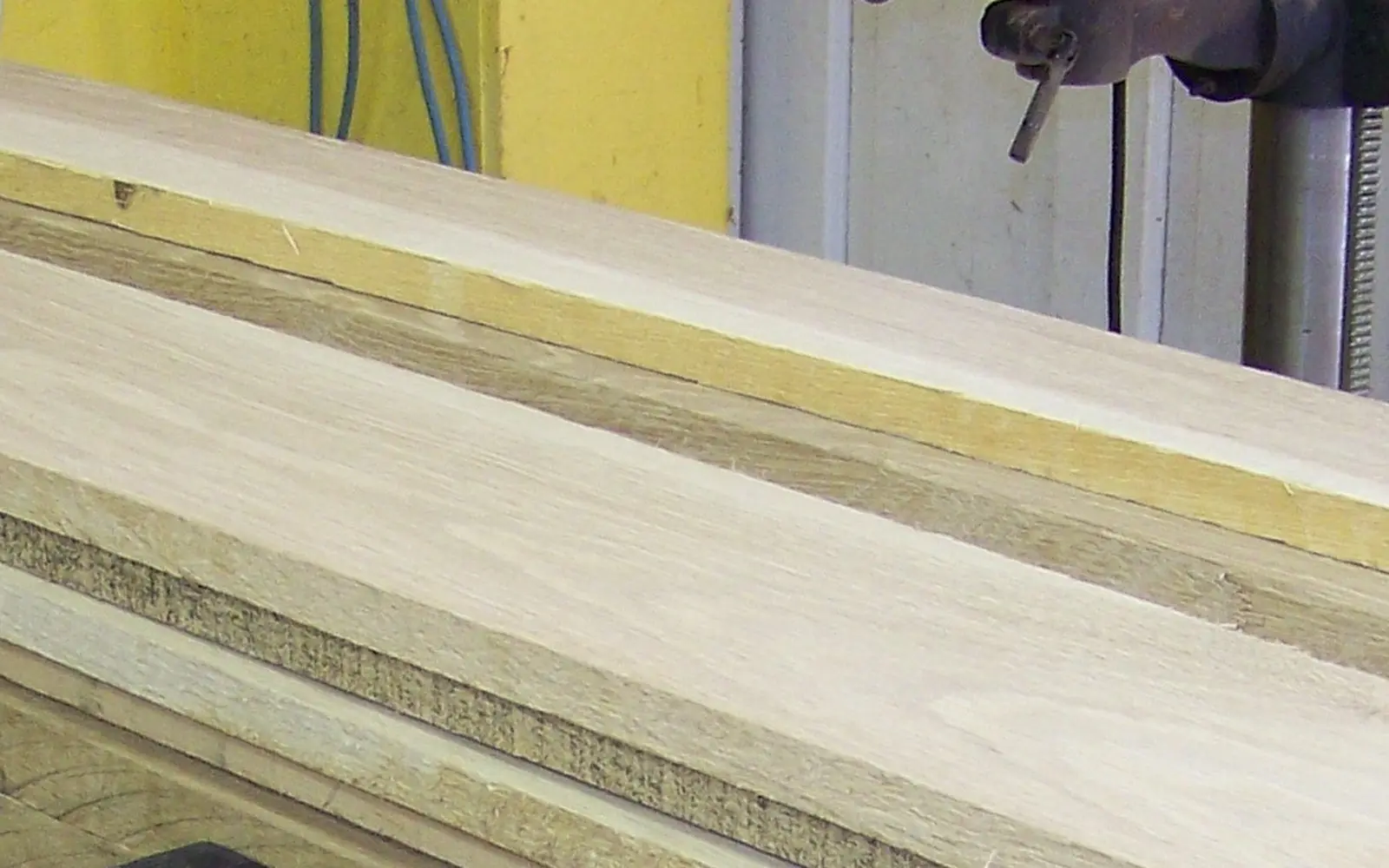
A solid-oak component is made from oak wood through its thickness, rather than a different core covered with oak. A leg may be cut from one piece. A wider top may be assembled from several solid boards. The word solid does not mean that every component is one uninterrupted board, or that all parts of a finished product must use the same construction.
Oak’s grain, pores and natural variation continue through a solid component. That makes shaping a visible edge or repairing some surface damage possible, depending on the design and finish. It does not guarantee a flawless surface, perfect stability or superior workmanship.
Ask which components are solid oak. A listing that says only “solid oak furniture” may leave important questions unanswered about drawer bottoms, cabinet backs, wide doors or hidden structural panels. The NHLA hardwood lumber grading rules describe the grading of lumber, not a finished furniture quality rating. Buyers still need a component-level specification and a physical sample.
What Is Oak Veneer?
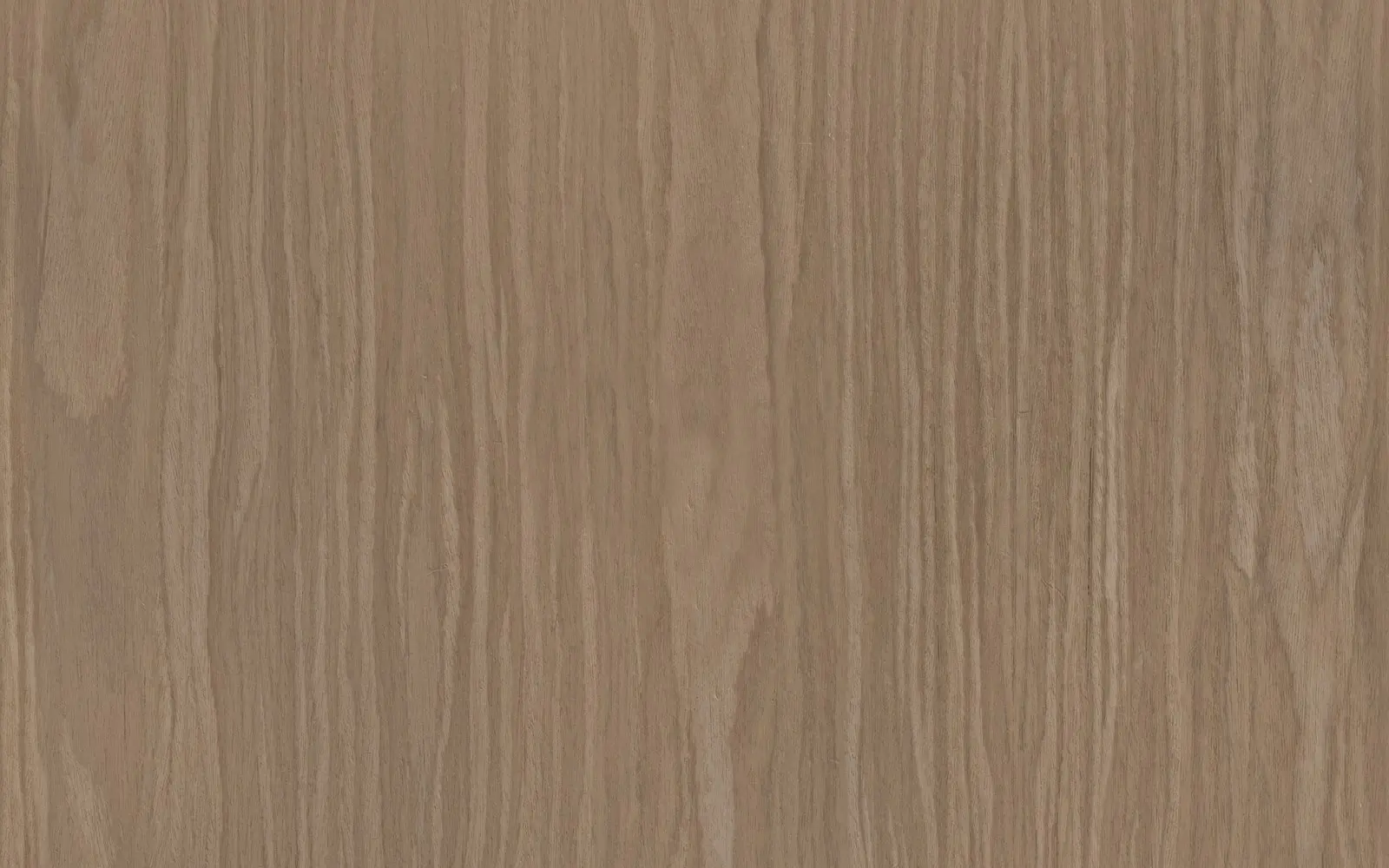
Oak veneer is a thin sheet of oak cut from a log and applied to another material. According to the Decorative Hardwoods Association’s veneer explanation, decorative veneer is genuine hardwood. The visible oak surface can therefore show real grain and natural variation. It is not the same thing as a printed oak-look film.
The core may be plywood, medium-density fiberboard, particleboard or another specified material. These choices are not interchangeable. Their thickness, construction, edge treatment, fastening details and intended environment affect how the finished component performs. The USDA Wood Handbook’s composite-material chapter describes how veneers, fibers and particles can be organized into different wood-based products.
For buyers, “oak veneer” names the face material, not the whole panel. A useful quotation identifies the oak face, core, backing where relevant, edge construction and finished thickness. It also states which parts of the product are veneered.
Is Oak Veneer Real Wood?
Yes, when the face is genuine oak veneer. The question should then move from “real or fake?” to “which real wood, on what core, with what visible and structural specification?” A printed laminate can imitate oak visually, but it is a different product and should be named differently.
For a furniture collection, ask the supplier to provide a material schedule. It should distinguish solid oak, oak veneer, other wood species, engineered cores and any non-wood finish. A sample alone may not reveal a hidden core or backing. Component drawings and an exposed-edge sample can make the construction easier to approve.
The ANSI/HPVA HP-1-2024 standard gives terminology and requirements for the hardwood and decorative plywood products within its scope. It is useful when specifying such panels, but it is not a blanket certification for every veneered furniture item.
Durability and Dimensional Stability
Neither construction is automatically more durable. A solid-oak top can last well when its moisture content, grain orientation, joining and movement allowances suit its destination. A veneered door can also perform well when its core, bond, balancing layers, edge and finish are suitable. Poor execution can undermine either one.
Wood takes up and releases moisture as its environment changes. The USDA Wood Handbook’s moisture chapter explains that relative humidity and temperature influence this exchange. Broad solid-wood panels need construction details that allow expected movement. A finish can slow moisture exchange but does not eliminate it.
Some engineered panels are designed to be more dimensionally controlled than a comparable broad solid board. That does not mean that any veneered panel can ignore humidity, moisture in the core or the quality of the glue bond. The relevant comparison is the proposed finished component under its intended use, not an abstract contest between “solid” and “veneer.” Oak wood moisture content deserves particular attention when the furniture will cross climates during export.
Appearance and Grain Matching
Solid boards can reveal the character of the individual pieces used to make a top or frame. Their color, grain direction, sapwood and natural features need an agreed acceptance range. On a wide surface, even well-selected boards will not look identical.
Veneer opens different layout choices. Leaves can be selected and arranged so that adjacent cabinet doors form a deliberate visual sequence. This may be more important to a coordinated furniture range than insisting that every broad face is solid. The appearance still depends on the available veneer, cutting method and the buyer’s approval standard.
Review a full-size visible surface where possible, not only a small swatch. Put door fronts next to each other, check the direction of the grain and compare the edge with the face. If the design uses both constructions, approve their appearance together under the proposed finish. Oak veneer grain matching can be a separate craft decision within the larger material choice.
Weight and Cost
It is unsafe to claim that one construction always weighs less or costs less. The answer depends on component dimensions, core, oak grade, veneer yield, edge treatment, finish, order volume and production method. A thin oak face on a dense core may not create a lightweight product.
The same caution applies to price. A broad solid panel may need careful board selection and movement-conscious construction. A veneered panel may involve face selection, matching, bonding, trimming and edge work. Both can become expensive when visible quality requirements are strict.
Ask for two quotations against the same drawing and finish brief. Record the material of each component and the approved appearance standard. Then compare finished-product prices, expected handling weight, packaging and repair provisions. Comparing a solid-oak table with a differently designed veneered table reveals little about the material choice itself.
Where Solid Oak Works Best
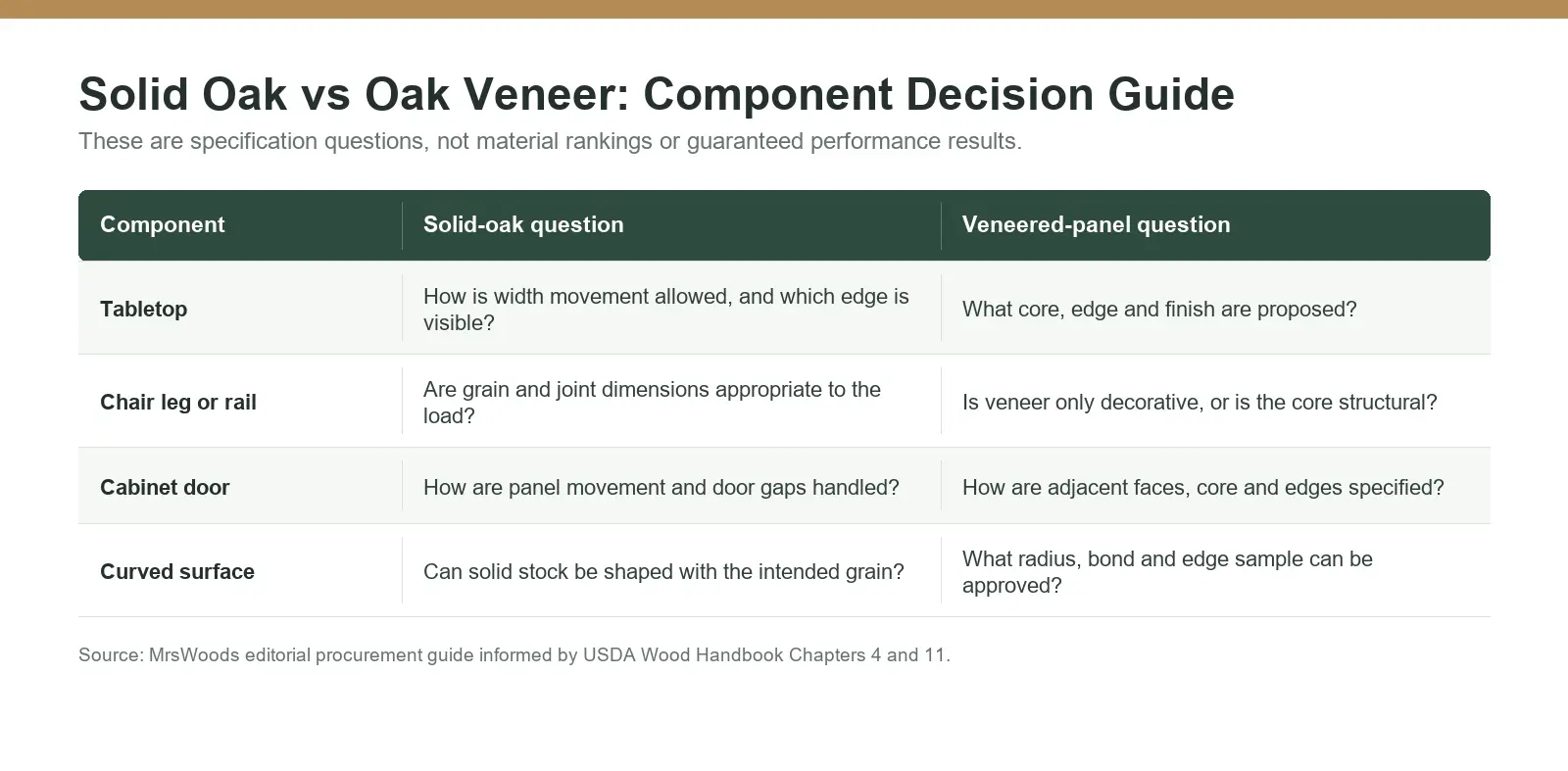
Solid oak is often a sensible candidate for legs, frames, rails and exposed edges that need to be shaped or show wood through their thickness. A chair leg or table base can use the natural appearance of the material as part of the design. The final component still needs the correct grain direction, dimensions and joints.
A solid-oak tabletop can also be appropriate when the design calls for a specific edge, tactile quality or repair approach. The larger and wider the panel, however, the more important it becomes to review movement, fixing points and destination humidity. “Solid” is a construction choice, not an exemption from engineering.
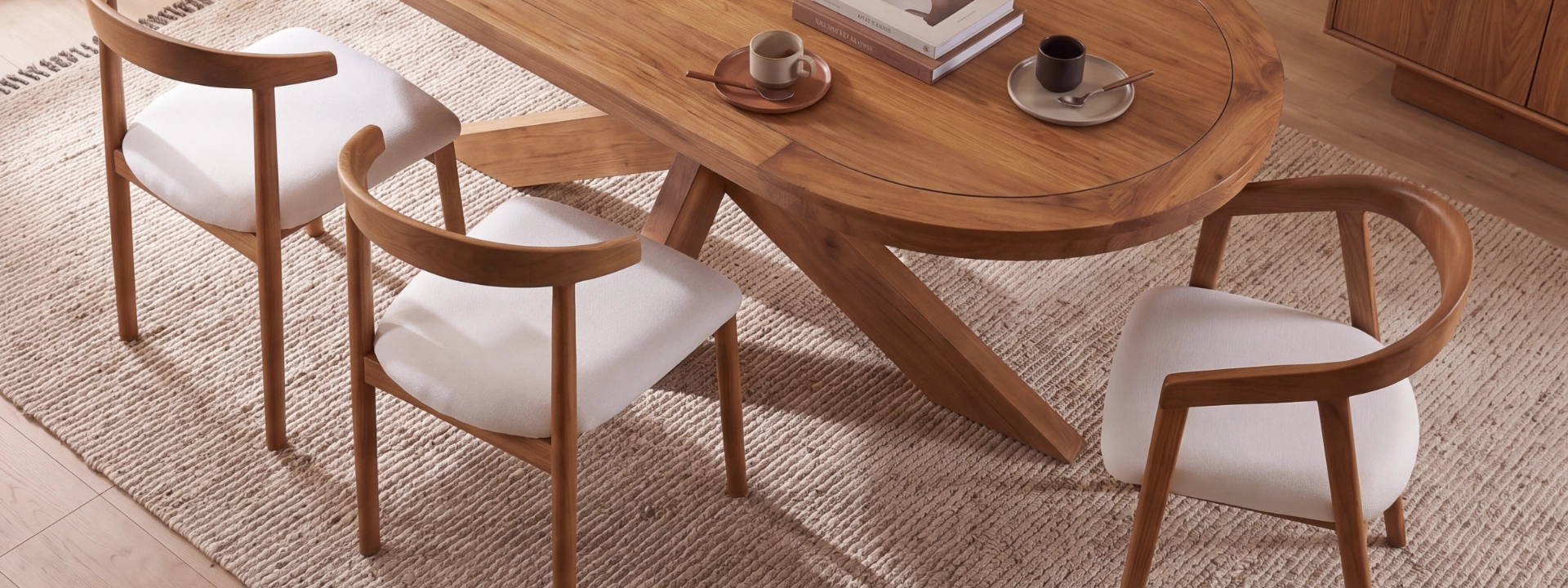
For product examples, the MrsWoods dining collection shows the types of tables and seating for which buyers can discuss material allocation. A listed product photo should not be treated as proof that every version or component uses solid oak; confirm the specification for the item being quoted.
Where Veneer Works Best
Oak veneer can be valuable on cabinet doors, sideboards, broad panels and some curved surfaces where surface layout is central to the design. It gives a designer a way to plan grain direction across adjoining faces while using a specified core. It can also help allocate more expensive solid stock to components where it provides a real functional or visual benefit.
Edges deserve particular scrutiny. A face that looks convincing in a front photograph can reveal its construction at a corner, handle recess or rounded edge. Check how the veneer, edge band and core meet, and whether the detail survives the intended use and cleaning routine.
Curved veneered components are possible, but the radius, veneer thickness, substrate and bonding process must work together. They should be sampled, not promised from a flat photograph. For a repeat-order collection, retain an approved face and edge sample so later production can be compared against the same standard.
Why High-End Furniture Can Use Both
Using two constructions in one piece is not a compromise by definition. A dining table may use solid oak where the edge and support design call for it, while a cabinet may combine solid framing with veneered broad faces. The goal is a coherent product with suitable performance, appearance and commercial fit.
What matters is honest allocation. A premium specification should say where the oak is solid, where it is a real veneer and what lies underneath. It should also describe the finish, visible quality, edge detail and any required tests. The buyer can then judge the finished piece rather than a slogan.
MrsWoods’ furniture development and customization services can be used to discuss drawings, material alternatives and physical samples before a collection moves to production. For buyers developing several product categories, the same approval logic can be applied across tables, storage and seating.
How Buyers Should Specify Materials
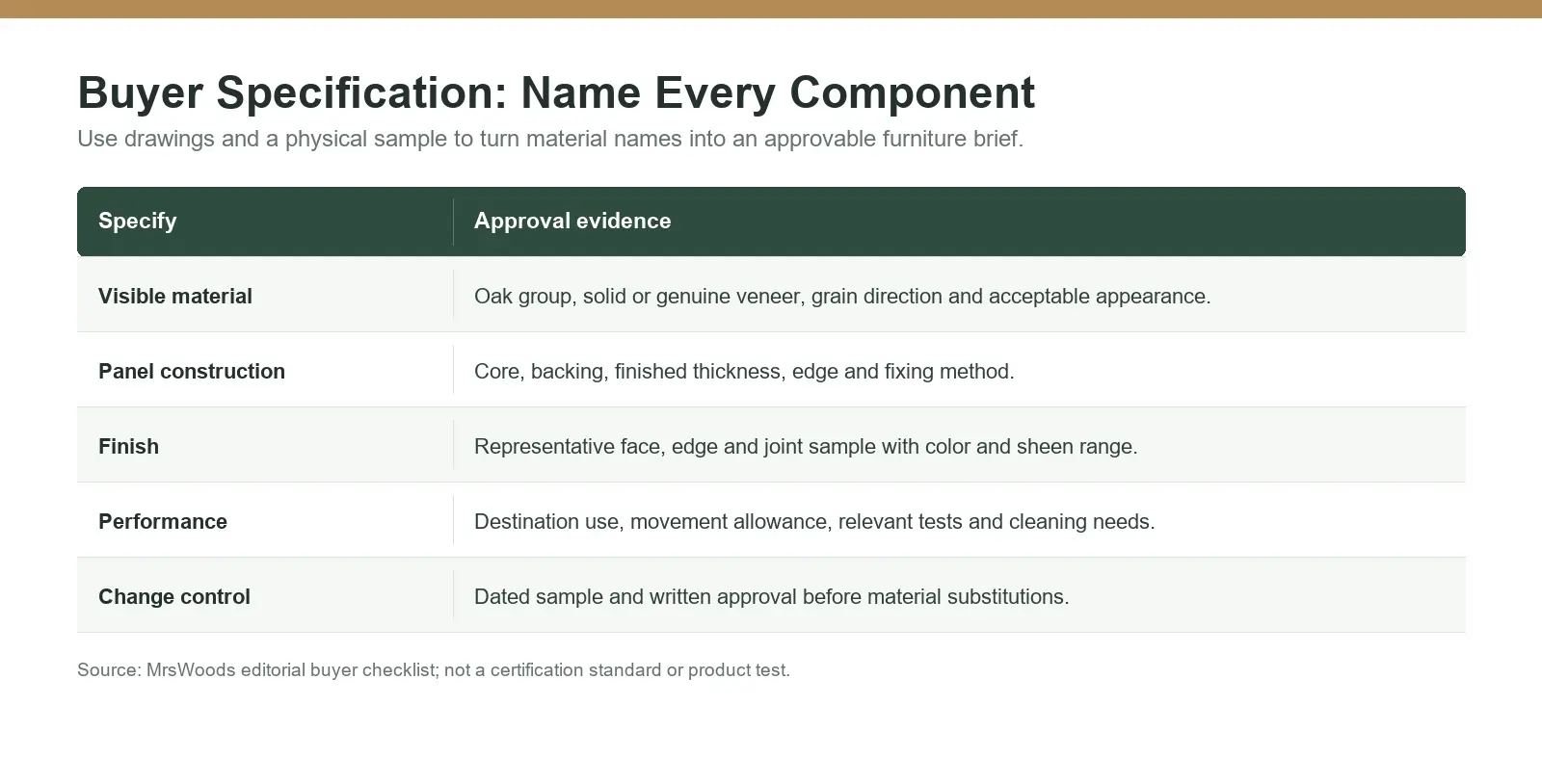
Begin with a component schedule attached to the drawing. For each visible or structural part, state the material, thickness, grain direction, core where applicable, edge detail and finish. Note which choices are fixed and which may be proposed as alternatives for approval.
Next, agree on samples. Review a representative face, edge and joint, including the proposed finish. Record the acceptable range of grain and color variation rather than approving only one unusually attractive board. If the supplier proposes a change, require approval before substituting a solid component for veneer or changing a core material.
Finally, align inspection with the specification. Check the finished dimensions, visible surfaces, edge integrity, assembly, hardware, packaging and any product tests required by the destination market. A photograph cannot fully verify the internal construction, so keep the approved material schedule and production records with the sample.
For a sourcing discussion, send MrsWoods your drawings or reference images, desired dimensions, finish, quantity and destination market. A clear brief makes it easier to compare a solid-oak option with a mixed-material option on equal terms.
Frequently Asked Questions
Is oak veneer real oak?
Yes, if the visible layer is genuine oak veneer. Ask what core and edge construction sit beneath that layer and confirm the material schedule.
Does solid oak always last longer than oak veneer furniture?
No. Service life depends on design, moisture control, bonding, joints, finish, use and maintenance. Evaluate the complete product rather than the surface label.
Can a high-end cabinet use oak veneer?
Yes. A well-specified veneered panel can support a consistent grain layout across large faces. The core, bond, edge and finish still need approval.
Is veneer always the cheaper choice?
No. Premium veneer selection, matching and edge work can add cost. Compare quotations for the same drawing and quality requirements.
Conclusion
Choosing solid oak vs oak veneer furniture means assigning materials to the jobs they do best. Solid oak can be compelling for shaped, exposed and structural parts; veneer can support deliberate appearance across broad faces. Neither label substitutes for sound construction or an approved sample.
Specify each component, compare equal quotations and inspect the finished product against the agreed brief. That approach gives buyers a clearer basis for quality and cost decisions than asking which material is universally better.
