
White oak vs red oak furniture differs most in grain, pore structure, finish appearance and sourcing requirements. White oak is heavier and slightly harder in the AHEC reference data used here, while northern red oak has a slightly higher stiffness value.
Neither group makes better furniture in every situation. For a furniture brand, retailer or project buyer, the choice should follow the product brief: appearance, construction, finish, handling and repeat-order supply.
This guide focuses on American white and red oak. It does not treat every oak sold internationally as interchangeable. Our guide to oak wood properties for furniture explains the underlying material science; here, the focus is choosing between the two groups.
Key Takeaways
- White oak and red oak are commercial groups containing multiple species; the name alone is an incomplete specification.
- White oak heartwood commonly contains vessel blockages called tyloses. Lower permeability does not make furniture waterproof.
- Color overlaps between groups. Physical samples give buyers a better approval basis than species names or screen images.
- Reference strength and hardness values cannot replace tests of the finished table, chair or cabinet.
- Compare cost using matched specifications, including grade, dimensions, finish, quantity and delivery terms.
White Oak vs Red Oak: Quick Comparison
American white oak includes several species, with Quercus alba a principal species. American red oak also includes multiple species. Northern red oak, Quercus rubra, is the red oak used in the numerical comparison below.
The AHEC 2024 Species Guide reports white oak at 769 kg/m³ and northern red oak at 705 kg/m³, both at 12% moisture content. The corresponding hardness values are 6,049 N and 5,738 N.
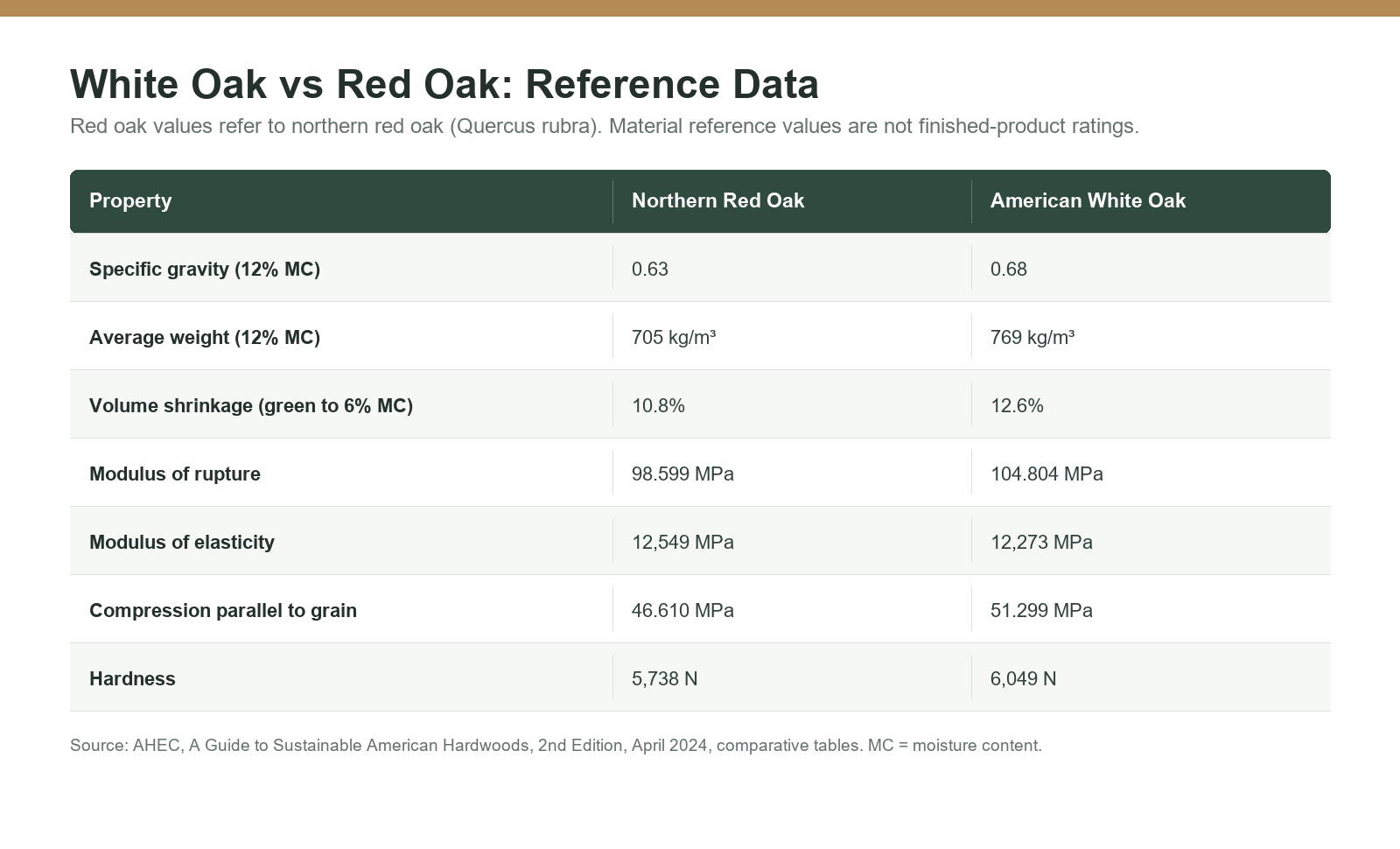
For buyers, these figures help frame a discussion. They do not establish a quality hierarchy. A heavier material may suit a substantial dining table, but it can also affect handling and delivery.
Ask the supplier to identify the oak group and describe the stock proposed for your order. If the quotation says only “oak,” clarify it before approving a sample.
Anatomy, Pore Structure and Tyloses
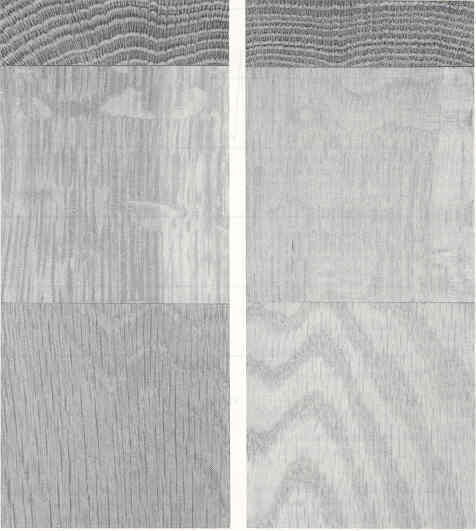
Both groups are ring-porous hardwoods: the larger early-season vessels form visible bands. The difference inside those vessels helps explain their different permeability.
What Tyloses Change
Tyloses are cell outgrowths that block vessel spaces. White oak heartwood commonly contains these blockages; red oak generally has more open vessels. This distinction has exceptions within the groups and should not be treated as an absolute identification rule.
USDA’s comparison of white oak and red oak anatomy shows the difference in actual wood sections.
Lower Permeability Is Not Waterproofing
Reduced liquid movement through vessels is a material characteristic. It does not seal joints, protect exposed edges or prevent humidity-related movement.
For a dining table, assess the finished surface and cleaning conditions. For outdoor or wet-area use, request a product designed and tested for that environment. An indoor white oak table should not be sold as waterproof because of its species.
Color, Grain and Visual Differences
Color is useful for design approval but unreliable as the only method of identifying oak. Board selection and finishing can make the visual difference larger or smaller.
Natural Color and Ray Figure
The AHEC white oak profile describes brown heartwood and longer rays than red oak. These rays can create prominent flecks on quarter-sawn faces. White oak is not necessarily pale or white.
The AHEC red oak profile describes heartwood that is often pinkish or reddish brown, but not always. Its texture is generally coarse, and it also has visible rays.
Approve a Range, Not Just One Board
For a sideboard, ask to see several adjacent door faces. A small sample may hide differences that become obvious across a full cabinet. Include both the desired appearance and acceptable natural variation in the approval.
For a coordinated collection, review the table, chair and cabinet samples together. Specify whether strong ray flecks are welcome, limited or excluded on prominent faces. Apply the same approach to sapwood, knots and contrasting strips.
Construction affects this decision too. A veneer layout can create a different visual rhythm from a solid-board assembly. Our planned guide to solid oak vs oak veneer furniture examines those choices separately.
Mechanical Properties and Furniture Performance
The reference data does not support saying that white oak is stronger in every way. Its listed bending strength and compression strength are higher, while northern red oak has a slightly higher modulus of elasticity.
Read the Data at Component Level
For a chair, focus on legs, rails, grain direction and joints. A modest hardness difference does not tell you how the chair will behave under repeated loading.
For shelving, examine span, thickness, supports and intended load. A species change should trigger a review of the design, not an assumption that the original dimensions remain suitable.
The USDA Mechanical Properties of Wood chapter explains the variability behind published wood values. Clear-wood test results are not finished-product performance guarantees.
If a manufacturer proposes replacing white oak with red oak, review the affected components and repeat the relevant product checks. Treat it as a material change requiring approval, even if the sample looks similar.
Keep Drying Shrinkage in Context
AHEC reports volumetric shrinkage from green wood to 6% moisture content of 10.8% for northern red oak and 12.6% for white oak. These are drying figures, not expected seasonal changes in a finished tabletop.
Neither figure predicts indoor movement by itself. Board orientation, component dimensions, moisture conditions and construction still matter. A narrower component and a broad solid panel pose different design questions, even within one species.
The dedicated article on oak wood moisture content will cover drying, measurement and destination conditions in more detail.
Machining, Staining and Finishing
AHEC describes both groups as suitable for machining, staining and polishing. Pre-boring is recommended for fastening. Red oak’s open structure also makes it receptive to treatments, although that does not guarantee an even decorative stain.
Test the Finish on the Actual Wood
A color code cannot capture grain contrast, pore appearance or sheen. Approve the finish on the actual oak and construction proposed for production, including veneer where applicable.
For a light finish, review how the underlying wood tone affects the result. For a darker finish, check whether the grain remains as visible as intended. The same coating recipe should not be assumed to produce identical results on both oak groups.
A useful comparison places finished samples side by side under the same lighting. Include a larger face, an edge and a joint. These reveal more than a photograph of one small flat sample.
Make Approval Repeatable
Retain a signed reference sample and agree on acceptable variation. Identify the material, surface preparation, color, sheen and texture in the approval record.
When a new batch falls outside the agreed range, resolve it before finishing the full order. Reworking an entire collection is more disruptive than reviewing a small trial batch.
Our planned article on oak furniture finishes will examine finish selection and sample approval in depth.
Best Furniture Applications for White Oak and Red Oak
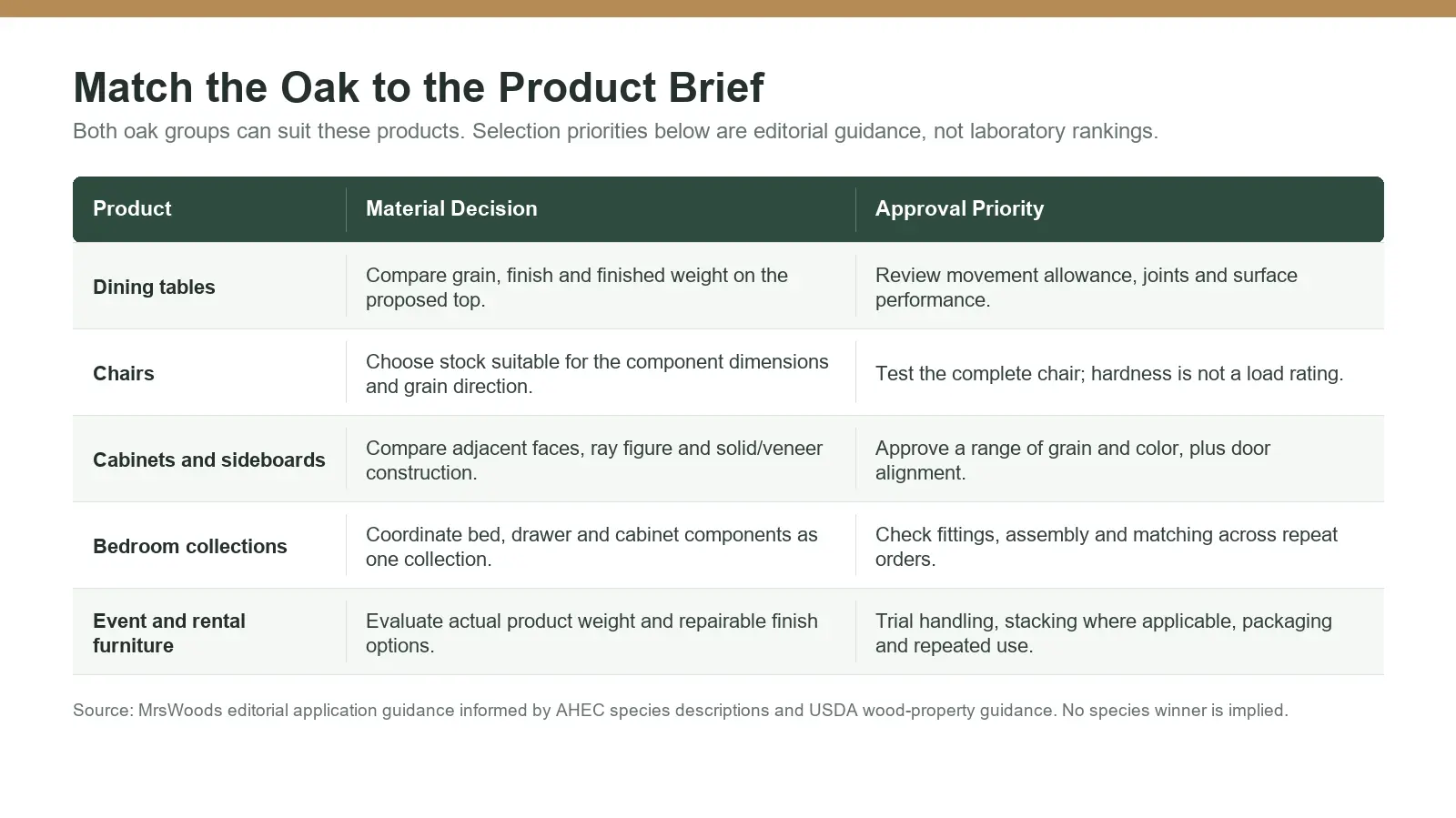
Both groups have established furniture uses. The practical task is matching their appearance and available stock to a specific design, then validating the complete product.
Dining Tables and Chairs
For dining tables, compare a representative top in the intended finish. Decide whether the visible rays, grain contrast and board layout support the collection. Then review the base connection and allowance for movement.
For chairs, approve appearance alongside structural performance. Test the proposed construction and check that production stock matches the approved material specification. Do not use species prestige as a substitute for inspecting joints.
Cabinets, Sideboards and Bedroom Furniture
Cabinets and sideboards expose differences across neighboring panels. Review the entire front, not each door in isolation. Decide where solid oak is needed and where an oak veneer construction suits the brief.
For bedroom collections, coordinate visible surfaces across products. Bed components, drawer fronts and cabinet panels may require different constructions while sharing an agreed oak appearance.
Event, Rental and Hospitality Products
For furniture that is moved frequently, assess actual finished weight, handling points, packaging and repair options. Do not infer handling comfort from lumber density alone.
Trial the sample in the intended workflow. Repeated setup, storage and cleaning may reveal priorities that a showroom review misses. Both oak options should be judged against the same use conditions.
Cost, Availability and Supply Considerations
There is no fixed price gap that applies to every white oak and red oak furniture order. Obtain current quotations for the same specification before drawing a cost conclusion.
Compare the Same Purchasing Basis
Ask both quotations to state material grade, thickness, visible quality, construction, finish, order quantity and delivery basis. Check whether sample costs, packaging and testing are included.
A lower lumber price does not automatically mean a lower finished-product cost. Strict color selection, wide clear components or an exact grain layout can change the amount of usable material. Ask the manufacturer to explain the main cost drivers for your design.
For a useful comparison, request two versions of the same product brief. A comparison between a solid white oak table and a red oak veneer table mixes species and construction costs.
Confirm the Stock Your Design Requires
AHEC describes both groups as available in lumber and veneer. It also notes more limited availability of some thicker stock. General availability does not confirm that a supplier has your required dimensions ready for production.
Check proposed lead time and repeat-order access before freezing the design. A collection built around unusually wide or thick pieces needs a different supply discussion from one using smaller components.
Agree on change control: the supplier should seek approval before substituting the oak group, changing visible construction or altering the finish. Keep a dated material schedule with the approved sample.
How Should B2B Buyers Choose Between White Oak and Red Oak?
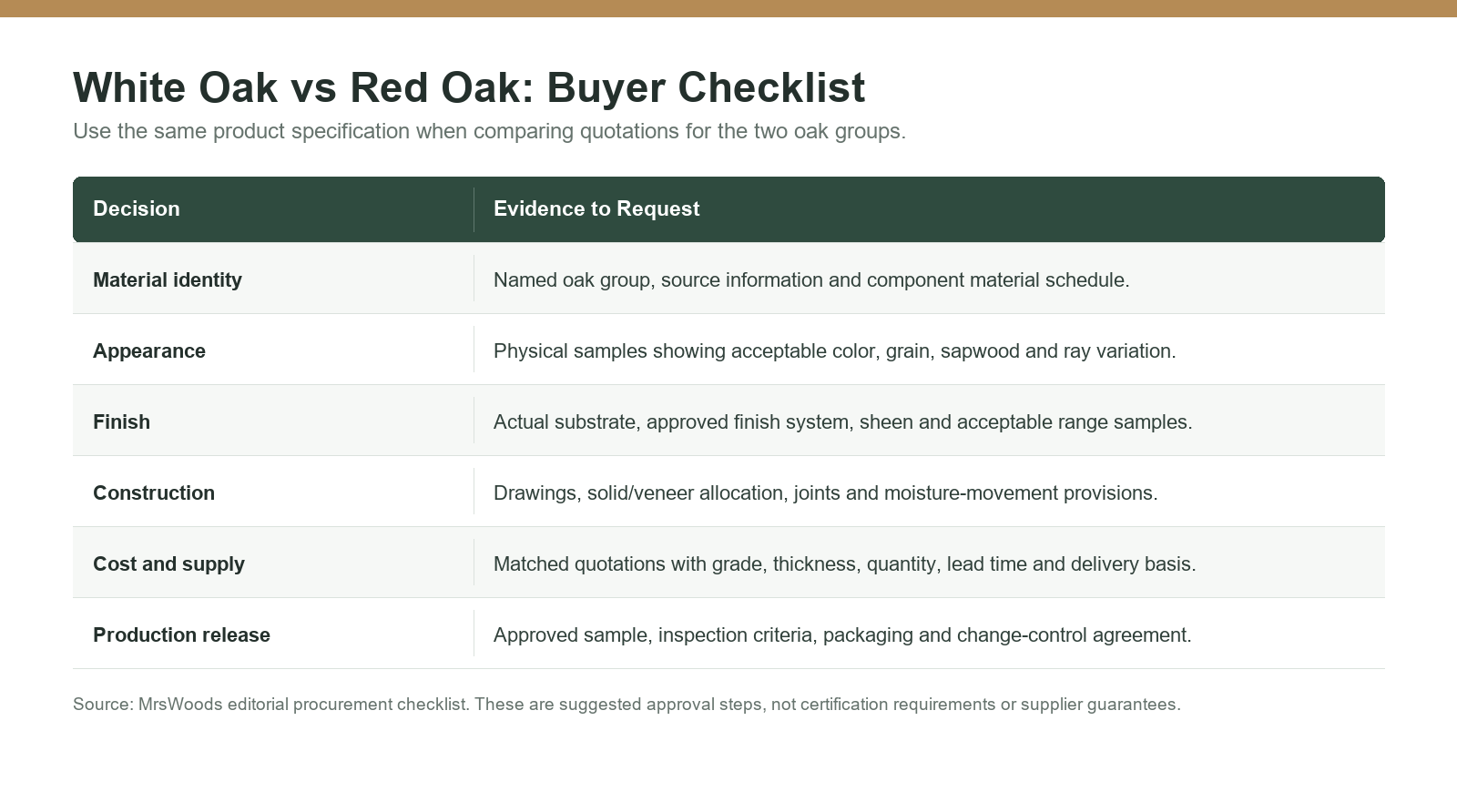
Start with the desired product, then work back to the material. This keeps the discussion focused on evidence that can be approved and checked.
Use a Three-Step Decision
- Approve the visual direction. Review physical samples of both options with the intended finish. Record acceptable grain and color variation.
- Validate the product. Review drawings, components, joints, use conditions and relevant tests. Include handling and packaging where they affect the brief.
- Confirm the commercial fit. Compare matched quotations, lead times and repeat-order arrangements. Record what requires approval if the supplier changes it.
White oak is a sensible candidate when its natural appearance or ray figure is central to the design. Red oak deserves evaluation when its grain and finish response meet the brief. Neither choice removes the need for sampling.
For a broader starting point, our guide to the advantages and disadvantages of oak wood explains the main benefits and tradeoffs of oak furniture.
FAQ
Is White Oak Better Than Red Oak for Furniture?
Not in every application. White oak may suit a particular appearance brief, but well-designed red oak furniture can also perform well. Compare the finished samples, construction and sourcing terms.
Is White Oak Furniture Waterproof?
No. Lower heartwood permeability does not make an assembled product waterproof. Its finish, joints, exposed edges and intended environment still determine suitability.
Can Red Oak Be Finished to Look Like White Oak?
A finish can bring the color closer, but it cannot remove the anatomical differences. Approve an actual sample before promising a match, especially beside existing white oak pieces.
Can You Identify Red Oak and White Oak by Color Alone?
No. Natural tones overlap, and finishes change appearance. Use supplier documentation and appropriate wood identification when material identity matters to the order.
Conclusion
Choosing white oak vs red oak furniture means matching a material to a product brief. Appearance, pore structure and reference properties help narrow the options; samples, construction checks and matched quotations complete the decision.
For a MrsWoods project discussion, send drawings or reference images, dimensions, preferred finish, expected quantity, destination market and target price positioning. Include any material restrictions and testing requirements so the comparison starts from a clear brief.
Explore our furniture development and manufacturing services to discuss material selection, sampling and the next steps for your collection.
